Why Fort Worth mayor shouldn’t be knocked for ‘casket’ remark | Opinion
AI-generated summary reviewed by our newsroom.
- Mayor Parker and activist seemed to exchange threats after casket protest escalated fears.
- Rising left-wing violence and online rage prompt officials to fear for safety and withdraw.
- The Fort Worth City Council cut public comment sessions from 15 to 10.
Fort Worth City Council meetings usually include anodyne but sometimes spicy comments from the public. Council members usually sit quietly and listen. It’s part of the job, even when the complaints get personal.
So, it was a surprise when a recent such session quickly went nuclear, with the speaker and Mayor Mattie Parker accused of making threats. Here’s a theory about why it happened.
The topic Sept. 30 was the council’s recent decision to reduce the number of public-comment meetings from 15 this year to 10 in 2026. To most citizens, that probably seems like plenty of time to engage with the council. Regular activists might see it differently; some people weigh in on many issues or appear frequently to press a specific complaint.
Activist Patrice Jones warned that with fewer opportunities to reach council members, those with causes to push might be left with no choice but to appear at a council member’s church or nongovernment functions. She also accused Parker of Ku Klux Klan ties, a laughable charge that bubbles up because of past KKK activity in Parker’s hometown of Hico.
Parker, a Republican who has taken more than her share of abuse from just about every part of the political spectrum, responded sharply, telling Jones: “Patrice, I still have your casket.”
Depending on your perspective, you see either or both of these comments as threats. Still, why would the mayor engage at such a seemingly personal level?
Conservative leaders, commentators increasingly fear left-wing violence
Parker didn’t return my call seeking to ask her about it. But it may be a direct consequence of the assassination of Charlie Kirk. Republicans and conservative commentators and activists feel genuine fear thanks to the large number of mentally unstable Americans and relentless left-wing rhetoric about “Nazis,” the end of democracy and, in this case, the Klan.
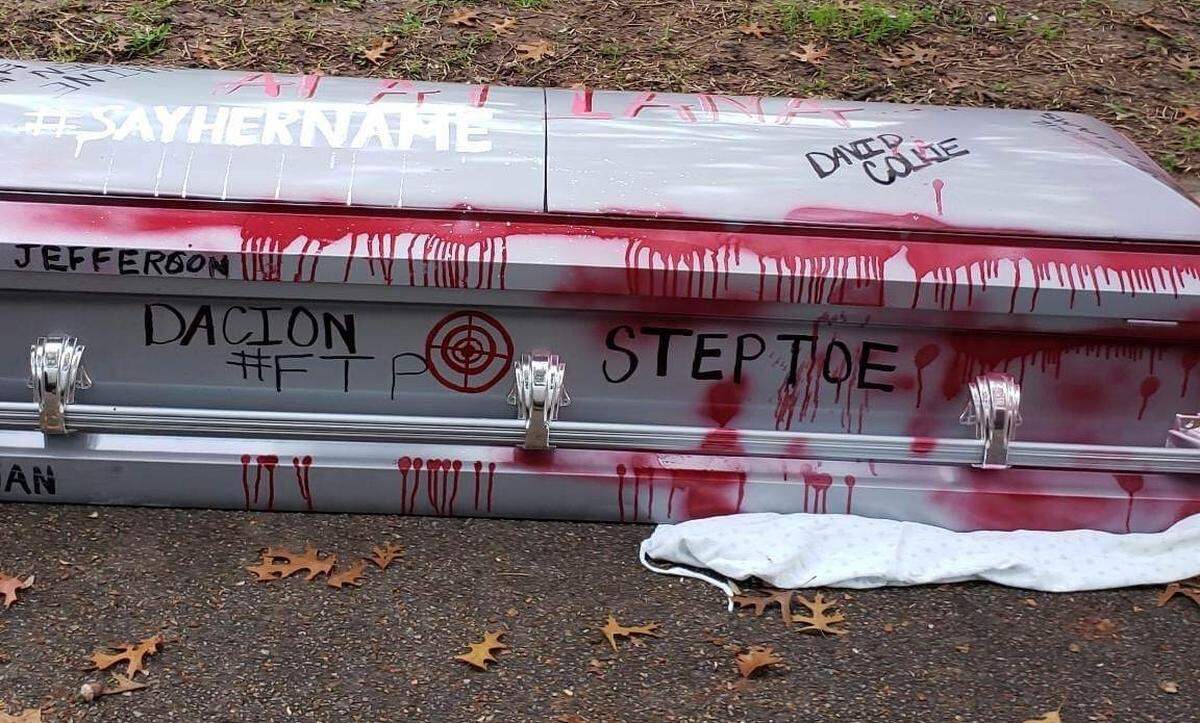
A casket bearing the name of Atatiana Jefferson, the Black woman killed in her own home by a Fort Worth officer in 2019, was left on Parker’s lawn during a 2022 protest. Parker alleged that Jones was involved, saying police records and witnesses confirm it. Jones says she didn’t have anything to do with it.
So, Parker has already endured a disgusting protest tactic. Now, after Kirk, a shooting at a Dallas ICE facility and other incidents, what might have once seemed like idle or overheated threats have people on the right worrying about their own safety and that of their children.
And it’s not just the Kirk shooting. Consider the way that many progressives and even some elected Democrats justified the murder of United Healthcare CEO Brian Thompson.
Consider the astonishing sentence that a federal judge gave this week to the person who threatened to kill Supreme Court Justice Brett Kavanaugh, someone who was arrested outside the justice’s home with two pistols, a knife and other weapons: just eight years and one month in prison. The suspect admitted to planning to kill Kavanaugh and enough of his fellow justices to change the outcome of the case challenging abortion rights. That’s textbook terroristic violence.
If Parker’s reaction was fueled by such events, she’s far from alone. Alliance Defending Freedom, a conservative legal group that frequently argues cases before the Supreme Court, decided not to hold rallies at the court’s building in Washington for fear that the gatherings could not be made secure.
Talk radio’s Ben Ferguson, who co-hosts Sen. Ted Cruz’s popular podcast “Verdict With Ted Cruz,” recently said on a different podcast that he’s been fitted for a bulletproof vest and had to answer his children’s question about whether he, like Kirk, is in danger because of mere words he said.
Democrats alarmed by worsening climate, too
Plenty of Democrats are alarmed, too. The sickness in our political discourse stretches across the spectrum. U.S. Rep. Marc Veasey, a veteran Fort Worth Democrat, told our Editorial Board this week that he’s been more vigilant and aware of potential threats since a Minnesota lawmaker and her husband were killed in June.
“It was really chilling after Minnesota, yeah,” Veasey said. “I felt really unsafe after Minnesota. And I would say I felt two times as unsafe after Charlie Kirk.”
Veasey noted the toxicity of online rage, pointing to a vow of revenge that a Kirk supporter posted after the murder. It drew millions of views and thousands of likes, he said. Few of the people who would click on such a thing would ever act on the idea; many probably forgot about it as soon as they came across the next reel or meme. But what if the original poster or someone like him interprets the response as a mandate to avenge Kirk with violence?
We all have to deal with this part of our sick online culture. When calls ring out to tone down rhetoric, it’s not just the politicians who must heed them; we all must condemn any suggestion of violence.
Back to Parker and Jones. The mayor has a responsibility to avoid escalating exchanges, even when many would find her response justifiable. Putting a casket on a lawn would be interpreted as a threat in any era, but especially now. No one should go there. Nor should they haunt public officials at their homes or places of worship or when they’re out with their families.
Ten comment sessions a year leaves ample opportunity to air grievances, especially at the level of City Council. You can readily email council members or contact their district staffers. Heck, some give out their cellphone numbers, understanding that local government especially must be accessible.
That won’t last if they believe their families could be in danger. Some good public servants will throw up their hands and say it’s not worth it, perhaps yielding their seats to more-extreme candidates.
And then, the discourse will get even worse.