
Menopause hits Black women harder. Let’s get them the help they need | Opinion

XOn a recent evening, a few of my sorority sisters and I were cleaning up after a gathering. We had come together, as we usually do, for sisterhood and conversation. The kitchen was warm, dishes were stacked by the sink, and someone was packing leftovers into containers for people to take home.
“Whew. I am about to melt,” one sister said, fanning herself with a paper plate.
Another laughed and replied, “Girl, I sleep with two fans and still wake up feeling like somebody turned the oven on.”
Everyone chuckled, but no one said the word “menopause.” No one said, “I have not slept through the night in weeks.” We know how to joke. We are slower to name what is really happening.
That moment stays with me because it captures what I hear every day as a Black woman and a physician. Our bodies are changing. Our plates are full. And many of us are trying to decide if what we feel is “serious enough” to talk about, or if we should just be strong and carry on.
If you are a Black woman reading this and wondering whether you are overreacting to your hot flashes, your mood shifts, or the way your heart races at 3 a.m., I want to say this clearly:
You are not imagining it. You are not “too emotional.” You are not failing at midlife.
Long-running research that has followed thousands of women shows that menopause often arrives differently in our bodies. On average, Black women enter menopause earlier than white women. We are more likely to have hot flashes that are frequent and intense, and this can go on for close to 10 years. We are also more likely to carry high blood pressure, diabetes and the weight of long-term stress into this season of life.
Scientists now use words like “weathering” and “allostatic load” to describe what many of us already know in our bones. Living with racism, financial strain, unsafe neighborhoods, and the constant need to prove ourselves does not just hurt our feelings. It leaves fingerprints on our biology. By the time we reach our 40s and 50s, our nervous systems, blood vessels and hormones have already been working overtime for years.
Then, menopause arrives, often louder and earlier than for other women.
At the very moment when symptoms are strongest, many Black women are also at the center of everything. We are running classrooms, clinics, offices and small businesses. We are raising children and helping with grandchildren. We are checking on aging parents, leading ministries and community groups and holding together spaces where other people come for support.
The “strong Black woman” image grew out of real resilience. It also came with a cost. We learned to postpone our own needs, to downplay our pain and to make quiet jokes about what hurts instead of asking for help. In health care, that silence meets a system that has not always earned our trust.
History has taught Black women to be cautious. From forced experiments on enslaved women to modern stories of pain in labor and delivery being dismissed, many of us carry family memories that say, “Be careful what you share. They will not listen anyway.” Studies of menopause care echo what my patients tell me. Black women are less likely to have clinicians bring up menopause at all. We are less likely to be offered safe, effective hormone therapy and more likely to be told to just wait it out or consider major surgery.
In a recent focus group study, African American women described having to start the conversation themselves, only to feel ignored or brushed off. They said they wished doctors would explain what to expect before symptoms hit, and they wanted honest information that respected their experiences, not quick assurances that “everything is normal.”
So yes, there is work for us to do as Black women. And there is just as much work for the healthcare system.
For my sisters, the first step is giving yourself permission to treat what you are feeling as real and worthy of care. If you are waking up drenched, if your mood surprises even you, if your body feels unfamiliar, you do not have to hold that to yourself. Talk with your sisters. Talk with your partner. Take those conversations into the clinic and insist on real answers.
It is reasonable to ask: What stage of menopause am I in? What are my treatment options? How will this plan protect my heart, my brain, my bones, and my quality of life? Bring a friend or family member if that helps you feel supported. Write down your questions ahead of time. And if you do not feel heard, it is not disloyal to seek another clinician who is prepared to walk with you.
For my colleagues and leaders in healthcare, the responsibility is to meet that courage with action. That means better training on menopause in general and on the specific patterns we see in Black women. It means asking midlife patients about sleep, cycles, hot flashes, moods and intimacy as a standard part of care. It means listening when a Black woman says, “Something is off,” instead of assuming she will simply endure.
Trust is built when a woman feels that her story is believed, her symptoms are taken seriously and her options are explained clearly and without judgment.
Midlife in a Black woman’s body is not the end of our story. It is a powerful turning point. We deserve care that respects our history, understands our biology and honors the lives we are holding together every day.
We have been strong for everyone else. It is time for strength to include getting the care we need, too. Put those hand fans down and practice true self-care.
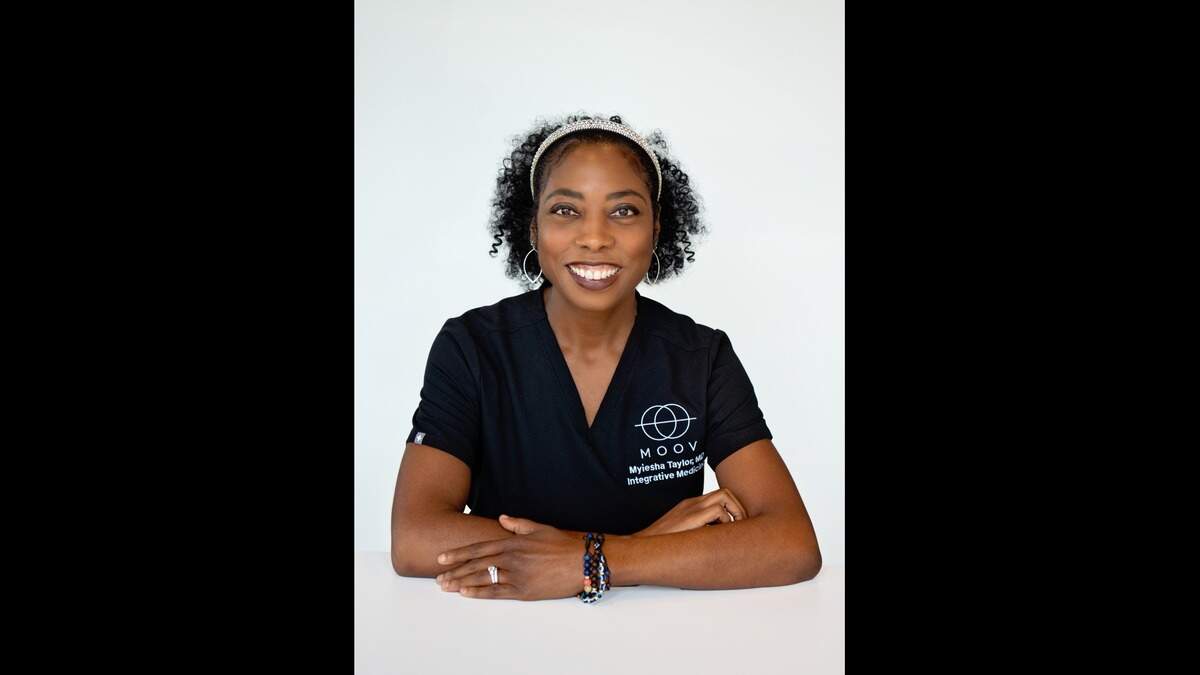
Dr. Myiesha Taylor is a board-certified emergency medicine physician and integrative and functional medicine expert based in North Texas. She has more than 20 years of clinical experience.
This story was originally published December 4, 2025 at 4:47 AM.