Texas school choice fight is about more than dollars. It’s about preserving liberty | Opinion
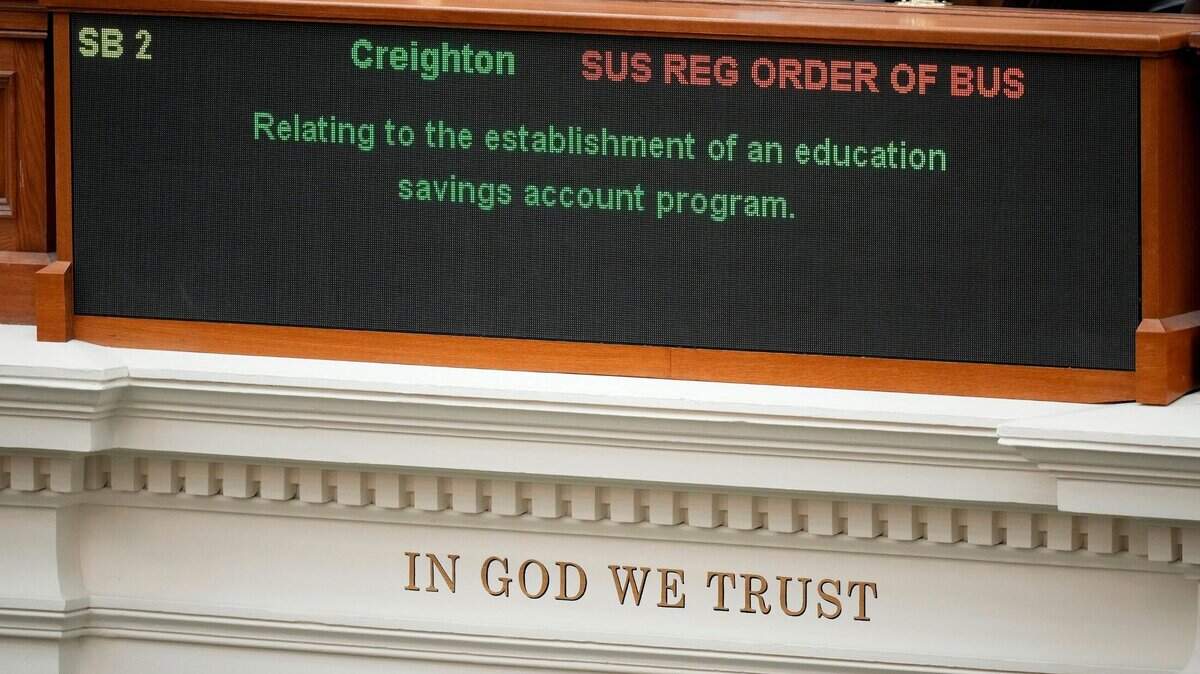
The battle for school choice isn’t just about whether a parent would have the resources to enroll their child in the best school for them or tailor a learning environment using an education savings account, or ESA.
School choice is about the foundational liberty of our nation and the God-given, inalienable right of parents to have absolute primacy to direct the education of their child.
When Texas created a system of free public education, it did so to benefit every child in Texas and for the preservation of our way of life. The Constitution clearly states that the purpose of education is to preserve the liberties and rights of the people.
That’s the starting point in this debate. Not money. Not buildings. Not superintendent pay. Liberty. Texas law states: “The mission of the public education system ... is grounded on the conviction that a general diffusion of knowledge is essential for the welfare of this state and for the preservation of the liberties and rights of citizens.”
What the Texas Constitution doesn’t mandate is that every child must go to public school. The Texas Supreme Court has been clear on this for more than 75 years: The Legislature must create and finance public schools — which has been done — and may offer additional education options at any time.
Under the leadership of Lt. Gov. Dan Patrick, the Texas Senate has passed Senate Bill 2. Under its provisions, Texas would join more than 30 states in creating a school choice program. Ours would be the largest initial education savings account program in the country. SB 2 would immediately eclipse the program in Arizona, which has been on the books for more than a decade. Arizona has 86,000 students enrolled; Texas would enroll about 100,000 in the first year.
Even though this is the fifth time in the last two years that the Texas Senate has passed an ESA bill, it’s the perfect time to reset the school choice debate before the House acts.
The Legislature is upholding its constitutional duty by funding our public school system and doing so generously. In 2023, the Legislature increased funding for public education by $10.8 billion, the largest increase in state history (although about $4.5 billion has not yet been allocated to schools). This year, lawmakers will invest more in public schools, including another increase in teacher pay and an expansion of the Teacher Incentive Allotment, which can propel teachers to six-figure salaries.
I’ll never relent in my support of public education. Nor will I sit by as false accusations are made about funding for our public schools.
We want to empower parents with the choice and support to send their children to the schools that best fit their needs or to help families fund home education. In that regard, I stand with Republican Presidents Ronald Reagan and Donald Trump as strong advocates of school choice. Reagan once said: “Choice in education is the wave of the future because it represents a return to some of our most basic American values.”i
Decades later, Trump made this forceful statement in support of school choice: “Frankly, school choice is the civil rights statement of the year, of the decade, and probably beyond, because all children have to have access to quality education.ii
We should look at school choice this way: While most Texans adore our public schools and all that they bring — extracurricular activities such as sports, theater, band, and technical courses — those schools aren’t the best fit for every student. Sometimes, students need a smaller, more nurturing place. Sometimes, students are threatened by violence. They need a new start.
This is the path we must take: Give parents the tools to get their kids into the best learning environment. By doing so, we will keep our commitment to ensuring that our liberty is preserved, while giving parents the resources to exercise their God-given rights to the best of their ability.