Flamingos, tattoos, Taylor Swift: Embracing the ups and downs of getting cancer at 28 | Opinion
Leave it to me to turn “I Can Do It With a Broken Heart” into my unofficial cancer anthem.
For those of you who don’t know the Taylor Swift earworm, there’s one line in particular that often played on my head in repeat in the final stretch of my cancer treatments: “I was grinning like I’m winning, I was hitting my marks ‘cause I can do it with a broken heart.”
Substitute “broken heart” with “breast cancer” and that was basically me for the past year.
I’m not saying it was the best coping mechanism. I’m not encouraging others going through similar experiences to emulate, because frankly I’m still processing the past year and the longterm effects — physical and emotional — are TBD.
But for me, smiling even as I wanted to cry and staying focused on the path ahead was all I knew to do.
And with that, let’s go back to fall 2023.
I’d just bought a house after years of saving. I was newly engaged and eagerly planning a wedding. It was one of the best years. Then, I found a lump in my left breast, and it took a turn.
I was 28.
At first I thought maybe it was in my head. I had my now-husband check. He felt it too. I had two close friends check. So did they. But Google cooed that most lumps are benign and only about 4% of breast cancer diagnoses in the U.S. are in patients under 40.
I almost didn’t go to the doctor for it, but at the insistence of others, I mentioned it at the very end of a routine doctor’s appointment about something unrelated. An afterthought. The nurse practitioner ordered some tests to be safe.
I wasn’t concerned until about halfway through the tests. I went to a diagnostic imaging office, where cheery technicians took some ultrasounds and assured me that people my age usually don’t need a diagnostic mammogram.
When they came back to let me know they were going to do that mammogram after all, I knew something was up. When they sat me down in a back room to explain that the results were indicative of cancer but more testing was needed, the real worrying began.
I did those tests and within days I was diagnosed with breast cancer — Stage 3, I’d later learn.
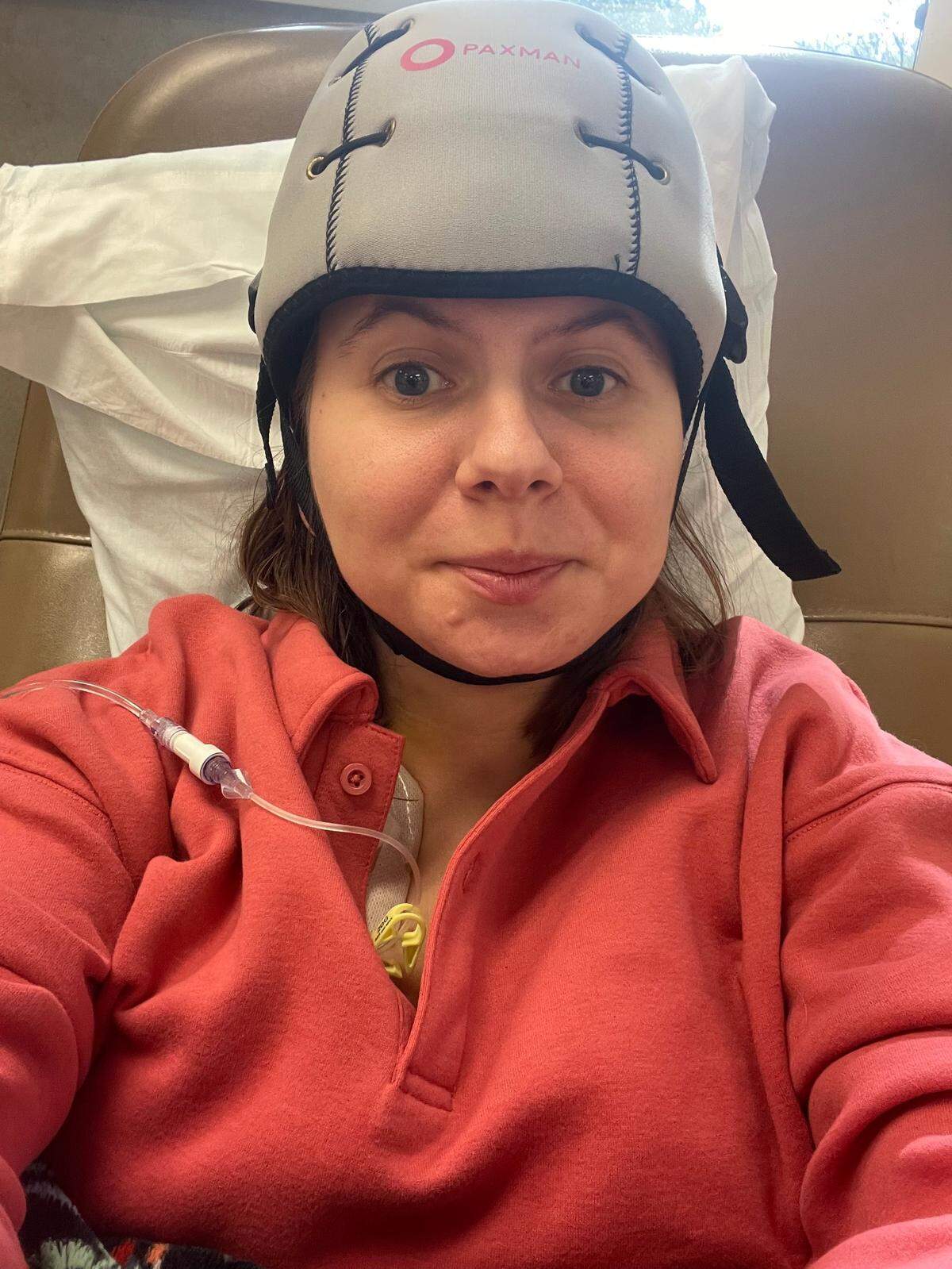
Thus began a yearlong mess of doctors appointments, chemotherapy, surgeries, shots, burns from radiation, pills, tears, pain, nausea, sorry looks, loving looks, kindness from people I know and ones I don’t, small victories, big victories, laughs and love.
Highs and lows to a dramatic degree. I tried so hard to stay laser-focused on the second half of that list. I needed to.
Laughing with my friends in a flamingo wallpapered bathroom as I asked them to see if they too felt a golf ball-sized mass.
The jokes about my so-called “boob job.”
The lighthearted conversation with a stranger, an older man, about our matching first tattoos: small, pen mark sized dots inked on us so the radiation machines line up and zap us just right.
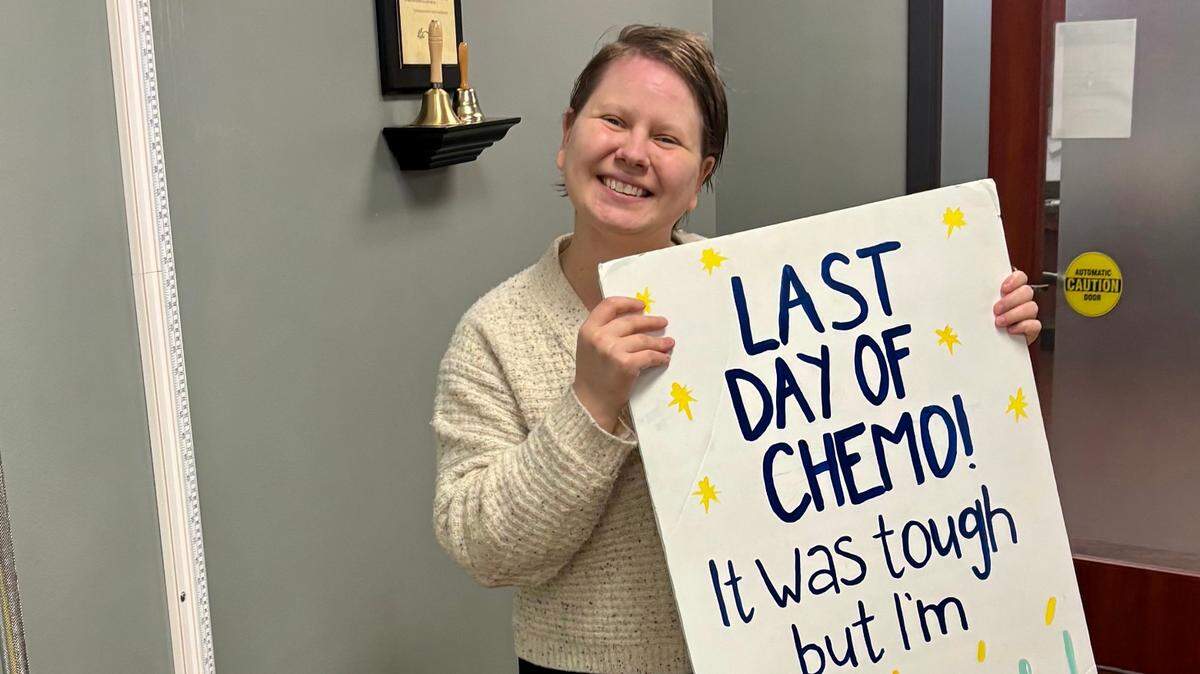
Ringing a bell when I finished a little over four months of chemo, and the confetti my medical team tossed my way when I finished a month of radiation.
I didn’t have the time or energy to reflect on the bad or the future. I was just grinning and pushing through.
Doctors would always ask me if I was still working. “Yes– of course.” I even asked my medical team to lower my Benadryl dose during chemo so that I could stay awake and catch up on emails or write that article that was due. A welcomed distraction.
I told myself that the small courtroom wedding that came earlier than expected — the happy-sad tears as I promised my husband “in sickness and in health” — was romantic. It was, but I didn’t let myself feel sad about my wedding day being different than how I’d imagined it. After all, it seems silly to cry over a party that I can ultimately hold later when there are so many more serious things to worry about, right?
My physical appearance has changed. On top of losing much of my hair and a mastectomy, I gained a lot of weight, a side effect of breast cancer that I did not anticipate. “But who cares about vanity when I’m alive?” I mused.
Perhaps the hardest were warnings that I might not be able to have kids due to the toll of my treatment. “But modern medicine is a marvel. I have options, for which I am lucky,” I told myself. I do have options, and I am lucky and grateful. Still, it’s a hard thing to come to terms with and something I haven’t fully processed.
I was obsessed with not making my illness a burden to others, with convincing them and myself that I was OK, with being productive.
Only now am I starting to really reflect on the reality that, like it or not, things will be different going forward, hopefully for many years to come. Things are slowing down, and as they do I’m starting to let myself feel the dichotomy of the past year. I had to concentrate on the good, but now that the cancer is gone — something I’m scared to say, like I’ll jinx it — I need to mourn the bad.
And so now, onto a new phase: Learning to accept and embrace the downs, not just the ups. And understanding that, as Swift sings, sometimes it’s fine to cry a lot.