Critics of new Texas Bible education aren’t telling you the whole story | Opinion
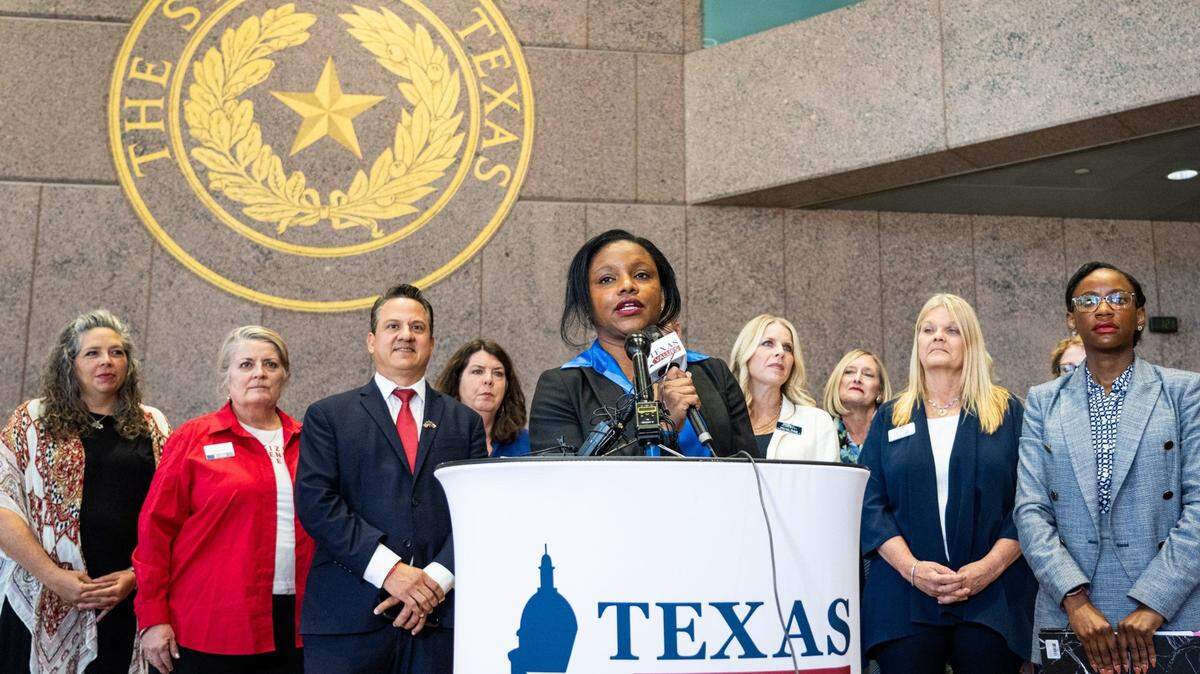
At the end of November, the Texas Board of Education approved what’s known as the Bluebonnet literacy curriculum; the narrow 8-7 vote was preceded by months of predictable outrage, including from teachers and administrators.
By all accounts, Texas seems to be the first state to create its own instructional materials.
The state’s goal is to provide a library of free, high-quality instructional materials that will allow teachers to more efficiently provide differentiated support for students.
The Bluebonnet curriculum will be included in those resources.
In early November, I testified before the Texas Board of Education where I witnessed many educators vehemently asserting that including Bible references in the curriculum was an unconstitutional violation of the “separation of church and state.”
In fact, not only does state law require such content, constitutional precedent supports it.
The Texas Informed American Patriotism Act requires all public-school students to closely study the founding documents of the United States and Texas.
The Bluebonnet Curriculum covers 100 percent of all state standards, known as the Texas Essential Knowledge and Skills.
Texas’ education code also explicitly requires students to receive instruction in “religious literature, including Hebrew Scriptures (Old Testament) and New Testament, and its impact on history and literature.”
In one of the Bluebonnet lessons, students learn of the Good Samaritan from the New Testament.
The story teaches students the importance of looking out for others even when it’s unpopular, and it connects the story to the Good Samaritan laws in many states, including Texas.
A fifth-grade lesson focuses on Dr. Martin Luther King’s “Letter from Birmingham Jail,” in which King mentions the Old Testament book of Daniel and the story of Shadrach’s, Meshach’s, and Abednego’s trial by fire.
King related to their persecution as he, too, was in trouble because he believed God compelled him to act. To understand King and his impact on his country, one must understand the biblical references he makes.
Despite these obvious rich connections, many educators still criticized the curriculum, claiming that it violated the Constitution’s Establishment Clause.
But in recent cases such as Carson v. Makin and Kennedy v. Bremerton School District, the Supreme Court made clear that the Religion Clauses require the government to remain neutral towards religion and cannot subject religious content to disfavored treatment.
This means any public official who is against the curriculum solely because of its religious content is engaging in unconstitutional religious hostility.
Critics also claim that to be neutral, the state must mention every type of religion in its curriculum.
This is not so.
Christianity is wrapped in the fabric of our country in a way that other religions are not.
While not all of America’s founders were Christian, they all were educated in the Bible. They understood the scriptural warnings about giving kings too much power, hence our belief in the separation of powers.
While we could blame the disdain for religion on ignorance, it may have deeper roots.
Recently, Texas Commissioner of Education Mike Morath discussed the Bluebonnet curriculum on Dr. Ben Carson’s podcast. Morath said that one reason Texas created its own instructional materials was to ensure the materials were a good representation of the state’s standards and values. He said that the materials give teachers “the option of excluding the progressive ideology from their classrooms.”
This is the core issue.
Many people don’t want teachers to have the option of excluding progressive content. This curriculum will allow teachers to use materials that provide a robust education rather than those that focus on social issues and provide little academic rigor.
When I testified, a member of the education board told me that teachers have neither time nor inclination to apply the First Amendment in their classrooms. I disagree.
Not only should educators know the Constitution, they should know it well enough to teach it to their students. Anything else is a disservice to America’s public school students.