How can FWISD fix reading crisis when its leaders don’t seem to understand it? | Opinion
“How much time do you want for your ‘progress?’ ”
This is my favorite quote from the brilliant James Baldwin, and I think of it often in my role as an early literacy advocate in Fort Worth. I was reminded of this quote recently as I attended the Fort Worth ISD board’s June 25 meeting, at which Superintendent Angélica Ramsey presented the district’s results on the State of Texas Assessments of Academic Readiness, or STAAR tests.
A student’s ability to read at grade level by the end of third grade is an important predictor of future success in life, and it is at the end of third grade that the public gets its first glimpse of how successfully our schools are teaching our students to read. This year’s STAAR testing revealed that only 30% of FWISD third-graders are meeting the goal. Even more disturbing is that this has been the case in our district for more than a decade, never varying by more than a few percentage points, under the leadership of three different superintendents and several school board trustees.
How is it that our trustees, those whom we elect to oversee the education of tens of thousands of children, find this situation to be acceptable? This meeting provided some clues. From third through eighth grade, STAAR reading scores for FWISD students are significantly lower than the state average, a 13 percentage-point gap in third grade that grows to a 32-point gap by eighth grade.
This striking difference in performance was never mentioned during the meeting. Instead, Dr. Ramsey presented a comparison of changes in scores from 2023 to 2024, highlighting when the FWISD “outperformed” the state. For example, according to Dr Ramsey, the district outperformed the state when the percent of FWISD third-graders meeting grade level in reading remained the same (30%-30%), but the state average went 49% to 46%. She touted a statistically insignificant change and implied it was meaningful.
When 70% of third-graders are not able to read at grade level, should we even be mentioning a 3 percentage-point change between the district’s results and the state’s?
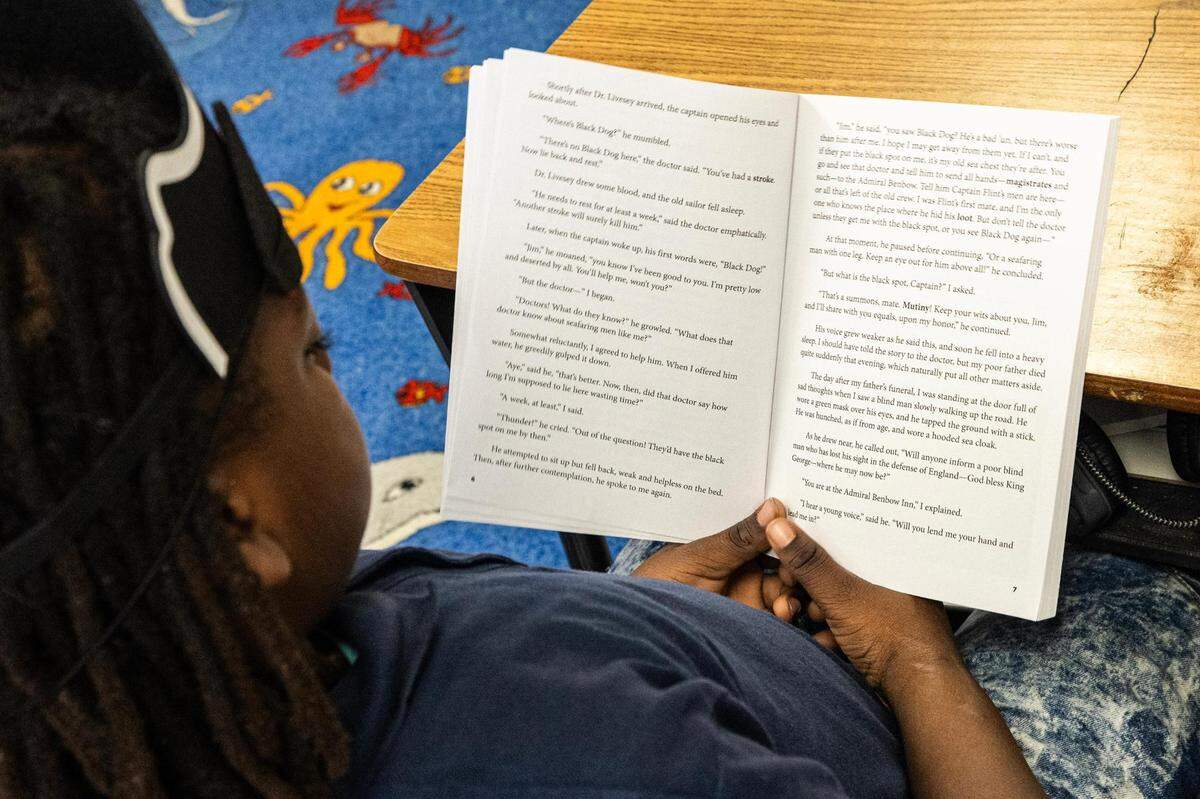
That 70% statistic means that nearly 3,000 students will go to fourth-grade this year unprepared to do grade-level work. This happens year after year after year. Was this discussed? No.
Another clue regarding our trustees’ tolerance of our appalling reading outcomes was revealed in the question-and-answer session. Anael Luebanos, an eight-year veteran of the board, asked Dr. Ramsey how to determine the share of students in the STAAR “did not meet” category, since those specific numbers were not presented. The question and response made clear that neither our superintendent nor an experienced trustee knew how to interpret the most important assessment of the performance of our schools and our district.
If we don’t understand our data, we cannot react to it appropriately.
Finally, there is an apparent willingness to blame the students and their families. “We know that when they get to us our students are already behind,” Ramsey said, despite having just presented data showing that our kindergarten students are at exactly the national average on a standardized test.
When discussing our low STAAR scores, she said to keep “in mind that this isn’t similar districts to us, right, this is all districts from across the state,” implying that we should only be compared with other large urban districts. Why would we think it is unfair for the FWISD to be compared to all districts? Should we have lower expectations for our students? If so, based on which factors?
There are solutions to the challenge of teaching every student to read. The first step must be to have a frank, clear-eyed acceptance of our history and where we stand currently. Trustees should insist on reports that are straightforward and meaningful, without sugar-coating or obfuscation.
Accountability testing is meaningless if no one is held to account. Nothing in education is more important than teaching our children how to read. We must do better.
“How much time do you want for your ‘progress’?” Our students are waiting.