Impeachment may seem harsh, but here’s how policing corruption reinforces rule of law | Opinion
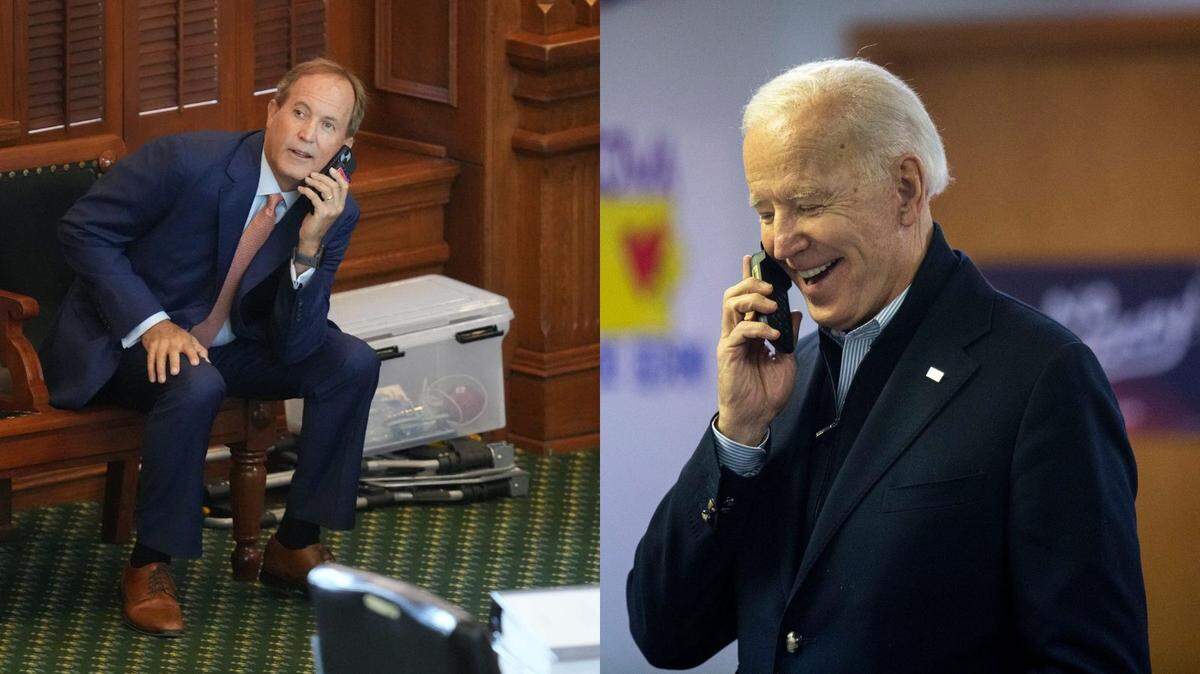
Some GOP leaders are claiming the impeachment proceedings against Attorney General Ken Paxton were a waste of money. Likewise, the White House maintained in July that the congressional investigations into whether President Joe Biden had any connection to son Hunter Biden’s dubious business dealings were a waste of time.
But regardless of whose ox is being gored, ferreting out public corruption is hardly a waste of resources given the close link between ethical government and our safety and prosperity.
Probing corruption is not just about the fate of one politician or even the moral imperative of seeking justice; it has practical implications for the foundations of our republic. Upholding the principle that the rule of law must be applied by government universally without fear nor favor to any individual or group is one of the bulwarks, along with recognition and protection of property rights, that have undergirded the relative peacefulness and prosperity in Western societies. Though white collar crime is often portrayed as being discrete from street crime, countries with high levels of political corruption tend to be among the most dangerous.
Fortunately, research suggests that public corruption is particularly susceptible to being deterred through imposing consequences and the stakes couldn’t be higher. Its connection to a society’s economic and public safety outcomes is most strikingly appreciated through an international lens.
In a 2022 ranking of nations based on perceived corruption, the top-ranked countries are Denmark, Finland, New Zealand, Norway, Singapore, Sweden and Switzerland. Conversely, the bottom-ranked nations are Haiti, North Korea, Libya, Yemen, Venezuela, South Sudan, Syria and Somalia. It’s no secret that these countries are beset by strife and, in many cases, civil war. All but one are listed among the 20 most dangerous countries in the world. The U.S. is rated as the 24th least corrupt nation, just below Austria and above Taiwan.
More than any other factor, such as geography and natural resources, it is the strength of a society’s institutions in upholding the universal rule of law that has the greatest effect on economic development.
The connection between property rights and political corruption is notable. Why would a person or business invest in improving their own property if it can be taken away by someone else who instead invested in compromising a government official?
While corruption corrodes the rule of law, societies with high levels of trust tend to have less political corruption and street crime. From 1972 to 2020, data indicate, trust in our political institutions has dramatically declined, and it has dropped in police as well, albeit more modestly.
Why is trust related to combating street crime? The reluctance of victims and witnesses to cooperate with police is a top obstacle to solving more shootings. Interviews with victims of shootings found that half withheld useful information from police because of distrust.
Police investigating street crime depend on informants in the same way public corruption investigations depend on whistleblowers such as those in the Paxton case, who similarly take risks by coming forward against the powerful and politically connected. Fortunately, strategies for building earned trust in police through positive community engagement and partnerships can lead to more victims and witnesses reporting crimes and sharing tips.
Left unchecked, public corruption not only tears at the bonds of trust between citizens and their government, but it may also metastasize into broader lawbreaking by convincing average citizens that they are suckers for playing by the rules when the most powerful are not doing so.
Politicians come and go, but the rule of law can erode through a death by a thousand cuts, leading to a less safe and prosperous nation. President Dwight Eisenhower said, “The clearest way to show what the rule of law means to us in everyday life is to recall what has happened when there is no rule of law.”
There’s nothing more conservative than exercising vigilance in protecting rule of law as a shared inheritance, not a perpetual guarantee.