
New drugs show great promise for treating dementia. But can we afford them? | Opinion
Dementia is devastating. It robs us of things so dear to us — relationships, cognition and our quality of life. It levies a heavy tax on family members who endure a long goodbye to a loved one requiring several layers of assistance.
Six million Americans suffer from dementia, and the costs associated with moderate to advanced disease average about $50,000 a year per patient. A recent Food and Drug Administration report declared: “The need for treatment is urgent.”
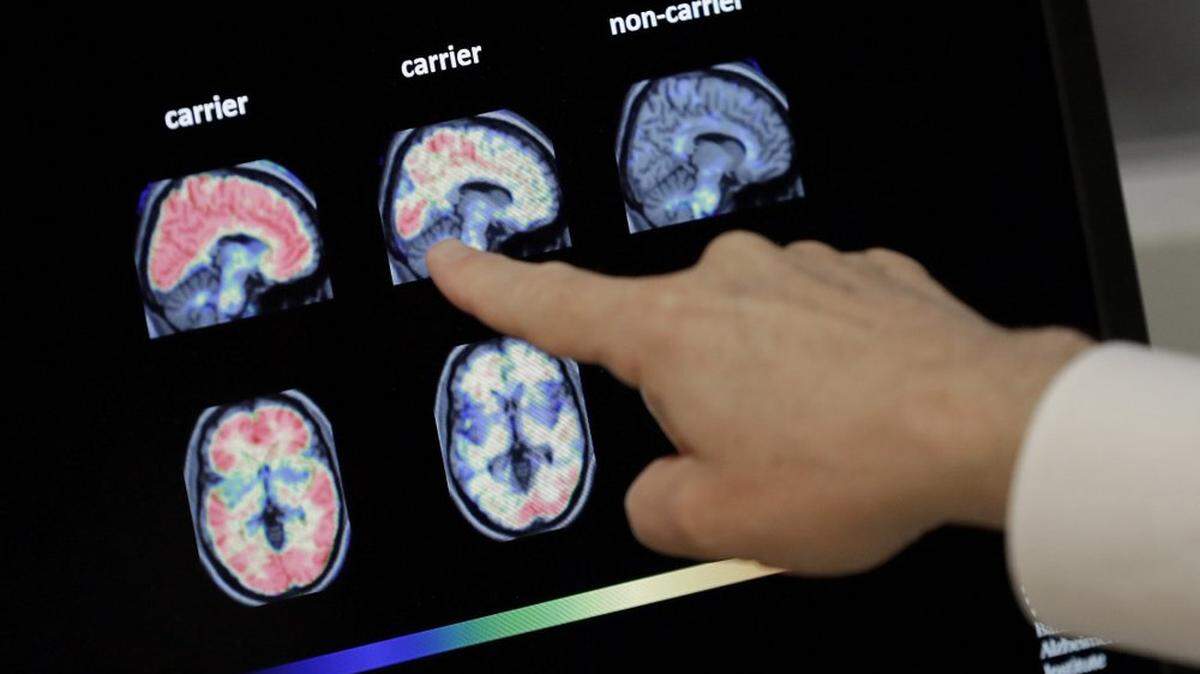
A few drug makers recently received FDA approval to sell a new type of anti-dementia medication. It targets a protein that builds up in the brains of dementia patients, and the treatments are showing some promise.
That could be good news.
In a couple of studies, these meds decreased disease progression as much as 27%. That means a longer and better quality of life.
But there were some downsides.
In one study there was no significant improvement, and in all studies about 20% of patients suffered from brain swelling. It was mostly asymptomatic, but potentially serious nonetheless.
The drugs come in a liquid form that must be infused through an IV. Medicare will require physicians and patients to be part of a special registry, making the treatment just a little more difficult to obtain.
One of the drugs, Aduhelm, will cost $26,000 a year. If just one-third of Americans with dementia take it, the annual tab for taxpayers and Medicare beneficiaries could exceed $52 billion.
In perspective, the total Medicare budget in 2021 was $689 billion. So, one drug — treating one disease out of hundreds patients suffer — would increase spending by nearly 8%.
And the numbers would increase as the Baby Boom bubble continues to age. The youngest Boomers will reach age 65 in 2030.
Remember, federal general revenues — not payroll taxes — fund the Medicare drug benefit. To keep up, our government will have to either borrow more money, increase taxes or cut spending elsewhere.
Consider this one pricey prescription as a micro-example of our federal spending problem. Though government by the people is the best way to organize ourselves, it hasn’t been able to check federal spending.
Why is that? The answer is that we are all in favor of cutting government spending until it affects us personally.
Billions of federal dollars flow into Fort Worth each year through Lockheed-Martin federal contracts. Anyone within earshot want to cut back on F-35 production? Of course not.
The same principle applies to electric vehicle subsidies in Detroit and government support for ethanol in Iowa. Physicians and hospitals push for higher Medicare payments, while Medicare beneficiaries lobby for lower co-payments. There are many examples.
We humans love getting more and paying less. And once we step on the government gravy train, we don’t react well when someone tells us to get off.
Eventually, the cost of financing the federal debt will force us into difficult spending cuts. I pity the elected officials who will carry that responsibility. In the meantime, our human tendency toward self-protection — and the democratic system that forms our government structure — makes meaningful federal spending cuts nearly impossible, politically speaking.
Back to those bougie dementia meds. Like looking ahead at a slippery, curvy road, we should proceed with caution.
They could represent a major breakthrough … or they might be duds. Plus, we don’t understand the extent of their side effects well enough.
Medicare should approve these treatments for ongoing study purposes only, thus curbing the cost and potential side effects. It can expand coverage once more data is available. That is a reasonable trade-off.
We desperately need dementia treatment; anyone taking care of a stricken family member can tell you that. But like all the government cheese that has created our $32 trillion debt, if we buy it all now, we must acknowledge that for decades our children and grandchildren will pay for it — plus interest.

This story was originally published June 29, 2023 at 5:28 AM.