
Partisanship, not school choice, is the biggest threat to Texas education system | Opinion
Texas student achievement is at its lowest in 20 years. Traditional public-school enrollment continues to decline, and a looming fiscal cliff threatens to wreak havoc on districts across the state as federal COVID relief payments are set to expire.
While Dallas-Fort Worth area teachers have led a heroic effort to close achievement gaps that the pandemic amplified, our education system was in trouble long before 2020. Instead of debating solutions, leading advocates on both sides of the aisle have chosen to wage war with divisive political narratives often missing three critical elements — truth, nuance, and a path forward. It’s more important than ever that we learn to recognize partisan hyperbole and separate fact from fiction, if we hope to improve our schools.
As the mother of two young boys with a decade-long career in education spanning K-12 programming, college administration and philanthropy, I have grown increasingly concerned that the complex reality of our education system is being reduced to polarizing clickbait. I see less of myself holistically represented by our two major political parties by the day. But nothing has been more upsetting than watching my life’s work — helping students access a quality education — described instead as a decades-in-the-making ploy to cripple and privatize our education system.
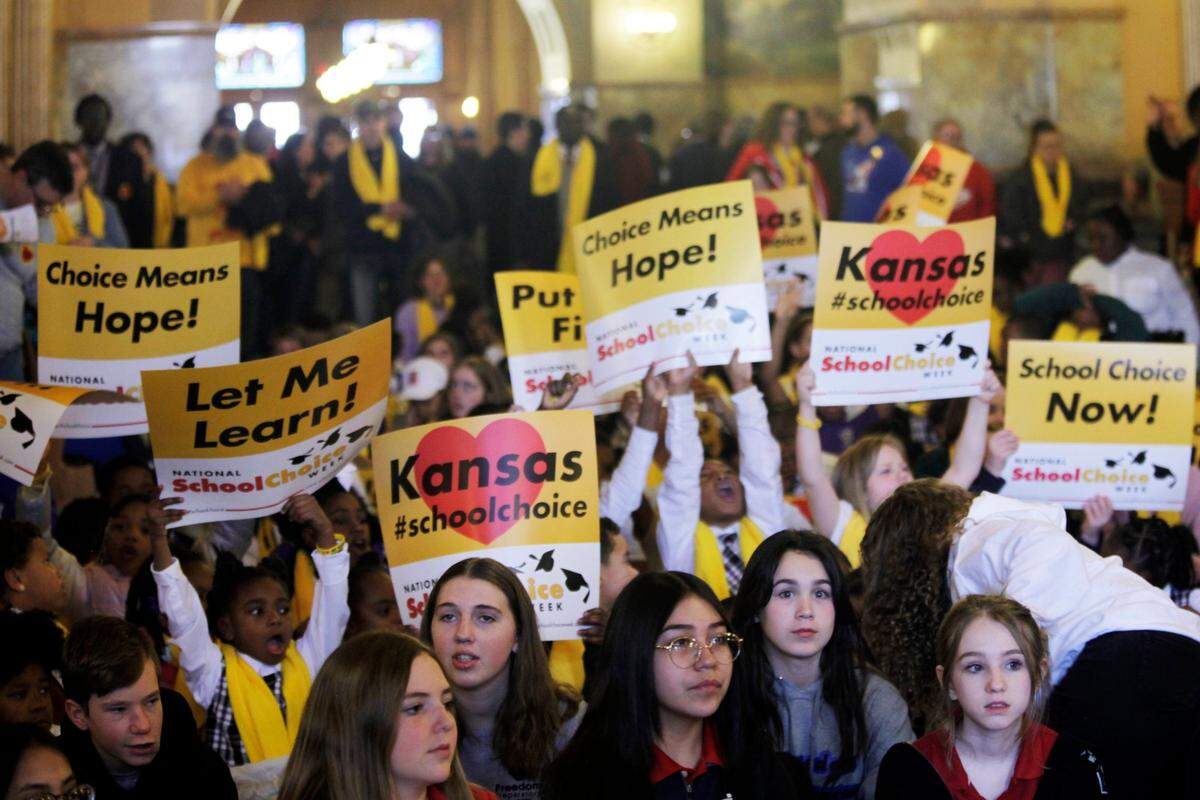
This narrative has led to irredeemable categorization as a friend or foe to traditional public schools. That discourages the vulnerable and nuanced problem solving required to move forward.
No single school or education model is unilaterally supporting or failing all students. To address the unique challenges facing 21st century families and schools, we need a complex set of tools — one of which is school choice.
While often labeled a far-right agenda item, local and national polls tell us that Democrats, Republicans, and independents alike support the idea of programs that allow parents to use state money to send their children to schools of their choice. In a recent Education Next Survey of Public Opinion, Black Democrats approved of targeted vouchers, universal vouchers, and charters at 70%, 64% and 55% respectively. Similarly, support from Hispanic Democrats for these policies registered at 67%, 60% and 47%.
Support for these options fell below 50% for one key group, white Democrats. This division of approval along racial lines provides critical nuance to this issue. It also reflects my own experience trying to bridge the divide between well-intentioned white suburban parents and the countless minority families I’ve worked with living in neighborhoods zoned to poorly performing public schools without representation in the broader school choice debate.
Even among supporters of school choice, there is concern about the impact choice programs could have on public school funding. We must recognize, though, that money alone will not solve every problem facing American K-12 education. Texas ranks in the lower half of the nation’s student spending with an average per pupil expenditure of just over $10,000. New York regularly ranks first, spending closer to $25,000. Both systems are considered underfunded but yield similar results at the aggregate level.
Intentional funding, deployed by excellent leaders with the support of teachers and families, can improve results. But this magical combination is nearly impossible to scale with fidelity across the 1,000 school districts in Texas, and robust improvement will not happen overnight.
The goal of school choice isn’t to destroy our public school system; it’s to provide equitable alternatives to students who, for myriad reasons, need a different school option while we continue to improve upon and reimagine the way we educate K-12 students.
As we debate the merits or malice of school choice policies under consideration in the Legislature — including open enrollment, charter school expansion and education savings accounts — advocates and parents especially must humbly recognize why we chose our own school districts and by proxy, our neighborhoods. “Chose” being the key word.
Our state cannot afford to provide a quality education to only those families with the wealth and agency to relocate. Even in rural Texas, where options appear limited, student-directed dollars could mean access to remote advanced courses or supplemental support for a homeschooled student with disabilities.
Policies and programs that give students the greatest flexibility to meet their individual needs should be prioritized; appropriate traditional school funding should follow. Providing access to the right educational experience is more than a partisan talking point. It’s a prerequisite for a healthy democracy.
This story was originally published February 3, 2023 at 6:08 AM.