Mark Davis: Conservatives can live with Senate gun deal — except for this one awful provision
The list of 10 Republican senators willing to sign on to the recently announced gun policy framework means any measure that actually reaches the Senate floor may be filibuster-proof.
But if it moves toward passage, how will the Republican base react? If the measures described in the compromise come to fruition, will GOP voters reward or resent senators who crafted it and voted for it?
None of the 10 have to worry about this in 2022. Four will never worry about such things again, since they are retiring. Of the remaining six, John Cornyn of Texas and four others will not face voters until 2026. That leaves Mitt Romney of Utah, who does not lie awake nights worrying about what the Republican base thinks of him.
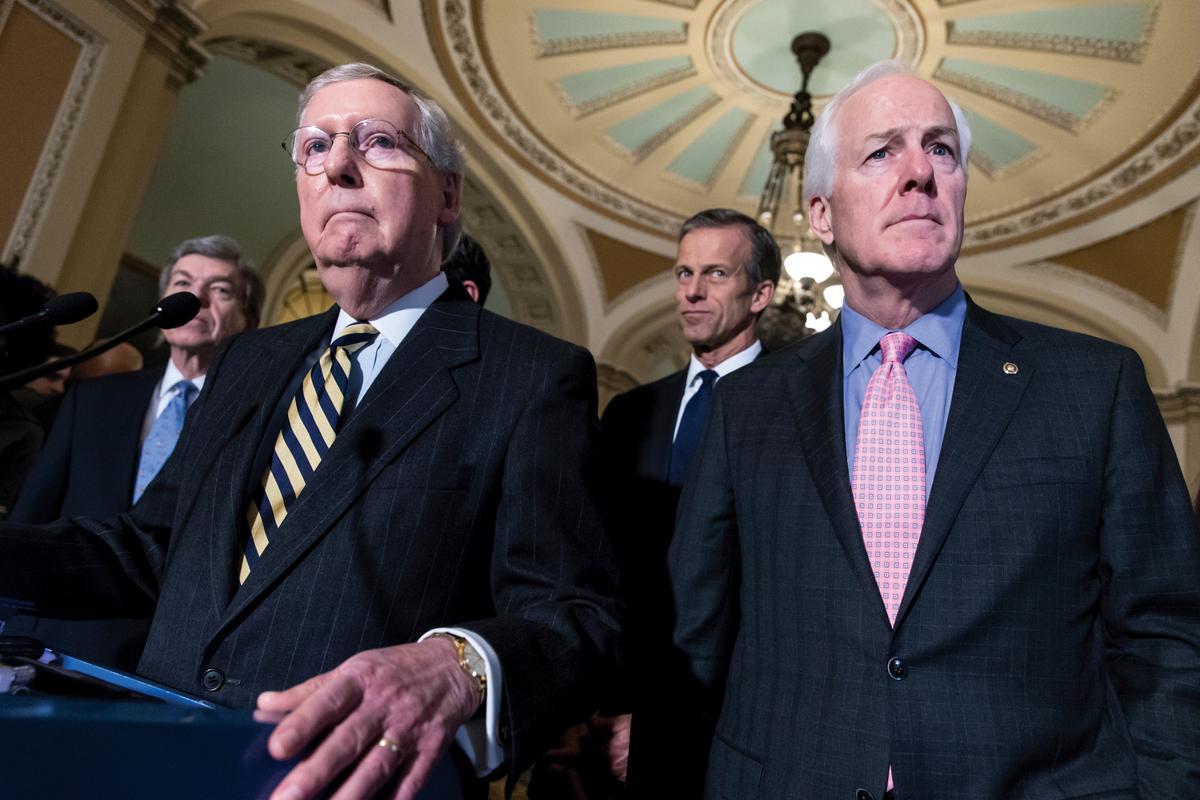
These Republicans are thus free to help hammer out this controversial measure without fear or short-term retribution. This elbow room creates what some might call courage, while others will call it disregard for conservative concerns.
Those concerns are mixed in with likely approval of some proposals that may win favor among Republicans and Democrats alike. Who is against additional mental-health funding or closing a loophole to protect women from abusive boyfriends? Some on the activist left have opposed heightened school security because of its reliance on armaments they seek to demonize, but mainstream Democrats will not object.
This leaves the two ideas in the package that raise Second Amendment hackles: red-flag laws and additional scrutiny for would-be gun buyers between the ages of 18 and 21.
The age shift for younger buyers can be made more acceptable if there is a firm limit on the time for greater background checks. A preponderance of mass shooters is in this demographic, and there is a loose logic to putting them under a stronger lens, even to the extent of examining juvenile records to see if alarming offenses lurk in the recent past.
But there is a more concrete countervailing factor. If adulthood kicks in at 18, there is an inherent problem with denying a basic right to adults. Many believe that liberty delayed is liberty denied, but there may be wiggle room if a reliable process is assembled to evaluate 18–to-20-year-olds in a timely fashion.
For every young adult who is a potential danger, there are countless others who have been raised responsibly around guns, who are leaving home to embark on the road to adulthood and who should not be impaired in their wish to protect themselves.
Even if the added perusal of young buyers can be made palatable to conservatives, there is one deal-breaker in the Senate compromise that cannot be repaired. Red-flag laws are an abrogation of due process, a guilty-until-proven-innocent assault on liberty that cannot be massaged by promises of fine-tuning.
Like many horrible ideas, it sounds plausible for about 10 seconds. Who can oppose the idea of identifying ahead of time those disturbed individuals who may be plotting the next Uvalde, Buffalo or Sutherland Springs?
But the logic is flawed on its face. 20/20 hindsight may give us a punch list of characteristics common to mass shooters, but this in no way means that everyone — or in fact anyone — displaying all or some of those traits is about to snap a twig and take lives.
Imagine the disarmaments that will spread among people fingered by vindictive ex-spouses, bitter family members, estranged friends or neighbors who just don’t like the way Uncle Fred voted? And if we are supposed to rely on local judges to prevent such baseless imputations, pardon me if I find some corridors of the judiciary unfit to protect citizen rights with consistent reliability in an age where emotion can outweigh the rule of law.
The cry to “do something” irrespective of the rule of law ensnares more than the usual suspects of Democrats and vacillating Republicans. Donald Trump himself tested the waters of red-flag law advocacy in 2019 and was promptly warned against it by Second Amendment advocates.
A fuller skirmish did not ensue because there was no specific road under construction for a federal encouragement of such laws among the states. Today, there is, which means every element of the potential compromise will be dissected by all sides.
So as senators hammer out a document fit for a floor vote, the first assessment of the landscape finds great promise for the portions focusing on mental health, school security and possibly the added attention to the youngest buyers.
But there will be no lipstick that Republican senators can apply to the red flag pig. The vast majority of GOP voters see the clear constitutional infringements that lie ahead. Senators cleaving to them must evaluate how many voters they are willing to alienate — and how long those voters’ memories will be.