
How my friend embraced life beyond cancer treatment — and helped me do the same
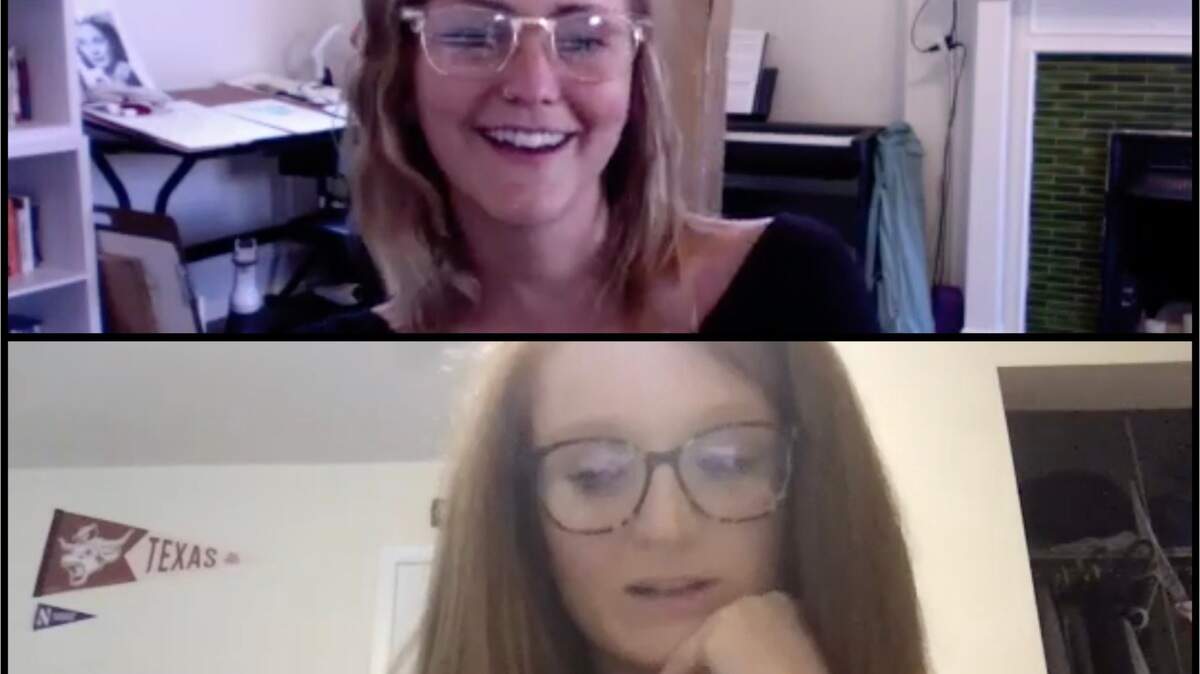
Wheelchairs felt stupid, and Carley Rutledge agreed.
Why did a nurse have to wheel me a few doors down the hall, when I was perfectly capable of walking the distance myself? That’s even with a fresh bag of chemotherapy hanging on my IV pole.
But there I was, in 2010, rolling up to Carley’s room as the new cancer patient on the floor of Cook Children’s Medical Center. She was lying in bed with a blonde wig on, in a room that looked like it had been lived in for awhile.
We broke the ice by comparing notes on mutual friends. I had gone to Fort Worth Academy before moving to Aledo High School, while she went to Trinity Valley School her whole life.
Turns out, she dated my third-grade crush.
When we got to the cancer part, I was surprised by how minuscule she made the disease. It’s this thing she occasionally had to deal with, like homework or chores. She told me where to get my wigs, how to order food from the cafeteria where the doctors eat, watch TV and, most importantly, to have fun outside the hospital. She had gone to her school dance recently and stayed out way past curfew.
I still had my hair, but Carley said that when she got diagnosed, she shaved hers right away into a mohawk and dyed it purple because, why not?
Carley found out about her cancer because she had a nagging hip pain that she thought was a soccer injury. It got so bad that she couldn’t walk up and down the stairs in her house, then an MRI revealed cancer.
It’s funny how cancer patients talk.
“How did you get here?” “How long are you in for?”
Like we were prisoners.
Carley never cared what her prognosis was or if what she did outside the hospital walls was high-risk. If she was going to die, she was going to die doing whatever she wanted, and no one could tell her otherwise.
Her mom started the Rutledge Cancer Foundation to give back to young adults in the community going through cancer, and over the years, I’d go to its kickball tournament. Carley never liked being the center of its attention, even when she had to be.
But whether she liked it or not, she was Fort Worth’s miracle. Doctors told her she had a 6% chance of survival, and not only did she survive, she taught us all how to live.
That’s why when I tell people from Fort Worth that I’m a cancer survivor, they often respond with, “Do you know Carley Rutledge?”
The irony of our friendship was that the thing that brought us together also made us keep our distance from each other, merely as Facebook friends. It wasn’t personal, just a reminder that we’d moved on from cancer.
We both saw how cancer survivors lost their identities in the disease, dedicating their lives to charity or medicine as a result. We preferred to move on, not letting uncontrolled cell division dictate who we became as human beings.
Throughout the years, we cheered each other on from a distance.
When the COVID-19 pandemic hit in 2020, we finally talked on a Zoom call to reflect on the past 10 years of our survival.
It felt like meeting someone who understood me better than everyone else.
We discovered how we both made spontaneous, often life-changing decisions with strong conviction.
For her, that was getting her master’s in creative media, moving to New York City for a film project for four months, then moving back to Colorado to be the digital media and content specialist at Denver Charter Schools, using her skills in documentary film and animation. For me, that was chasing small-town newspaper jobs across the country and getting my master’s degree in journalism at Northwestern to become a college or NFL football writer.
“I’m still to this day confused by people who want something and don’t go get it,” she said.
We also both considered our own cancer journeys the least interesting part about us.
“People tell me, ‘You’re so strong.’ No, the doctors told me to take this medicine or I’ll die, and so I did and I watched TV. I always tell them, ‘You, too, could’ve done it,’ ” she said.
I think fate brought us together for clarity just in time, because a few months later, Carley’s cancer returned after 10 years. She died on Nov. 24, 2021.
This year, I made a job switch from covering Iowa Hawkeyes football to LSU football midseason at a larger newspaper. People told me I was crazy to make the move when I did.
That made me think about what Carley told me.
“When you’re threatened with a lack of time, you tend to spend it differently.”
I thought about that again when I found out she died. I was driving to a football game.
Why was my last conversation with her about dating apps and drug tests? How could I get so caught up in life that I forgot to ask about her health these past two months?
Then I knew.
That’s exactly how she wanted me to remember her.