
God doesn’t demand we ignore coronavirus medical advice. Stay home for Easter, Passover.
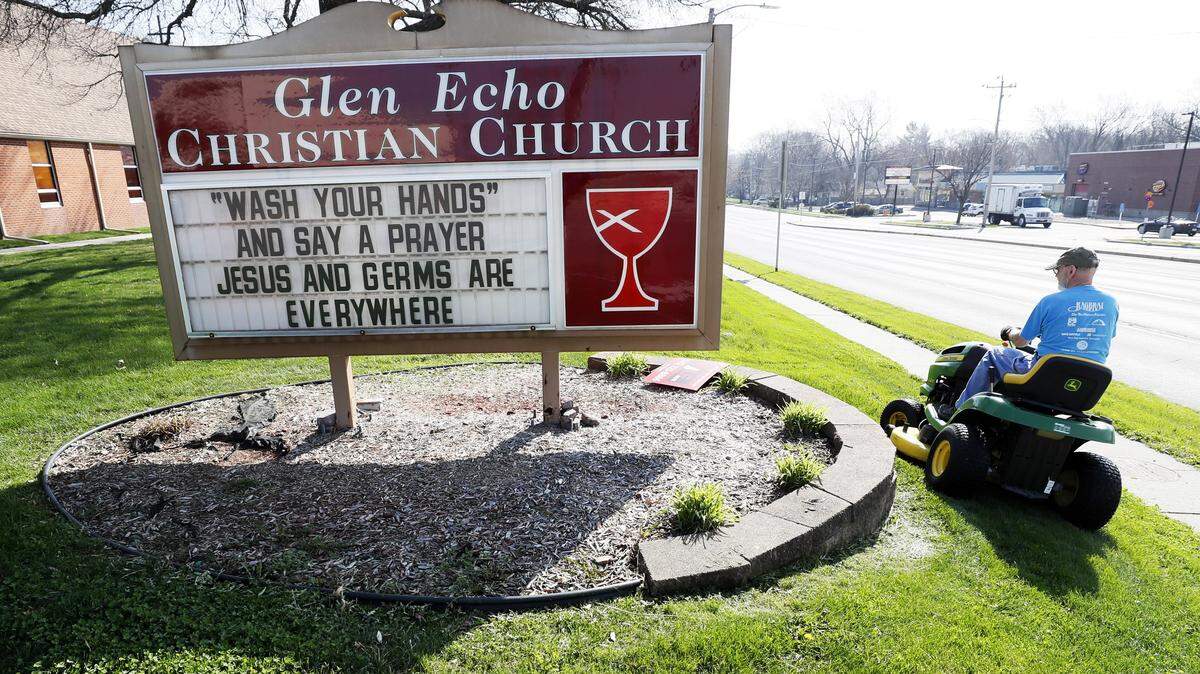
Some of the holiest times of Judaism and Christianity are upon us. And the news brought word of overflow attendance at Palm Sunday services in a couple of churches in Louisiana and Kentucky.
Messages from state and federal government are mixed. But we join our voices to say large worship gatherings are both unwise and theologically suspect.
We would love to say to our congregations that the threat is over and we can come together for Easter and Passover as usual. But we cannot in good conscience do so.
It is simply irresponsible to think that God desires that we ignore the very best medical advice God has sent us about how to fight this virus. Other cities have already had to track down everyone who worshiped in some churches after finding they may have come in contact with members who have later tested positive for COVID-19.
Online-only worship is a critical important part of social distancing, which has proven to be effective in slowing the spread of the disease. The latest news that 25% to 50% of infected people show little or no symptoms while being contagious only adds to the urgency of social distancing.
We advise against paying heed to any declaration that flies in the face of that news, whether from government or from a clergy member. The health of our members and everyone they come in contact with is at stake, as is the toll on health care workers and their families.
In-person worship at this time is simply arrogant. In response to similar displays of piety while the larger population suffered, the prophet Isaiah wrote of God’s hatred. He said that God is “weary of bearing” such assemblies. Even more, he said that such worship leaves blood on the hands of those who lead it and makes God deaf to their attempts at praise. (Isa. 1)
Anyone retelling the story of the exodus from Egypt will not fail to note that plagues happen in our time as well, and we need to respond more thoughtfully than Pharaoh.
Anyone retelling the story of the passion of Jesus will not fail to connect his dark hours in Gethsemane and ours, his pain and loneliness on Calvary and ours, the darkness of his tomb and the same of our seclusion, unemployment and worry about friends and relatives. Christians’ work this Holy Week is to make those connections.
Anyone retelling the story of resurrection will not fail to note that Easter commences in the darkness before dawn, that it continues in confusion and uncertainty, with erratic response from disciples that only hesitantly evolves into a wobbly sort of confidence. What better year than this one to experience that same progression of emotions.
Passover, Holy Week and Easter may even be enhanced by the very distancing and self-imposed journeys of quieter, lonelier faith now required. We opt for, in the words of Martin Luther during the bubonic plague, “such a God-fearing faith because it is neither brash nor foolhardy and does not tempt God.”
We are discovering that we can worship in many ways besides being in large groups together. We are learning new, creative ways to praise God. So, we will not endanger lives just for the sake of nice traditions.
Even the most holy observances and celebrations of April will be made hollow and unholy by a resulting rise in illness in May, the overwhelming of the health care system in June, and more deaths in July. Such hallelujahs may, then, just be judged sinful.
This story was originally published April 9, 2020 at 7:04 AM.