
Our endorsement for TX Senate district that stretches across Parker, Collin counties | Opinion
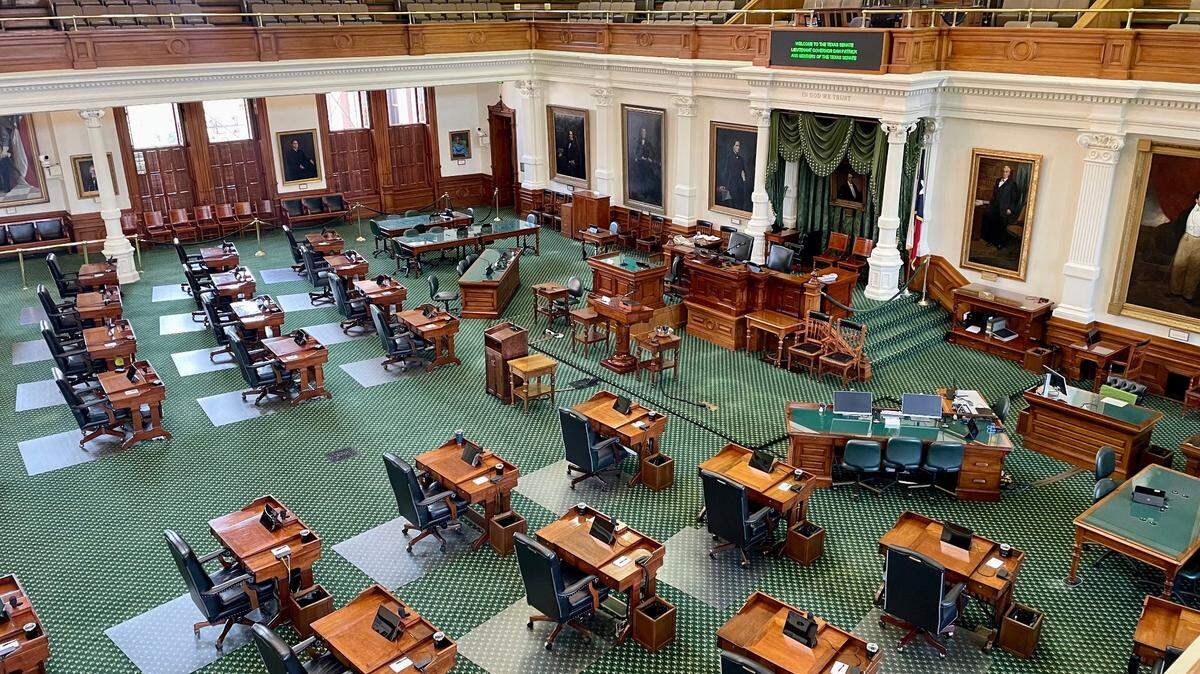
Voters in Senate District 30, which sprawls north and west of Dallas-Fort Worth, have a chance to elect a senator who could instantly rise in influence in the chamber.
Republican Brent Hagenbuch enjoys the backing of Gov. Greg Abbott, Lt. Gov. Dan Patrick, U.S. Sen. John Cornyn and — as he reminded us in an interview — former President Donald Trump. They helped him prevail in a hotly contested primary and runoff.
District 30 could benefit from that kind of clout. It has an unusual mix of communities, from Frisco to Graham, and that brings a panoply of challenges. In the suburban areas, fast growth demands state attention to keep up. In rural areas, the encroachment of that growth itself is sometimes the issue.
Hagenbuch displays a good grasp of the array of needs. He discussed the full range of infrastructure, including roads, utilities and water. The last in particular is a constant long-term concern for Texas, and it demands long-term thinking that sometimes escapes our instant-gratification politics.
On education, Hagenbuch, 64, unsurprisingly favors a private-school voucher program. But he also said that public schools need significant new funding, much of it to increase pay for teachers. He also identified mental health as a priority, noting that smaller communities in the district struggle for resources in that vital area.
Hagenbuch lives in Denton, and while opponents contested whether he met residency requirements to hold the office, those appear to be resolved. He owns a delivery business that serves grocery chains, so he’ll bring knowledge of transportation, supply chain and energy-cost issues to the job.
The Democratic nominee, Dale Frey, is a 39-year-old web developer who lives in The Colony. He’s been active in party politics and, as an employee of a federal contractor, is knowledgeable of government issues. But Frey, who didn’t attend our candidate interview, wouldn’t be able to match Hagenbuch’s connections.
The winner will replace Republican Sen. Drew Springer, who is retiring. Early voting begins Oct. 21. It ends Nov. 1. Election Day is Nov. 5. State senators are elected to four-year terms.

BEHIND THE STORY
MOREHey, who is behind these endorsements?
Members of the Editorial Board, which serves as the Fort Worth Star-Telegram’s institutional voice, decide candidates and positions to recommend to voters. The members of the board are: Cynthia M. Allen, columnist; Steve Coffman, editor and president; Bradford William Davis, columnist and editorial writer; Bud Kennedy, columnist; and Ryan J. Rusak, opinion editor.
Read more by clicking the arrow in the upper right.
How does the process work?
The Editorial Board interviews candidates, asking about positions on issues, experience and qualifications, and how they would approach holding the office for which they are running. Board members do additional research on candidates’ backgrounds and the issues at hand. After that, members discuss the candidates and generally aim to arrive at a consensus, though not necessarily unanimity. All members contribute observations and ideas, so the resulting editorials represent the board’s view, not a particular writer.
How do partisanship and ideology factor in?
We’re not tied to one party or the other, and our positions on issues range across the ideological spectrum. We tend to prefer candidates who align with our previously stated positions, but qualifications, temperament and experience are important, too.
This story was originally published October 19, 2024 at 5:24 AM.