
Star-Telegram endorsement: Democrats’ best option to face Ted Cruz for Senate | Opinion
Texas Democrats have nine options on their primary ballot to take on U.S. Sen. Ted Cruz. That’s a lot, but for some voters, the choice may come down to pragmatism vs. progressivism.
Voters who are angry about guns, abortion, and the treatment of immigrants may see a like minded ally in the passion expressed by state Sen. Roland Gutierrez. His crusade for new gun laws after the Uvalde school shooting in his district launched him to prominence.
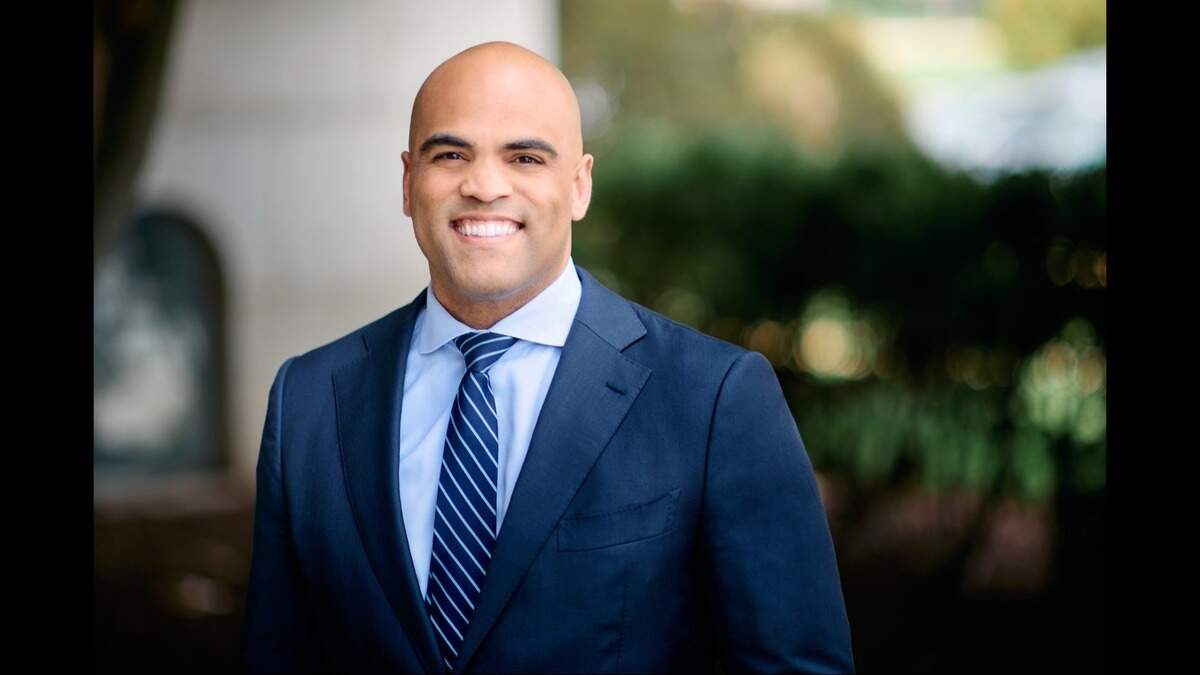
But for most voters, the priority is probably just beating Cruz, and a candidate with a more welcoming approach to moderate and conservative voters could be a more effective candidate. That’s U.S. Rep. Colin Allred of Dallas, whose mild manner and bipartisan approach make him the best choice to possibly win the race and the most likely to be an accomplished senator.
Unlike Democrats in bluer states, Allred, 40, definitely knows his constituency and has a history of pushing bipartisan legislation in Congress. He defeated a longtime Republican incumbent to win his Dallas County seat in 2018. Allred’s mild manner might be seen as a sign of growth and maturity, given Cruz’s occasional outbursts.
By the end of 2023, Allred had outraised Cruz in campaign funds, too. His genuine desire not to “play politics” and find common ground may sway independent voters and moderates on both sides of the political aisle.
Allred told us he supported the recent border security compromise effort that failed in the Senate, though he noted that there wasn’t enough in the bill to accomplish any meaningful comprehensive immigration reform. As we’ve said, the deal was far from perfect, but incremental progress is better than none in an issue of national crisis.
Allred can come across a bit too benign, even placating, though he would probably dub this evidence of his eagerness to bring unity to constituents who’ve seen a divided Texas for too long. Allred also probably doesn’t want to risk a healthy lead in the polls dividing anyone over issues, but that could lead voters to wonder where he stands on some ideas.
Gutierrez, 53, is probably Allred’s closest competition. He’s represented his southwest-Texas district since 2021 and was a multi-term Texas House member before that. A resident of San Antonio, he’s also in the thick of pressing border issues, and he departed from his party in criticizing President Joe Biden for the way he’s handled the border.
In our interview, Gutierrez said he’d changed his mind on whether he’d hypothetically have supported the recent border compromise, because he didn’t like the fact that it was tied to aid to Ukraine and Israel and the fact that it left out Dreamers — immigrants brought here illegally at a young age — among other key provisions.
Gutierrez departs from Allred on several issues and is clearly Allred’s most serious opponent. We appreciate Gutierrez’s zeal, but by pushing so far to the left, he reduces any chance Democrats might have to win.
Texas Rep. Carl Oscar Sherman, 57, of DeSoto also stands out in this crowded field. The pastor, who served as DeSoto’s first Black mayor, was responsible for authoring bipartisan police reform after George Floyd was killed. He argues that his background as a pastor is likely to draw voters of faith who don’t feel Republicans like Cruz represent them. But he doesn’t quite have the name recognition yet to square off against an opponent like Cruz.
Among the other candidates of note are Mark Gonzalez, a former district attorney in Nueces County (Corpus Christi). Steven J. Keough of San Antonio is a law school teacher. Thierry Tchenko of Houston, a nonprofit executive, is trying to appeal to younger voters. First-time candidate Heli Rodriguez Prilliman is a Fort Worth tech entrepreneur.
Also running are Meri Gomez and A. “Robert” Hassan.
Early voting starts Feb. 20 and runs until March 1. The primary is March 5. If no candidate wins more than half the vote, the top two will advance to a runoff. The winner will face Cruz, who has two unknown primary opponents, in November.
BEHIND THE STORY
MOREHey, who is behind these endorsements?
Members of the Editorial Board, which serves as the Fort Worth Star-Telegram’s institutional voice, decide candidates and positions to recommend to voters. The members of the board are: Cynthia M. Allen, columnist; Steve Coffman, editor and president; Bud Kennedy, columnist; Ryan J. Rusak, opinion editor; and Nicole Russell, opinion writer.
Read more by clicking the arrow in the upper right.
How does the process work?
The Editorial Board interviews candidates, asking about positions on issues, experience and qualifications, and how they would approach holding the office for which they are running. Board members do additional research on candidates’ backgrounds and the issues at hand. After that, members discuss the candidates and generally aim to arrive at a consensus, though not necessarily unanimity. All members contribute observations and ideas, so the resulting editorials represent the board’s view, not a particular writer.
How do partisanship and ideology factor in?
We’re not tied to one party or the other, and our positions on issues range across the ideological spectrum. We tend to prefer candidates who align with our previously stated positions, but qualifications, temperament and experience are important, too.