
Time to restructure Texas business incentive funds
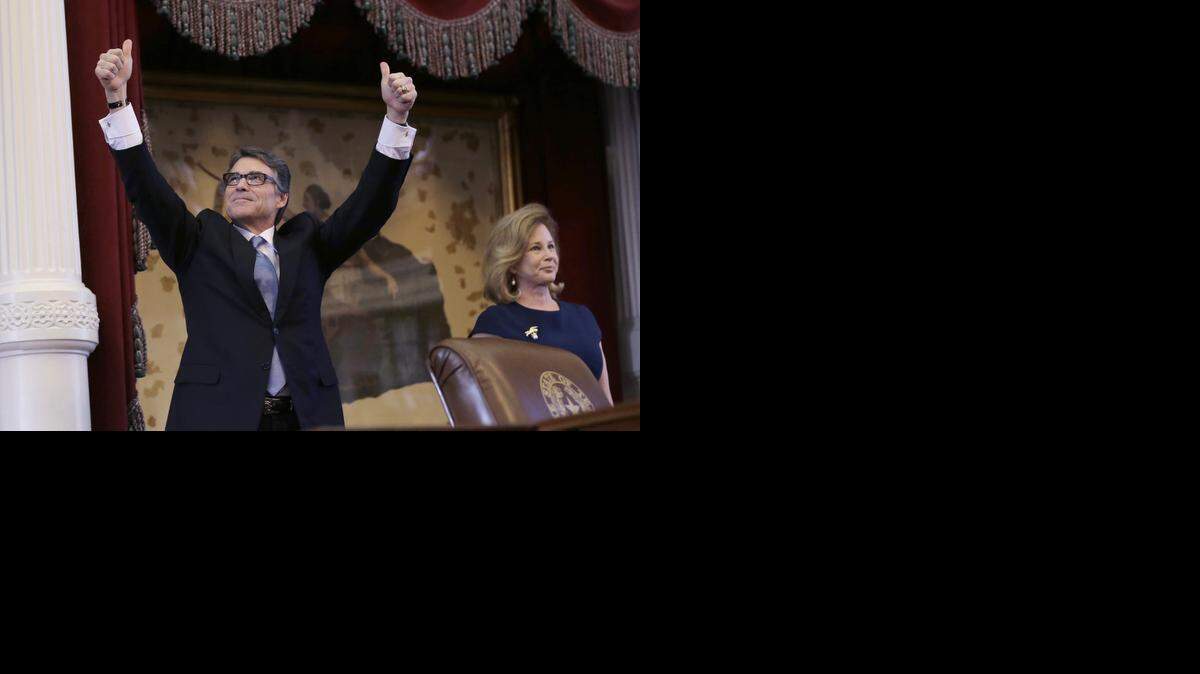
In one of his last official acts as governor, Rick Perry took a victory lap around the Texas Legislature.
On Thursday, addressing a joint session in the House Chamber, Perry accepted a substantial amount of credit for the state’s economic prosperity in recent years.
“As governor, I have made economic growth my signature initiative,” he declared.
Say what you will about the state’s bombastic (and longest-serving) governor, but the Lone Star State has weathered the nation’s recent economic woes better than most.
According to Perry, that’s at least in part thanks to Texas’ many pro-business policies, including some programs near and dear to the departing governor’s heart: the Texas Enterprise Fund and the Emerging Technology Fund.
But the Enterprise Fund and Emerging Technology Fund — two substantial pots of taxpayer money overseen by the governor’s office — have had questionable success.
They’ve raised concerns among lawmakers and the public about accountability, transparency and performance and prompted reviews from the State Auditor’s Office — one damning report issued last fall found that the “absence of an adequate control structure” within the governor’s office meant Texas has been unable to properly administer the Enterprise Fund. Such reports have substantiated claims that the programs are little more than “slush funds” for the governor’s political allies.
So it’s perhaps appropriate that on the eve of Perry’s departure, the House Select Committee appointed to review Texas’ many state and local incentive programs and evaluate each for both effectiveness and efficiency should officially release its interim findings.
The report is far from scathing.
“Texas is not a leader in job creation by pure luck,” the 49-page review boldly stated. Incentive programs have been one of several important factors that have attracted businesses to Texas.
But the committee didn’t sugar-coat obvious and ubiquitous problems with the programs responsible for doling out millions of taxpayer dollars.
“Even the best incentives need review to make sure they are meeting the demands of an ever-changing world, operating in a transparent manner, and to see if they have outlived their purpose,” the committee wrote.
That’s where the Enterprise Fund, Emerging Technology Fund and several of the other programs the committee studied fall short. Most lack sunset dates, independent oversight or regular auditing. And all seem to suffer from complicated application processes.
When you’re spending state money, these kinds of public policy failures typically spell disaster.
Among its recommendations, the committee calls for regular reviews, tighter controls, an oversight committee to address concerns that politics influence awards and sunset dates for existing and new incentive programs — all good reforms.
It also suggests a restructuring and possible consolidation of the Enterprise Fund and Emerging Technology Fund that would “ensure openness and fairness in the [award] process.”
The interim report has little weight on its own; it will require further input from the House and Senate before its recommendations can be implemented.
But the fact that all three Texas leaders at the top of the political food chain — incoming Gov. Greg Abbott, incoming Lt. Gov. Dan Patrick and just re-elected House Speaker Joe Straus — have called for reforms in the incentive system suggests that the committee findings won’t go unaddressed this session, so long as legislators continue to press for reform.
Perry will continue to take credit for the state’s economic success. But like his tenure, time for irresponsibly run taxpayer-funded programs is over.
This story was originally published January 15, 2015 at 5:58 PM with the headline "Time to restructure Texas business incentive funds."