
Tarrant schools hide the public’s info. Why won’t Paxton fight for you? | Opinion
Everyone understands the axiom that justice delayed is justice denied.
But there’s more to it when that delay involves the public’s ability to see its own government’s records. Good governance, accountability for mistakes or malfeasance, and better decision-making and stewardship of public resources are all harmed when simple requests for information are deliberately — and often cynically — tangled up in legal red tape. Just such a scheme is ongoing in the Keller and Grapevine-Colleyville school districts, and Attorney General Ken Paxton’s office is aiding and abetting the assault on the public’s right to know.
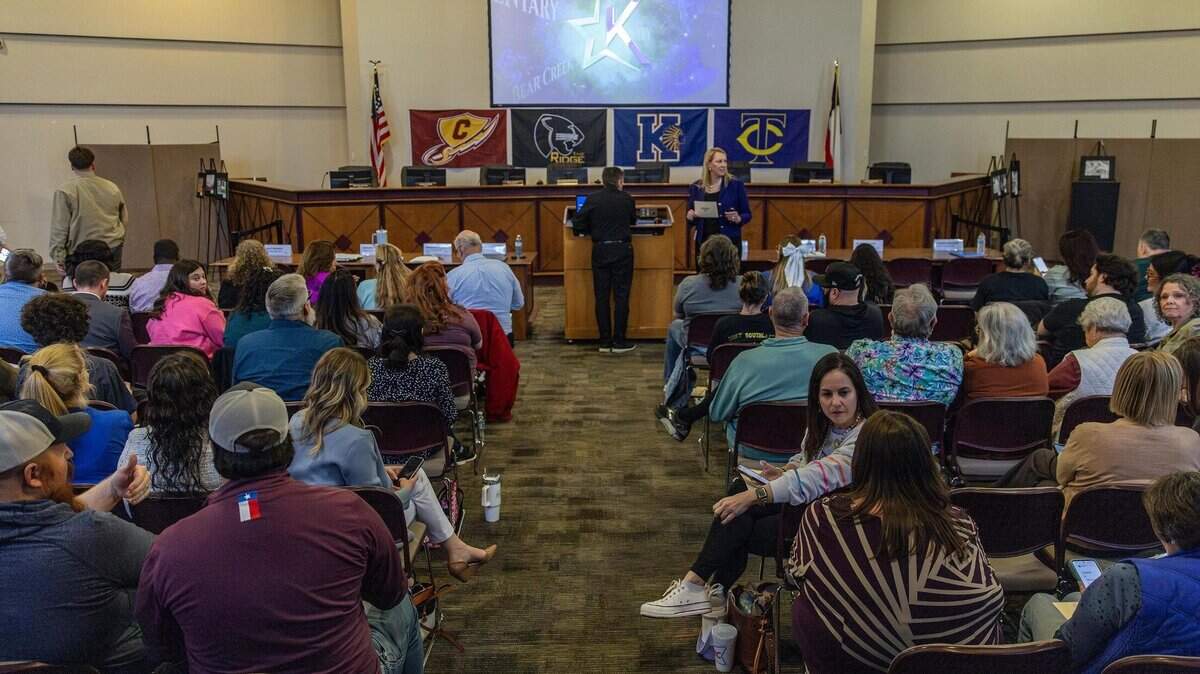
Last year, the Star-Telegram asked the districts (as did a handful of citizens) for details on bills they paid for services from lawyer Tim Davis and his firm, Jackson Walker. In Keller, the information centers on Davis’ legal work over the since-abandoned proposal to divide the district into two.
Such requests fall under the Texas Public Information Act, the venerable law that asserts the obvious notion that data generated by the people’s governments belongs to the people and, with reasonable exceptions, should be available for review. Paxton’s office is the arbiter of when those exceptions should apply. And the professionals there ruled against a request from the school districts to keep the information secret, which asserted a claim of attorney-client privilege.
The decision reinforced what should be obvious to all: Basic information about use of taxpayer money should be made public without delay or obfuscation. The school districts sued Paxton’s office nine months ago. The dispute reaches back even further, when the Keller school board released Jackson Walker invoices approaching $172,000 with almost no detail on the services provided, a cynical but unsurprising attempt to obscure the cost of the underhanded district-split effort.
Now, Paxton’s office should be vigorously defending its finding in court, but the suit has languished. Whether that’s due to overworked staff, political considerations or a change of position, we don’t know.
The Star-Telegram and other requestors could sue to try to force action. But that’s costly and time-consuming, and frankly, we shouldn’t have to. This is the public’s business, and the public’s attorney should handle it with dispatch and enthusiasm.
Regrettably, though, that person is Ken Paxton.
During the three terms in which he has manipulated his office and let whole parts of it wither, the public-records division has faltered in its duties. Decisions take too long, whether because of staffing challenges or delay tactics. That failure has encouraged local governments to bring obviously weak attempts to block the release of records, knowing that they can at least delay some potential embarrassment.
Officials in cities, counties, school districts, police departments and all kinds of offices that you fund have also figured out that they can aggressively seek to redact documents, knowing, again, that any plea for the attorney general to enforce the law with enthusiasm or at least urgency will be ground to dust in the crippled operation Paxton will soon leave behind.
In a republic, it’s vital that citizens are able to hold their elected representatives accountable, particularly on matters of spending and hiring decisions. This should not be dismissed as a “media” issue or special pleading; this is about what voters have a right to see from their governments.
The AG’s office should immediately respond and vigorously fight the suits. If it becomes necessary to appeal, it should do so without delay. If a twisted court ruling lets the school districts obfuscate on this basic but crucial information, the Legislature should clarify the law’s application.
And whichever state senator wins the election for attorney general, Republican Mayes Middleton of Galveston or Democrat Nathan Johnson of Dallas, must send a clear signal that the days of Paxton running cover for local governments to cover up bad decisions or even potential misdeeds are over.
BEHIND THE STORY
MOREHey, who writes these editorials?
Editorials are the positions of the Editorial Board, which serves as the Fort Worth Star-Telegram’s institutional voice. The members of the board are: Cynthia M. Allen, columnist; Steve Coffman, editor and president; Bud Kennedy, columnist; and Ryan J. Rusak, opinion editor. Most editorials are written by Rusak. Editorials are unsigned because they represent the board’s consensus positions, not necessarily the views of individual writers.
Read more by clicking the arrow in the upper right.
How are topics and positions chosen?
The Editorial Board meets regularly to discuss issues in the news and what points should be made in editorials. We strive to build a consensus to produce the strongest editorials possible, but when we differ, we put matters to a vote.
The board aims to be consistent with stances it has taken in the past but usually engages in a fresh discussion based on new developments and different perspectives.
We focus on local and state news, though we will also weigh in on national issues with an eye toward their impact on Texas or the Dallas-Fort Worth area.
How are these different from news articles or signed columns?
News reporters strive to keep their opinions out of what they write. They have no input on the Editorial Board’s stances. The board consults their reporting and expertise but does its own research for editorials.
Signed columns by writers such as Allen, Kennedy and Rusak contain the writer’s personal opinions.
How can I respond to an editorial, suggest a topic or ask a question?
We invite readers to write letters to be considered for publication. The preferred method is an email to letters@star-telegram.com. To suggest a topic or ask a question, please email Rusak directly at rrusak@star-telegram.com.