
Sheriff’s pique over Tarrant jail briefings robs us all of info we need | Opinion
AI-generated summary reviewed by our newsroom.
- Sheriff Bill Waybourn says he won’t respond to jail briefings sought by Commissioner Alisa Simmons.
- Commissioners and taxpayers need jail updates amid scrutiny over inmate deaths and legal costs.
- Waybourn's stance limits transparency and public access to critical information.
Chalk up another blow to comity and simple respect among Tarrant County leaders.
Sheriff Bill Waybourn recently informed the Commissioners Court that he would no longer appear for a public briefing about incidents and conditions at the jail if it’s requested by Alisa Simmons, the Arlington Democrat who represents District 2. For the court’s Sept. 3 meeting, Waybourn sent an email explaining that Simmons’ “repeated lack of civility … towards Tarrant County staff is both hostile and unprofessional.”
It’s far from the first clash between Simmons and Republican leaders, though most of the battles have been within the court, particularly with County Judge Tim O’Hare. But none of that justifies Waybourn to simply refuse to work with someone who represents a quarter of the county and to again find reasons not to answer questions about inmate deaths and other concerns in the jail he runs.
In his message, Waybourn said his office routinely releases information about in-custody deaths. But his missive gave away how he really feels about anyone questioning his operation. The gruff lawman declared that if commissioners, other elected officials or even citizens want to know about jail operations, they can file a request for records under Texas’ public-information laws.
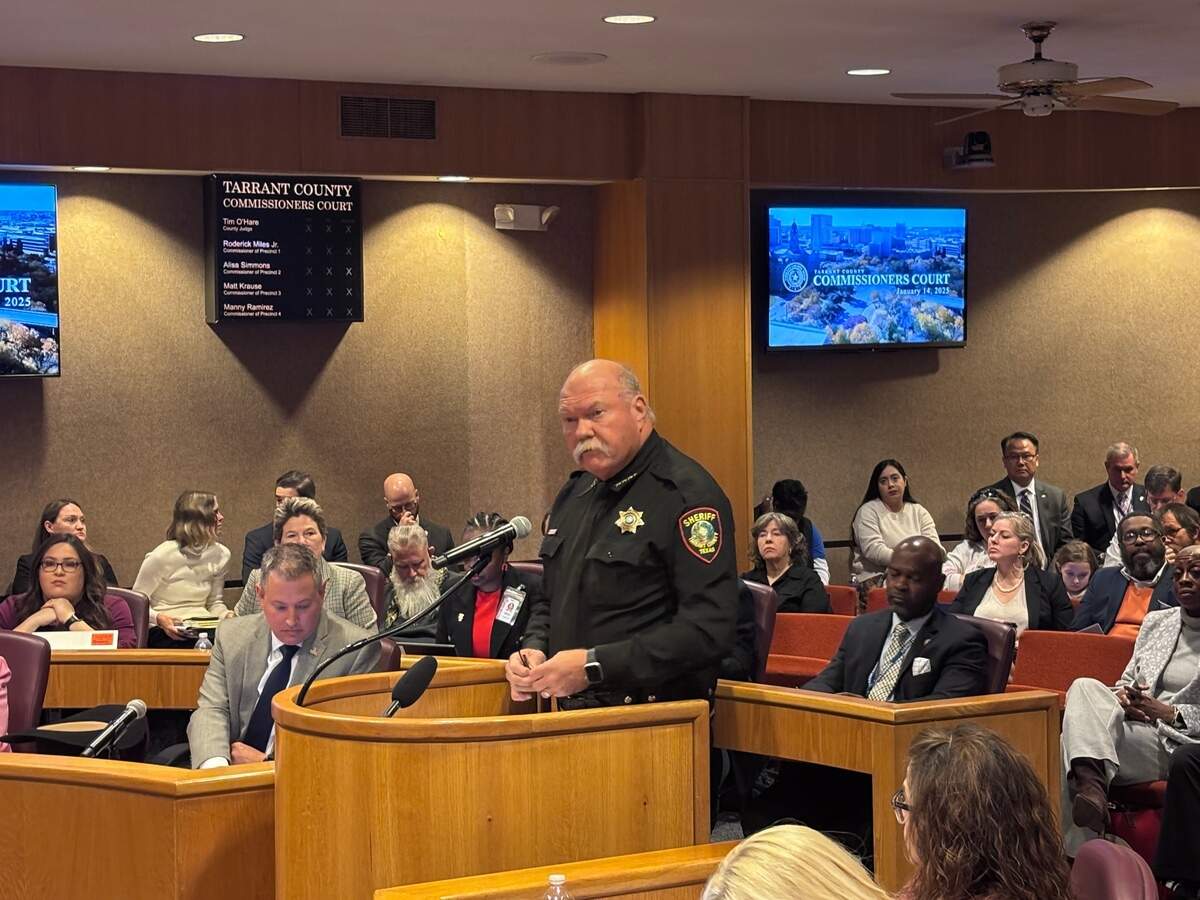
Any elected official should feel obligated to speak to public concerns, particularly those that are literally matters of life and death. Waybourn’s fit of pique smacks of a regal authority who doesn’t believe in the public service and obligation he espouses.
That’s not to say that commissioners can or should summon the sheriff, or any county elected official, as if they are in command. County governance is fractured, part of Texas’ diffuse power structure at every level. They are not the sheriff’s boss (or the district clerk’s, or the tax assessor-collector’s, or any elected judge’s).
But common sense and civility dictate that they all try to get along, share information and work together. Commissioners ultimately control the budget for Waybourn and other officials, and voters look to them to ensure efficient, effective operations.
The jail has been a sore spot for a while. Questions have mounted about several inmate deaths, culminating with one incident so poorly handled, that of Anthony Johnson Jr., that two former employees are charged with murder. The county has already authorized millions of dollars for legal representation and settlements. Commissioners need regular updates, and they need to be able to ask questions and drill down about Waybourn’s operation.
Simmons has become a particular source of frustration for Republican officials, and their political battles have escalated. O’Hare and his compatriots even took the unusual step of mid-decade redistricting with the clear intent of making it impossible for any Democrat to win Simmons’ seat. And she’s shown a willingness for sharp-elbowed combat, too.
The jail’s deficiencies are a problem for the entire county. Waybourn owes all of us an explanation and updates, not just Simmons. If she’s the one filing the request, so be it. He should show up for voters’ sake, not hers.
Since he won a third term in November, Waybourn has shown a willingness to push back on charges that the jail is mismanaged. He frequently notes, not without merit, that jailers often suddenly become responsible for people with years’ worth of health problems, substance abuse and complex medical needs. That does not absolve them of their duty to provide care, but it does explain that some deaths in the jail are sadly inevitable.
However, questions remain. In particular: What happened to minutes of video footage around the time of the medical emergency that led to the death of inmate Chastity Bonner? It was never turned over to the state, and we still don’t have an good explanation for why it’s missing.
But where does the sheriff spread this message? Mostly in friendly interviews and before partisan audiences. He should be more open, visit more civic groups and take more questions. And it shouldn’t take a formal records request to pry basic information out of his office.
Tension among elected officials, especially of different parties, is unavoidable. It can sometimes even be productive, leading to a full public debate of an important issue. We hope that behind closed doors, there’s a little more cooperation — and that other Republicans, not just Democrats, are nudging Waybourn in the right direction and demanding answers and action.
After all, if not, we all end up paying the cost in the end.
BEHIND THE STORY
MOREHey, who writes these editorials?
Editorials are the positions of the Editorial Board, which serves as the Fort Worth Star-Telegram’s institutional voice. The members of the board are: Cynthia M. Allen, columnist; Steve Coffman, editor and president; Bradford William Davis, columnist and editorial writer; Bud Kennedy, columnist; and Ryan J. Rusak, opinion editor. Most editorials are written by Rusak or Davis. Editorials are unsigned because they represent the board’s consensus positions, not necessarily the views of individual writers.
Read more by clicking the arrow in the upper right.
How are topics and positions chosen?
The Editorial Board meets regularly to discuss issues in the news and what points should be made in editorials. We strive to build a consensus to produce the strongest editorials possible, but when we differ, we put matters to a vote.
The board aims to be consistent with stances it has taken in the past but usually engages in a fresh discussion based on new developments and different perspectives.
We focus on local and state news, though we will also weigh in on national issues with an eye toward their impact on Texas or the Dallas-Fort Worth area.
How are these different from news articles or signed columns?
News reporters strive to keep their opinions out of what they write. They have no input on the Editorial Board’s stances. The board consults their reporting and expertise but does its own research for editorials.
Signed columns by writers such as Allen, Kennedy and Rusak contain the writer’s personal opinions.
How can I respond to an editorial, suggest a topic or ask a question?
We invite readers to write letters to be considered for publication. The preferred method is an email to letters@star-telegram.com. To suggest a topic or ask a question, please email Rusak directly at rrusak@star-telegram.com.