
As we ‘spring forward,’ Texas should end clock-change nonsense. But we need some help | Opinion
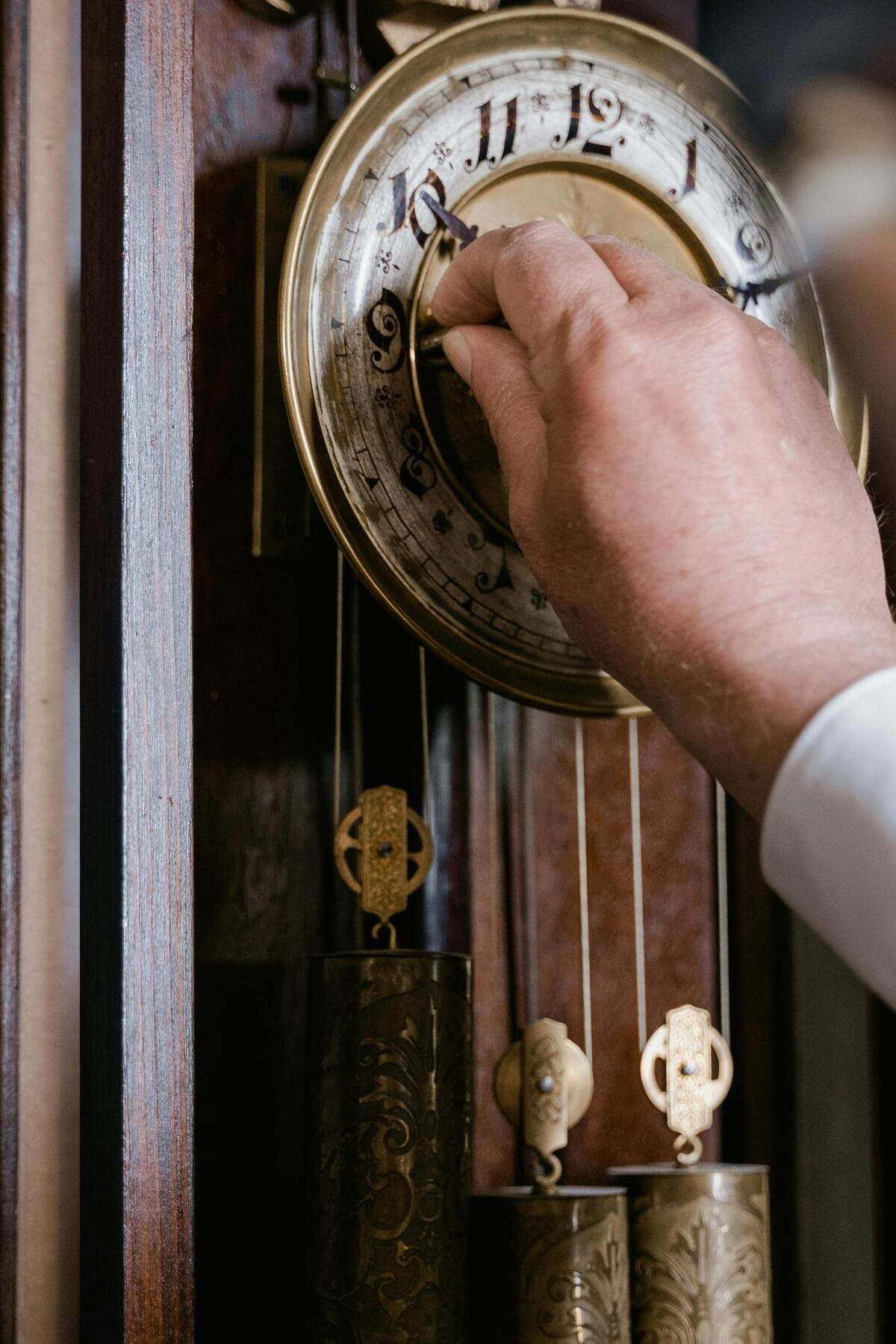
Twice a year, we change our clocks under the rules of daylight saving time.
And twice a year, we grumble about it and debate whether and how it should be changed. You could say it’s like clockwork.
Saturday brings the time shuffle back, along with clock confusion and sleep deprivation. Texans, haven’t we had enough?
In the Legislature, at least, bold leaders have lined up for years to take on the scourge of the clock change, only to be beaten back by Big Daylight.
Congress, which institutionalized the infernal time change in the first place, is captured by that special interest. So, states are permitted only to abandon daylight saving time for permanent standard time. Two have done it: Arizona and Hawaii.
What Americans seem to want most, according to surveys, is permanent daylight saving time. In Texas, it’s best if we can make the most of our abundant sunshine, even if it means some miserably early winter nights. We’re already not so good at winter anyhow, so what difference will it make if the sun comes up a little later, right?
But with Congress in the way, what’s a determined Texan to do? A two-step, of course.
Sen. Judith Zaffirini, a Laredo Democrat who’s now the longest-serving senator, is offering a state constitutional amendment. It’s awaiting a hearing in a Senate committee, but if it’s approved, Texas would switch to standard time. And when Elon Musk finally gets around to the Department of Time or whatever agency controls the clocks, Texas voters could decide in a statewide referendum whether to stay on standard time or switch to daylight saving time.
Imagine that: Giving the voters a say on something that affects their everyday lives. Someone alert the Keller school board!
Other bills would hold out for daylight saving time; the House approved such a measure in 2023, but the Senate never considered it. Such an approach would put Texas on track for an automatic switch whenever Congress gets it together. And we all know what a safe bet that is.
Ending the biannual clock dance should be straightforward enough. Scientists generally agree that it messes with our sleep cycles. Between devices that bathe us in blue light and the just-one-more-episode button that keeps us watching Taylor Sheridan shows into the wee hours, we don’t need any help screwing up our circadian rhythms.
And that’s about more than whether you have to apologize to your boss for looking like a Zombie on the morning Zoom. Disrupted sleep leads to increased risk of heart attack, stroke and other maladies.
The public seems to firmly favor ending the time change. Even in an era when many devices do the work for you, there’s always that one microwave or ancient alarm clock that you have to dig out the manual to set. And if your car is an older model, you’re more likely to master cryptocurrency than remember which three buttons you press to get the clock moving.
But which way do we go? There are good arguments (and bad, naturally) for and against both standard and daylight time. The American Academy of Sleep Medicine favors standard time, considering the risks posed by artificially changing the duration of our exposure to the sun too great. Plenty of industries like the longer window for summer business, though.
Health vs. economic activity? Sounds like a job for Robert F. Kennedy Jr., though we hear he’s going to be pretty busy.
Texas, like always, can lead the way. We like permanent daylight saving time, even if it would put us out of step with our neighbors and aligned with (gulp) New York and Boston.
Whether it’s Zaffirini’s proposal or a straightforward abolishing of the time change, let’s hope that for once, our legislators can shake the fog of springing forward and give ordinary Texans the time of day.
Updated March 7 to reflect the pending clock change and status of the proposal in the Legislature.
BEHIND THE STORY
MOREHey, who writes these editorials?
Editorials are the positions of the Editorial Board, which serves as the Fort Worth Star-Telegram’s institutional voice. The members of the board are: Cynthia M. Allen, columnist; Steve Coffman, editor and president; Bradford William Davis, columnist and editorial writer; Bud Kennedy, columnist; and Ryan J. Rusak, opinion editor. Most editorials are written by Rusak or Davis. Editorials are unsigned because they represent the board’s consensus positions, not necessarily the views of individual writers.
Read more by clicking the arrow in the upper right.
How are topics and positions chosen?
The Editorial Board meets regularly to discuss issues in the news and what points should be made in editorials. We strive to build a consensus to produce the strongest editorials possible, but when we differ, we put matters to a vote.
The board aims to be consistent with stances it has taken in the past but usually engages in a fresh discussion based on new developments and different perspectives.
We focus on local and state news, though we will also weigh in on national issues with an eye toward their impact on Texas or the Dallas-Fort Worth area.
How are these different from news articles or signed columns?
News reporters strive to keep their opinions out of what they write. They have no input on the Editorial Board’s stances. The board consults their reporting and expertise but does its own research for editorials.
Signed columns by writers such as Allen, Kennedy and Rusak contain the writer’s personal opinions.
How can I respond to an editorial, suggest a topic or ask a question?
We invite readers to write letters to be considered for publication. The preferred method is an email to letters@star-telegram.com. To suggest a topic or ask a question, please email Rusak directly at rrusak@star-telegram.com.
This story was originally published February 14, 2025 at 5:21 AM.