
If it’s this hard to stop a flawed execution, should Texas have death penalty at all? | Opinion
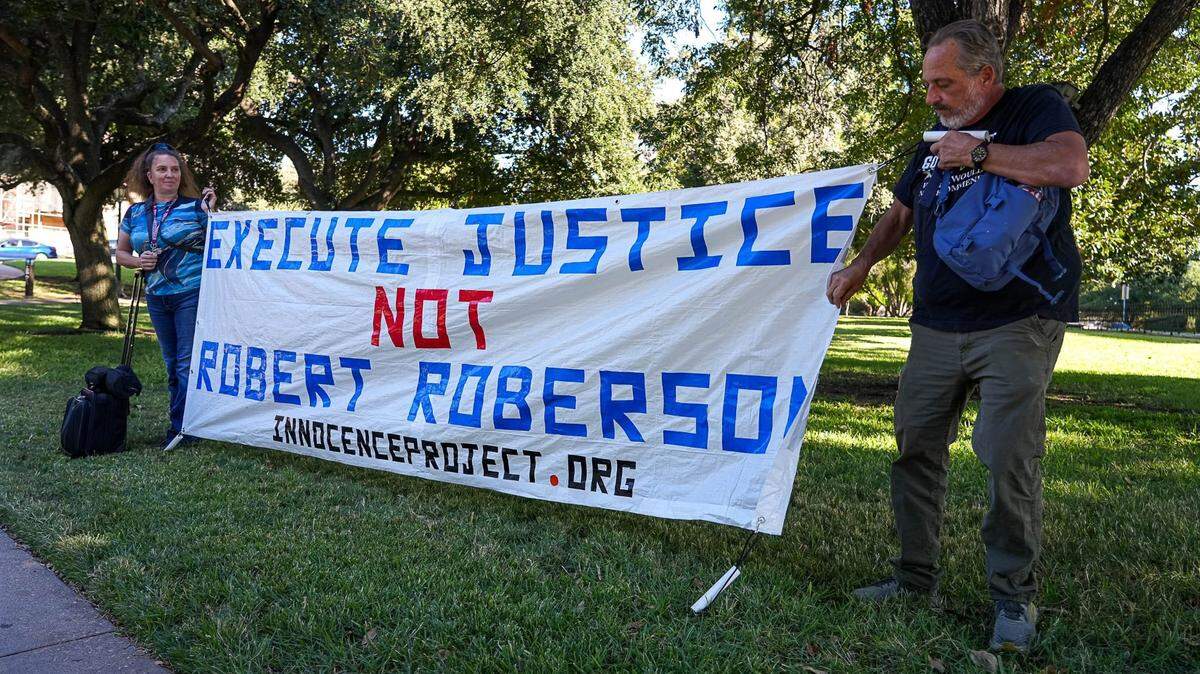
Here’s a brief and inexhaustive rundown of what it takes not to kill a man in the state of Texas:
A growing caucus of scientific dissent must form against the validity of shaken baby syndrome, or at least its use in court, including a group of 34 scientific and medical experts writing to the Texas clemency board.
The dissent must form alongside a recent string of overturned convictions, such as that of Brandy Briggs Sorto, a Texan who, at 17, was found guilty of an SBS-related homicide of her 2-month-old son. Five years later, her case was overturned when a medical examiner found that a breathing tube had been improperly inserted into the boy’s esophagus, causing air to go to his stomach instead of his lungs.
A Texas “junk science writ” law must follow, intended specifically for the purpose of controversial scientific precepts used in criminal convictions — even if all 25 people on death row who have used it to request an appeal have, so far, failed.
The lead Palestine police investigator who worked on the case, upon encountering the evidence he didn’t have, must urge the state to reconsider the validity of “evidence” they never had. It helps if at least one juror, Terre Compton, comes to the same conclusion.
A bipartisan and multi-faith group of state lawmakers, from deeply conservative pastor Rep. Nate Schatzline of north Fort Worth to Euless’ Muslim Democratic Rep. Salman Bhojani, must sign a letter requesting clemency and even go as far as deploying a prayer circle around the man they don’t want to kill. They must plead across ideological and religious lines to petition both deities and mortal leaders, including Gov. Greg Abbott and Attorney General Ken Paxton to listen and intervene.
Then, being Christ’s hands and feet, faithfully applying the Quran’s edict to “avoid doing injustice to others” or some combination of the two, the lawmakers must bend precedent to subpoena the man they wish to not die, a last-second gambit to delay the execution made necessary because Gov. Abbott would not grant a 30-day reprieve.
As you can see, not executing Robert Roberson, a Texas man convicted of killing his 2-year-old daughter, Nikki Curtis, in 2002, a conviction based on thin evidence that Roberson shook her to death, requires a perfect Rube Goldbergian sequence of events that still offers no promise of a retrial.
On one hand, it is an extraordinary and commendable work to see bipartisan coalitions in a state closely hewed to the death penalty hustle to save Roberson’s life. Working across the aisle should happen more, especially on such a literal life-and-death issue.
The uncommon efforts to subvert the system don’t indict Roberson’s case for exoneration, which columnist Melinda Henneberger summarized aptly in these pages, but the system that made revisiting his situation so urgent.
On Wednesday, Paxton issued a statement that he said “sets the record straight about Nikki Curtis’s death” and disproves “lies” from the House committee’s leaders. The evidence of blunt-force trauma wasn’t contingent on shaken baby syndrome in Roberson’s trial, he said. Paxton’s claim is an apparent contradiction to Compton’s testimony at Monday’s hearing, where she insisted that evidence of Nikki’s physical trauma was presented as proof Roberson initiated SBS.
OK, so all sides think someone’s lying. Sounds like grounds for a retrial, no? Remember: Once that needle hits Roberson’s arm, there’s no going back.
Abbott, in a brief filed with the state Supreme Court, appeals to legal precedent while slamming the lawmakers for their subpoena of Roberson.
“Unless the Court rejects that tactic, it can be repeated in every capital case, effectively rewriting the Constitution to reassign a power given only to the governor,” his counsel wrote. This is quietly revealing. Power to do what, Governor? The power to ignore a review of evolving, relevant information that might prevent someone from being killed? The governor had the power to halt the execution for just such a review, and he should have. When he didn’t, the spectacle of the subpoena, the legal fight and a celebrity-stacked hearing ensued.
Or was it the power to unilaterally decide the fate of another man’s life with a near-certain guarantee that, in the increasingly likely case that you got it wrong, you will never be held similarly accountable.
Power to do what? Be specific.
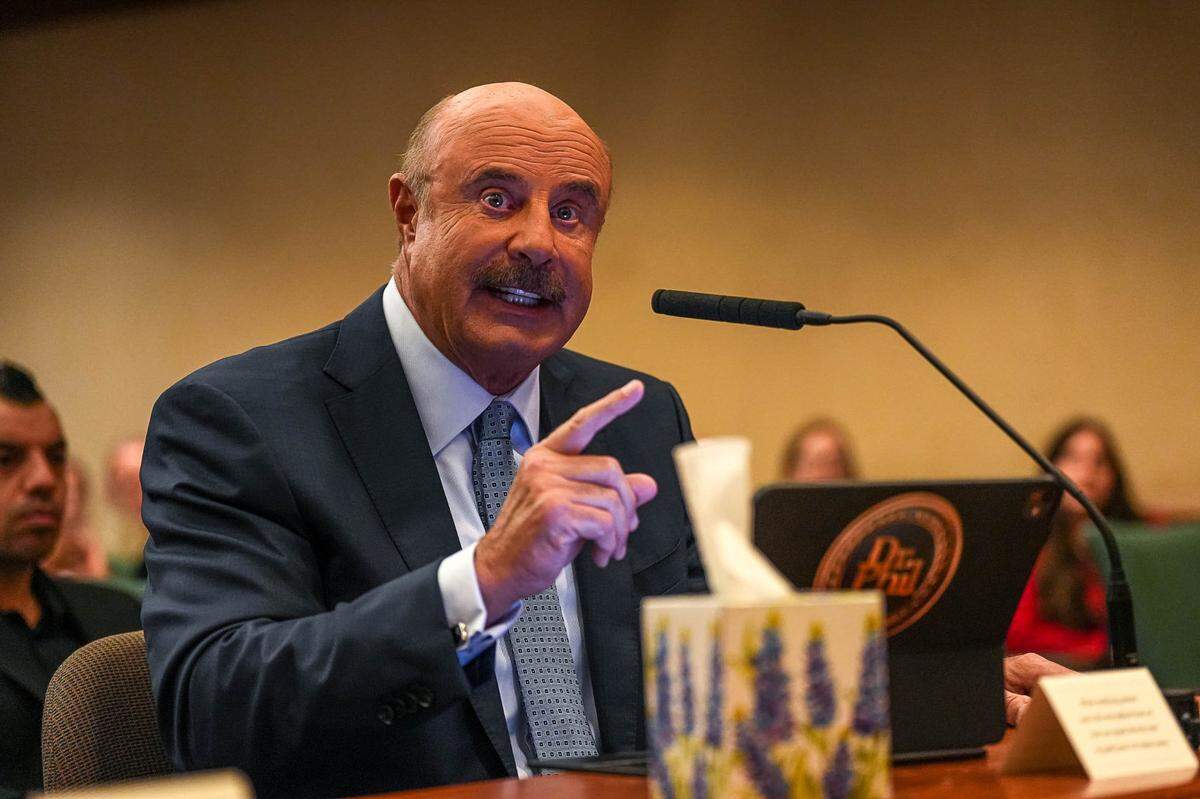
During Monday’s hearing, an unlikely voice of reason appeared in Dr. Phil McGraw.
(Yes, that Dr. Phil.)
He cited the fact that Texans have served thousands of years in prison only to later be exonerated, often thanks to breakthroughs in scientific evidence analogous to the Roberson case. Dr. Phil argued that if Texas is “going to preserve the death penalty, we need to show a commitment to do everything possible to get it right. And if we’re not good stewards of that, then we shouldn’t have the privilege of asserting it. So if we want to preserve it, we need to be really committed to getting it right.”
He’s right, possibly more right than he even realized. We are plainly poor stewards of this great responsibility over whether a Texan should live or die. So why do “we” have it, anyway?
BEHIND THE STORY
MOREHey, who writes these editorials?
Editorials are the positions of the Editorial Board, which serves as the Fort Worth Star-Telegram’s institutional voice. The members of the board are: Cynthia M. Allen, columnist; Steve Coffman, editor and president; Bradford William Davis, columnist and editorial writer; Bud Kennedy, columnist; and Ryan J. Rusak, opinion editor. Most editorials are written by Rusak or Davis. Editorials are unsigned because they represent the board’s consensus positions, not necessarily the views of individual writers.
Read more by clicking the arrow in the upper right.
How are topics and positions chosen?
The Editorial Board meets regularly to discuss issues in the news and what points should be made in editorials. We strive to build a consensus to produce the strongest editorials possible, but when we differ, we put matters to a vote.
The board aims to be consistent with stances it has taken in the past but usually engages in a fresh discussion based on new developments and different perspectives.
We focus on local and state news, though we will also weigh in on national issues with an eye toward their impact on Texas or the Dallas-Fort Worth area.
How are these different from news articles or signed columns?
News reporters strive to keep their opinions out of what they write. They have no input on the Editorial Board’s stances. The board consults their reporting and expertise but does its own research for editorials.
Signed columns by writers such as Allen, Kennedy and Rusak contain the writer’s personal opinions.
How can I respond to an editorial, suggest a topic or ask a question?
We invite readers to write letters to be considered for publication. The preferred method is an email to letters@star-telegram.com. To suggest a topic or ask a question, please email Rusak directly at rrusak@star-telegram.com.
This story was originally published October 24, 2024 at 2:36 PM.