
Republicans own Texas. So, why is the state GOP acting like it expects to lose? | Opinion
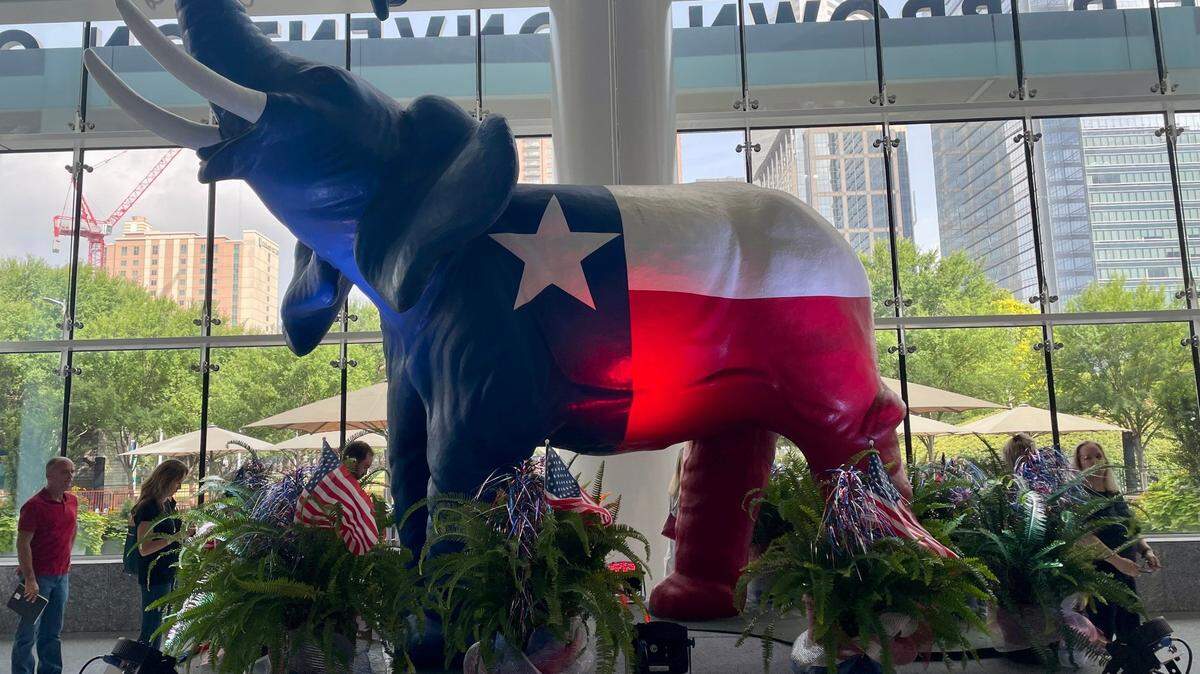
For a party that hasn’t lost a statewide election in nearly 30 years, the Texas GOP sure is acting like it expects to start losing.
First, there was the obsession with voter fraud, a serious issue but never so widespread or alarming to merit the paranoia it has stirred among some Republicans. Then, there was the push to close primary elections to only certain voters, as if Democrats and independents are flooding GOP nominating contests.
The latest addition to the Texas Republican Party platform, while creative, is a wild overreaction to — well, we’re not sure what, since Republicans are still dominating elections. The small, populist group that has taken over the state party apparatus wants Texas to require that candidates for statewide office win not just the most individual votes in the general election, but also a majority in each of the state’s 254 counties.
The party would also require that amendments to the state constitution get majorities in two-thirds of the counties. Right now, most amendments that clear the Legislature are approved by voters. with healthy majorities anyway.
These are the reactionary moves of a party that expects to struggle soon to win majorities, not one that has remade the state’s political scene in a little more than a generation. They would shift power to rural counties that strongly vote Republican. It’s true that Texas’ big cities tend to vote Democratic. But this reads like a tacit acknowledgment that the suburbs are slipping away from the GOP, too.
The ideas are constitutionally dubious, as they would violate the principle of one person, one vote. Some might compare them to the Electoral College, but that’s a faulty reading of history. Our unique method of electing a president, whatever you think of it, was a compromise among sovereign states coming together to form a union, meant to protect small states from being overwhelmed by large ones.
Texas is not a collection of counties that came together to form the state. The counties are subsets of the state. The comparison falls apart.
The party is guilty of a faulty reading of politics, too. Republicans seem to agree with Democrats that if more people vote, especially in urban and suburban areas, it will hurt the GOP. Political science suggests otherwise. Daron Shaw, a professor at the University of Texas at Austin, has analyzed decades worth of election data to show that even when voter turnout is high, the result tends to mirror the partisan breakdown in the electorate.
Perhaps the small ultra-conservative group that runs the GOP has one good point, not that it’s making it explicitly. The hard-right turn on issues such as abortion doesn’t match the larger population of Texas. The further the GOP wants to go, the more it may struggle.
And yet, Texas is plenty conservative, especially on economics, immigration and even some of the social policies that the far-right focuses on. Persuading Texans to reject liberalism, especially higher taxes and more expansive state services, is not a challenge.
Party platforms need not be taken too seriously. They are created in processes controlled by fire-breathing activists, and both parties tend to craft platforms that are more wishful than prescriptive. The voting changes the Texas GOP wants would require amending the state constitution, which is a high bar: two-thirds support in the Senate and House and a majority of voters in a statewide election.
Curtailing the power of the majority is an important feature of American politics. We do not swing wildly between governments and policies because of the wise protections for minority views that the Founders placed into the U.S. Constitution and the American political culture.
But at some point, anti-majoritarian becomes anti-democratic. The Texas GOP approaches that threshold.
And it need not do so. Parties should broaden their appeal, not shrink it. That doesn’t have to mean sacrificing principles. It means winning arguments and accepting incremental victories.
Becoming and remaining a majority party is not easy; why not just change the systems to lock in your wins?
But the hard work of voter persuasion and turnout is how Republicans have dominated Texas for years. The desperation of proposals such as requiring county majorities suggests at least some in the party are no longer confident that can continue.