
A new fee to fix Fort Worth roads? No way. Residents are taxed enough already | Opinion
If there’s one thing everyone in Fort Worth might agree on, it’s that residents want better streets.
And most would also say that the city has to find a way to get on top of maintenance needs and stay on top, before things get any worse.
Even if that means new fees on property owners, as staff recently pitched to the City Council? That’s where agreement falls apart.
Read our lips: No new fees. The city is slated to collect and spend more than $2.5 billion this fiscal year. Residents are paying enough to keep streets maintained; it’s a matter of setting priorities.
The proposal outlined before the council would charge homeowners $9.22 a month; apartments would be charged $5.65 per unit a month. Businesses such as offices, retail stores and restaurants would pay a range from about $9 to nearly $16 per 1,000 square feet of space.
The result would be an estimated $66.1 million annually for road maintenance, more than double what the city currently has budgeted for projects (not counting new construction funded by bonds).
All the usual arguments were deployed: This will force those who benefit most from good roads to pay. It’s just a “user fee” such as those charged for water and sewer service. Other large cities, including some in Texas, charge such fees.
The plan is an effort to paper over poor planning and mislaid priorities. How does a city with more than 8,000 lane-miles to maintain end up with just $28.3 million budgeted for repairs?
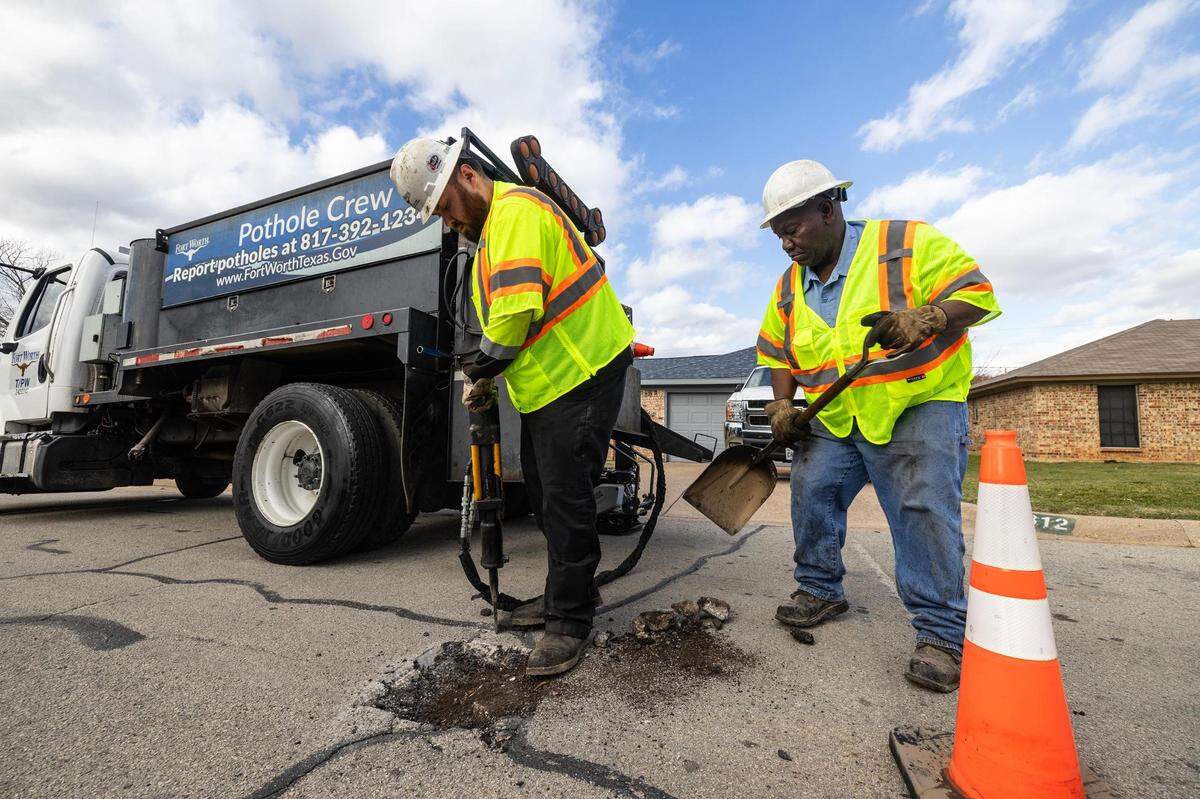
Nearly 40% of Fort Worth streets need work. So, it’s not a sudden problem or one with a single cause. Start with the city’s rapid and sustained population growth — more drivers, more cars, more wear on streets. Between inflation and high demand for construction material, costs are constantly higher. Years of insufficient funding means problems compound. Only the highest priorities can be fixed, so lesser needs are neglected, and they get worse — and more expensive.
The City Council should reject this proposal and demand that City Manager David Cooke and his staff develop a better plan to prioritize street maintenance. Yes, that means some other needs may be sacrificed.
But Fort Worth simply can’t argue it doesn’t have enough money. The city substantially reduced the property tax rate this year but is still collecting more overall, thanks to growth in property values. That’s an effective tax increase for businesses and homeowners. Between that and new development, Fort Worth collects 9.2% more this fiscal year than last. And that’s not counting boosts in sales-tax collections thanks to a robust local economy.
That’s not to say the city’s options are unlimited. Most of the sales tax you pay goes to the state, and half of what’s collected locally is earmarked for public transit and supplemental police funding.
Creating any new levy on residents, though, should be a last resort. Once in place, they are inevitably raised. What starts at $9 a month per homeowner rarely stays there.
And the calculations seem off: Do homeowners drive less than apartment dwellers? Do certain businesses not contribute to road usage? Besides, fees on business will be passed on to consumers already struggling with rising prices. Piling on more could crimp economic growth.
Transportation funding, including road maintenance, presents a challenge for governments at all levels. Federal and state funds are often provided through gasoline taxes, a source that is questionable in an era of fuel-efficient cars and, increasingly, electric vehicles.
And as council members noted, the city has done a poor job ensuring that developers provide for adequate roads in fast-growing areas. The cost for maintaining and expanding those streets inevitably trickles down to taxpayers.
To govern is to choose, to set priorities. For most residents, there are fewer higher needs than well-maintained roads. Creating new fees — and thus opening the door to higher and higher costs on homeowners and businesses — isn’t the answer.
BEHIND THE STORY
MOREHey, who writes these editorials?
Editorials are the positions of the Editorial Board, which serves as the Fort Worth Star-Telegram’s institutional voice. The members of the board are: Cynthia M. Allen, columnist; Steve Coffman, editor and president; Bud Kennedy, columnist; Ryan J. Rusak, opinion editor; and Nicole Russell, editorial writer and columnist. Most editorials are written by Rusak or Russell. Editorials are unsigned because they represent the board’s consensus positions, not the views of individual writers.
Read more by clicking the arrow in the upper right.
How are topics and positions chosen?
The Editorial Board meets regularly to discuss issues in the news and what points should be made in editorials. We strive to build a consensus to produce the strongest editorials possible, but when we differ, we put matters to a vote.
The board aims to be consistent with stances it has taken in the past but usually engages in a fresh discussion based on new developments and different perspectives.
We focus on local and state news, though we will also weigh in on national issues with an eye toward their impact on Texas or the Dallas-Fort Worth area.
How are these different from news articles or signed columns?
News reporters strive to keep their opinions out of what they write. They have no input on the Editorial Board’s stances. The board consults their reporting and expertise but does its own research for editorials.
Signed columns by writers such as Allen, Kennedy and Rusak contain the writer’s personal opinions.
How can I respond to an editorial, suggest a topic or ask a question?
We invite readers to write letters to be considered for publication. The preferred method is an email to letters@star-telegram.com. To suggest a topic or ask a question, please email Rusak directly at rrusak@star-telegram.com.