
No rides to polls? Telling teachers how to vote? Primaries driving some Texans mad | Opinion
In the frenzied final days before the March 5 party primaries, we expect candidates, staffers and political surrogates to get a little nutty. We know ads and online posts will get a little nasty.
We didn’t anticipate that it would all spill over to elected and hired leaders’ official duties.
And yet, there were Tarrant County commissioners, on a petty party line vote Tuesday, pulling a small amount of money out of a program that helps voters get a ride to the polls. And there were two Denton ISD administrators, blatantly violating laws against electioneering by encouraging teachers to go vote in the Republican primary — and offering notes on who to support.
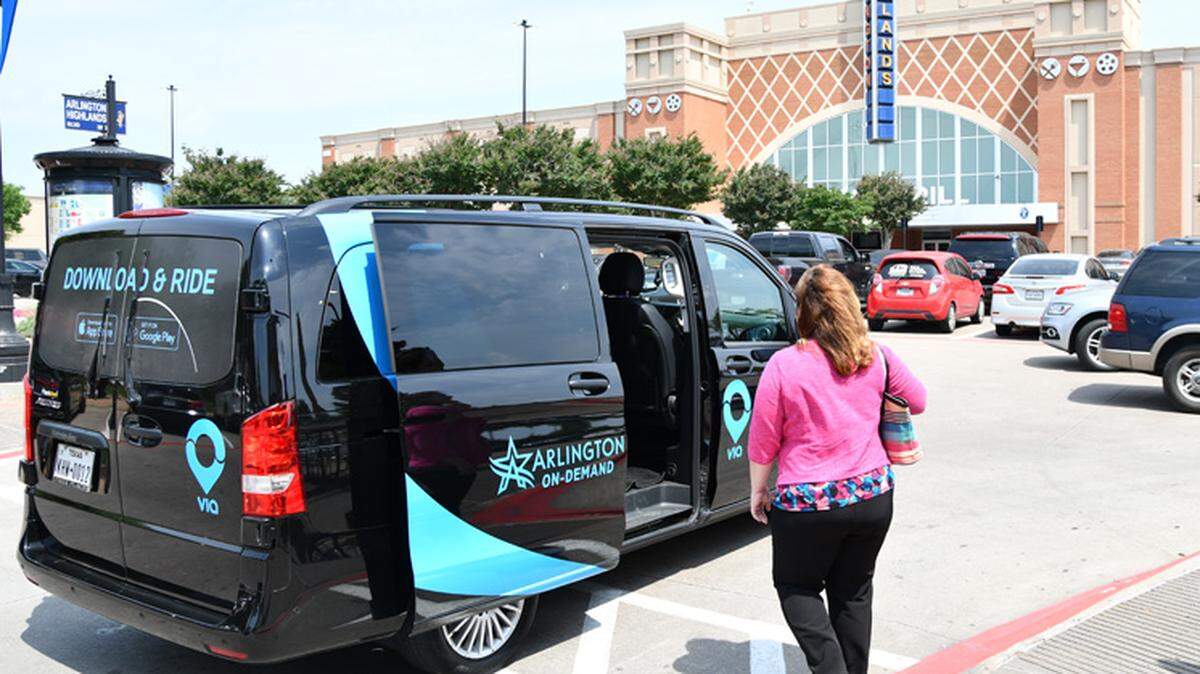
The Commissioners Court decided, 3-2, to cancel the county’s $10,000 contribution to a Trinity Metro program that picks up voters with transportation issues and takes them to the polls. It’s been in place for years, with no known issues or controversy.
County Judge Tim O’Hare, a Southlake Republican, voiced a philosophical objection and worries about whether the county can spend such money without violating federal law. GOP Commissioner Manny Ramirez, from northwest Tarrant County, said he was concerned that the program only covers certain areas.
If these are the real concerns — more on that in a moment — perhaps there’s a way to address them, through private funding and a larger program. As it stands, it’s a small service for a few people. But for those voters, be they disabled or without reliable transportation, it’s a powerful contribution to their dignity to be able to go and cast a ballot like anyone else.
The number of rides varies, not surprisingly, based on the type of election. For the November 2020 presidential vote, 5,658 people were helped, according to Trinity Metro, the largest number in the last few major election cycles. Trinity Metro still plans to provide rides on Election Day, which is March 5.
As for the cost, O’Hare is consistent in seeking to curtail spending. But we’re talking about $10,000; the county spends nearly $900 million a year. Let’s not pretend a great blow has been struck here for smaller-government conservatism.
County Republican Chairman Bo French may have revealed the real reason any of this even became an issue. On Monday, he wrote on X that he had “discovered” that the county wanted to “use taxpayer dollars to bus Democrats to the polls.”
If he just noticed the program, around since 2019, he’s not as politically observant as a county party leader should be. French also asserted that the “deep state” was behind the program — which was printed in advance on the agenda for the commissioners’ meeting. Fine sleuthing, Mr. Chairman.
He may be right that more Democrats take advantage of the program, based on the areas served. But it’s a real stretch to call it a concerted effort to serve one party or the other. No one tracks party affiliation or votes cast by those who get a ride. It’s revealing, perhaps, that French thinks a county program might work that way.
Finally, there’s a bit of inconsistency at work. Aren’t Republicans the party of in-person voting? Many of the voters who get a ride might otherwise use mail-in ballots, which the GOP’s national leader, Donald Trump, rails against every chance he gets.
PAXTON SUES DENTON SCHOOLS OVER ELECTION MESSAGE
Of course, no list of political shenanigans would be complete without Attorney General Ken Paxton getting involved.
According to Paxton’s office, the principal of Alexander Elementary School in Denton ISD, used her school email address to urge staffers to vote in the Republican primary. She ensured that their classes would be covered if they wanted to vote on school time. And if the message wasn’t clear enough, it quoted Diboll ISD Superintendent Brian Bowman: “If Texas educators do not come together and vote on the candidate that will support public schools, we are in trouble.”
A second Denton principal, at Borman Elementary School, made it clear that employees should go cast a ballot for candidates who oppose vouchers.
The AG filed a suit alleging electioneering, the use of taxpayer-funded resources to campaign. Denton ISD must investigate, and barring some extraordinary circumstance, both employees should be fired.
These kinds of incidents reflect the over-dramatization increasingly overtaking elections, with hard-core voters in each party convinced that the world will end if the other wins. It’s used to justify bad behavior, violating rules and taking petty swipes over something like a small busing program.
Meanwhile, most voters scratch their heads, refusing to obsess over school vouchers and whether a few people get a free ride to the polls. More politicians should look to serve them and their concerns, not the ever-narrowing bases that see every election as a pitched battlefield.
BEHIND THE STORY
MOREHey, who writes these editorials?
Editorials are the positions of the Editorial Board, which serves as the Fort Worth Star-Telegram’s institutional voice. The members of the board are: Cynthia M. Allen, columnist; Steve Coffman, editor and president; Bud Kennedy, columnist; Ryan J. Rusak, opinion editor; and Nicole Russell, editorial writer and columnist. Most editorials are written by Rusak or Russell. Editorials are unsigned because they represent the board’s consensus positions, not the views of individual writers.
Read more by clicking the arrow in the upper right.
How are topics and positions chosen?
The Editorial Board meets regularly to discuss issues in the news and what points should be made in editorials. We strive to build a consensus to produce the strongest editorials possible, but when we differ, we put matters to a vote.
The board aims to be consistent with stances it has taken in the past but usually engages in a fresh discussion based on new developments and different perspectives.
We focus on local and state news, though we will also weigh in on national issues with an eye toward their impact on Texas or the Dallas-Fort Worth area.
How are these different from news articles or signed columns?
News reporters strive to keep their opinions out of what they write. They have no input on the Editorial Board’s stances. The board consults their reporting and expertise but does its own research for editorials.
Signed columns by writers such as Allen, Kennedy and Rusak contain the writer’s personal opinions.
How can I respond to an editorial, suggest a topic or ask a question?
We invite readers to write letters to be considered for publication. The preferred method is an email to letters@star-telegram.com. To suggest a topic or ask a question, please email Rusak directly at rrusak@star-telegram.com.