
We finally know what it takes to get the truth out of Ken Paxton: a deposition order | Opinion
Attorney General Ken Paxton has for years denied retaliating against whistleblowers who raised charges of corruption and abuse of power. He dragged the state through legal and political turmoil and continues to seek retribution against political enemies.
On Thursday, though, he said: Never mind.
Paxton told a Travis County court he no longer wanted to contest the whistleblowers’ lawsuit. He said he wanted to avoid his office being “distracted by these disgruntled former employees and their self-serving sideshow.”
That’s quite a statement from someone whose entire nine years as AG have been exactly that, a self-serving sideshow. How convenient that his concern for the public and his employees surfaced just after the Texas Supreme Court ruled that Paxton would have to sit for a deposition in the case. It would have been his first time under oath answering questions about favors for Nate Paul and the shabby treatment of brave employees who questioned his deeds.
Paxton was willing to contest the charges for years. He was willing to have taxpayers settle the case for $3.3 million and, as a condition of the deal, apologize to his four former loyalists. He was willing to ask the Legislature for the money. And then, he was willing to put the entire state through an expensive, divisive impeachment trial.
Throughout it all, Paxton insisted he did nothing wrong and that, somehow, everyone who saw his contortions to help donor friend Paul with federal charges was lying or mistaken that he was abusing his office. To this day, Paxton portrays himself as the victim of a conspiracy that gets more complicated and fanciful by the day.
But suddenly, with a chance to fight in court, he says: Never mind.
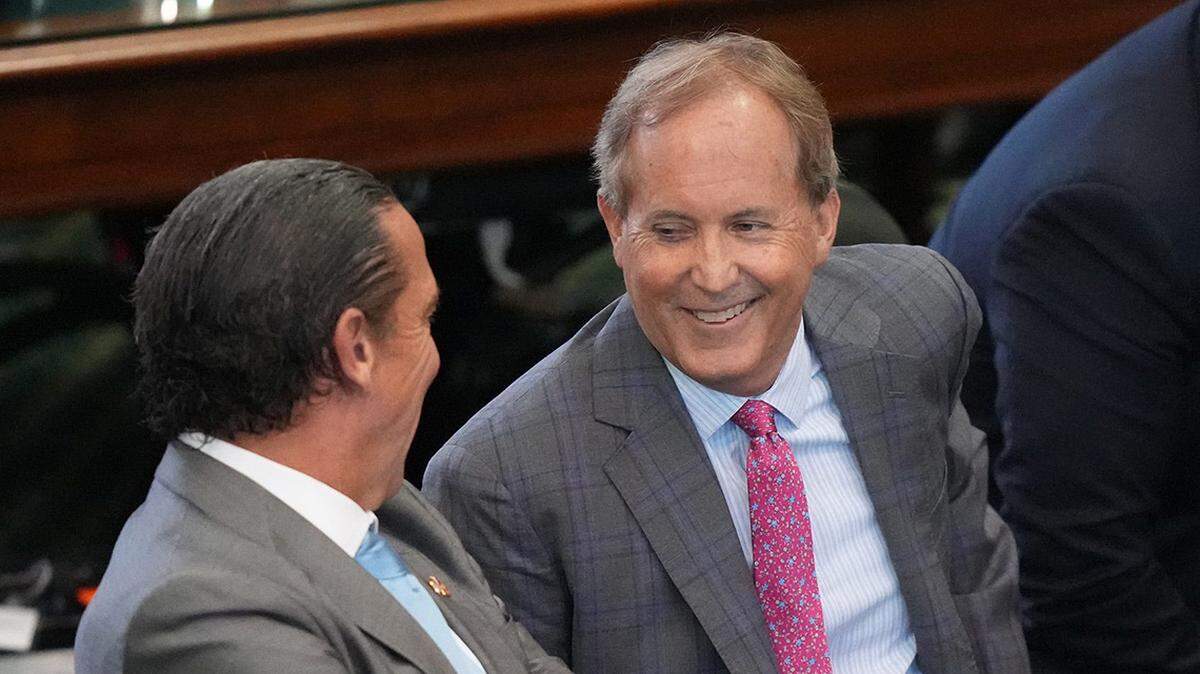
Rep. Andrew Murr, the Republican who led the charge to impeach Paxton at the cost of his political career, said it best. Paxton, he said in a written statement, has admitted that “he flagrantly broke the law, violated the Whistleblower Act and betrayed the trust placed in him by retaliating against his own team, those who bravely reported his illegal actions. … This admission is stark and undeniable confirmation of our grave concerns.”
Paxton escaped political justice when Republican senators couldn’t muster the courage to confront the corruption staring them in the face. But there’s still the possibility of federal criminal prosecution, and surely Paxton’s lawyers told him it was too dangerous to sit under oath for a deposition.
It’s somewhat surprising that he listened. After all, as he campaigns for revenge for his impeachment, Paxton seems increasingly separated from reality. Appearing recently in Beaumont on behalf of a primary challenger to Republican House Speaker Dade Phelan, Paxton spun a conspiracy theory so elaborate, even his pal Donald Trump might raise an eyebrow.
Paxton told a crowd at an arch-conservative group’s gathering that Democrats — the party that last won a statewide race in Texas 30 years ago — engineered the impeachment at the demand of President Joe Biden because Paxton successfully sues the administration so often.
Oh wait — or maybe it’s the result of Democratic megadonor George Soros, who, in Paxton’s telling, managed to dictate which Republicans won election to the Court of Criminal Appeals. See, that court — composed entirely of Republicans — struck down a law allowing Paxton to prosecute voter fraud, so now, Democrats can steal elections and local, Soros-backed prosecutors won’t pursue cases.
In this telling, only Ken Paxton can save Texas for conservatism, even though his years-long crusade against election crime yielded few successful prosecutions. Say this for the man — when he decides to spin a yarn, he goes at it with gusto.
Oh, and during the impeachment trial, Paxton said, many of the Republican senators secretly coveted his job. How almost all then voted to acquit him … well, don’t expect Paxton to connect the dots, at least not without a huge cork board and plenty of string.
This kind of narcissistic nonsense would be laughable if it wasn’t poisonous to our politics. One problem with the extremes in both parties is that they’re constantly convinced that they’re losing, that “real” conservatives or progressives are suppressed. When they don’t get everything they want, they get more extreme and conspiratorial, and incremental progress on issues becomes impossible.
Back here on earth, what’s obvious is that Paxton, by suddenly dropping his case in the whistleblower suit, has turned on so many people who worked so hard to defend him. The people who stuck their necks out to say that he didn’t violate his oath of office, couldn’t have, wouldn’t have.
Ken Paxton has a clear message for them: Never mind.
BEHIND THE STORY
MOREHey, who writes these editorials?
Editorials are the positions of the Editorial Board, which serves as the Fort Worth Star-Telegram’s institutional voice. The members of the board are: Cynthia M. Allen, columnist; Steve Coffman, editor and president; Bud Kennedy, columnist; Ryan J. Rusak, opinion editor; and Nicole Russell, editorial writer and columnist. Most editorials are written by Rusak or Russell. Editorials are unsigned because they represent the board’s consensus positions, not the views of individual writers.
Read more by clicking the arrow in the upper right.
How are topics and positions chosen?
The Editorial Board meets regularly to discuss issues in the news and what points should be made in editorials. We strive to build a consensus to produce the strongest editorials possible, but when we differ, we put matters to a vote.
The board aims to be consistent with stances it has taken in the past but usually engages in a fresh discussion based on new developments and different perspectives.
We focus on local and state news, though we will also weigh in on national issues with an eye toward their impact on Texas or the Dallas-Fort Worth area.
How are these different from news articles or signed columns?
News reporters strive to keep their opinions out of what they write. They have no input on the Editorial Board’s stances. The board consults their reporting and expertise but does its own research for editorials.
Signed columns by writers such as Allen, Kennedy and Rusak contain the writer’s personal opinions.
How can I respond to an editorial, suggest a topic or ask a question?
We invite readers to write letters to be considered for publication. The preferred method is an email to letters@star-telegram.com. To suggest a topic or ask a question, please email Rusak directly at rrusak@star-telegram.com.