
How many more people must die in Tarrant County Jail before someone acts? | Opinion
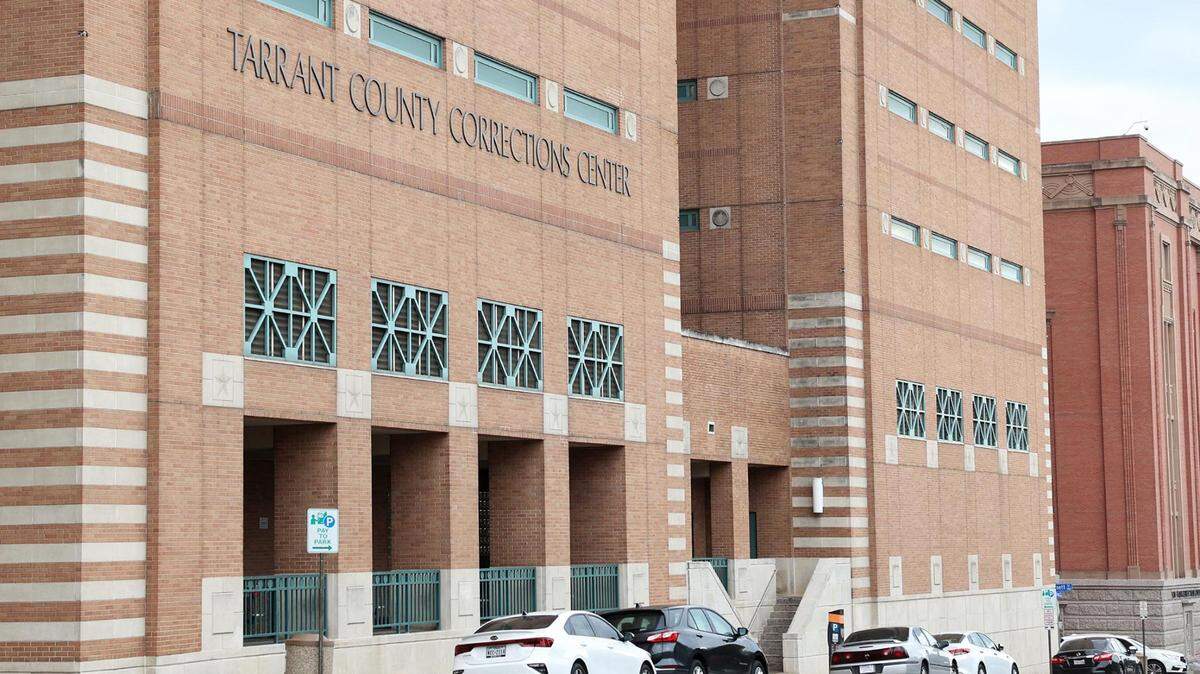
Another day, another Tarrant County Jail death — actually, this time, it’s two more deceased inmates in a three-day span, plus a new lawsuit about a 2021 death.
We’ve said this before but it bears repeating until it comes to fruition: People in custody at the jail are the county’s responsibility and deserve to be treated with dignity and respect, regardless of the reason they are there. The medically vulnerable need supervision and proper care. And above all, there must be accountability for the continued failures under Sheriff Bill Waybourn.
On Saturday, jail detention officers rushed to the aid of a 38-year-old inmate who was unresponsive. He was taken to John Peter Smith Hospital, where he was pronounced dead. So far, the investigation suggests the inmate died by suicide, although details, like the inmate’s name, have not been released.
Just three days later, JoAnn Lemmons, 55, died in the custody of the jail, according to the medical examiner’s records. She had been in custody since Saturday, booked on a charge of property theft. The details of Lemmons’ death have also not been released.
Almost as if on cue, a wrongful death lawsuit alleged that Georgia Kay Baldwin died because of the jail’s “policies, practices and customs.” The details in the lawsuit, filed by Baldwin’s sons in federal court, are horrifying.
According to the lawsuit, Baldwin, 52, died of dehydration after spending about 15 weeks inside the Tarrant County jail. According to the lawsuit, though, she was clearly unwell mentally when she arrived and should have been sent to a state hospital. Instead, she simply continued to deteriorate. Baldwin was unable to communicate, was “severely low functioning,” and often seemed delusional.
On Sept. 14, 2021, she was found laying next to the working water fountain attached to her cell toilet. A Texas Ranger did not find anyone at the jail to be criminally responsible for Baldwin’s death, but if Baldwin was not drinking due to her mental state to the point of dehydration, which caused her death, isn’t someone responsible?
These deaths follow a troubling pattern over the last several years. Each could have likely been prevented with more attentive care inside the jail or even perhaps placement in a more appropriate facility. In the last 18 months, 14 other people have died in the Tarrant County jail.
Last year, we learned of the sad tale of Robert Miller, whose 2019 death magnifies all the problems we still have in the management of the Tarrant County jail. He didn’t just die in custody, but authorities who could have called for justice covered it up. Miller was pepper-sprayed while being handcuffed and when he died soon thereafter, the county medical examiner initially cited natural causes related to the sickle-cell trait.
Experts who examined the case at the Star-Telegram’s request said it wasn’t possible because Miller didn’t have sickle-cell disease. The county stood by its explanation, citing a Mayo Clinic review, but changed an autopsy to say that the cause of Miller’s death was “undetermined.”
BEHIND THE STORY
MOREHey, who writes these editorials?
Editorials are the positions of the Editorial Board, which serves as the Fort Worth Star-Telegram’s institutional voice. The members of the board are: Cynthia M. Allen, columnist; Steve Coffman, editor and president; Bud Kennedy, columnist; Ryan J. Rusak, opinion editor; and Nicole Russell, editorial writer and columnist. Most editorials are written by Rusak or Russell. Editorials are unsigned because they represent the board’s consensus positions, not the views of individual writers.
Read more by clicking the arrow in the upper right.
How are topics and positions chosen?
The Editorial Board meets regularly to discuss issues in the news and what points should be made in editorials. We strive to build a consensus to produce the strongest editorials possible, but when we differ, we put matters to a vote.
The board aims to be consistent with stances it has taken in the past but usually engages in a fresh discussion based on new developments and different perspectives.
We focus on local and state news, though we will also weigh in on national issues with an eye toward their impact on Texas or the Dallas-Fort Worth area.
How are these different from news articles or signed columns?
News reporters strive to keep their opinions out of what they write. They have no input on the Editorial Board’s stances. The board consults their reporting and expertise but does its own research for editorials.
Signed columns by writers such as Allen, Kennedy and Rusak contain the writer’s personal opinions.
How can I respond to an editorial, suggest a topic or ask a question?
We invite readers to write letters to be considered for publication. The preferred method is an email to letters@star-telegram.com. To suggest a topic or ask a question, please email Rusak directly at rrusak@star-telegram.com.
The troubling lack of transparency from Waybourn’s office and the inability to pinpoint the nature of these untimely deaths or prevent them requires close scrutiny. The state commission that evaluates jails gave Tarrant County a passing grade last year, but clearly, something is wrong in staffing, supervision or procedures.
Some jail deaths are probably inevitable: As Waybourn has noted, many inmates arrive after years of untreated health crises. As of April 2023, there have been 52 deaths in the last five years (now 54) in the Tarrant County Jail; Tarrant County has a population of about 2.1 million. In nearby counties with a similar population size, the numbers are in a similar range: In Bexar (2.0 million), there have been about 63 deaths and in Dallas County (2.5 million) there have been about 44 deaths.
Still, there are simply too many that appear to have been preventable. There is no compelling reason to believe the Tarrant County jail should thrive in mediocrity or that the citizens who perish there do not deserve better.
So now we ask again: When is enough actually enough for county commissioners? How many more potential expensive lawsuits are they willing to risk? Who’s willing to dig in and determine what’s happening and how to prevent it?
The county needs a third-party investigator with no political or local law enforcement entanglements to review the last five years, find the common denominators, and determine a course of action to prevent deaths.
Even if the focus was purely on improving the evaluation and treatment of mentally ill inmates, surely it would save some lives.