
Nothing the Supreme Court says can change this important fact about Texas education | Opinion
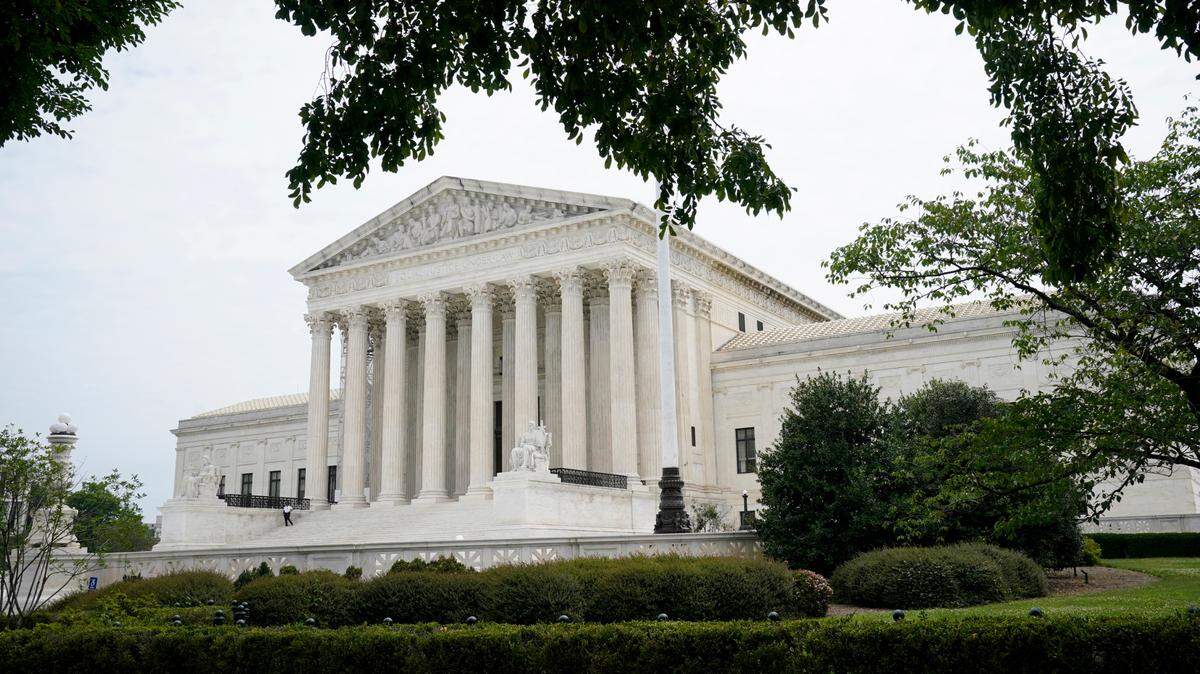
It’s ironic that Thursday’s monumental Supreme Court ruling barring affirmative action in college admissions will have a more limited impact on Texas than many states.
Several key cases upholding affirmative action originated over the always-thorny issue of who gets into the University of Texas at Austin. And UT is the only Texas public university that still considers race in admission decisions. Private universities, including TCU, will have to adjust, but most Texas colleges are ahead of the curve.
It should nonetheless be a wake-up call. There is so much work to be done to improve education for Black and Hispanic Texans. It’s vital to our future; look no further than the recent finding that Hispanic people are now the largest demographic group in the state, a trend that will only intensify in years to come.
We would prefer that universities, especially private ones, have the most control possible over the composition of their enrollment. The court’s 6-3 majority, led by Chief Justice John Roberts, leaves some wiggle room, but not much.
It’s crucial to note, though, that nothing in the ruling can justify the return of bias against minorities, in college admissions or anything else. Roberts issued a clarion call for race neutrality, not a return to the dark days of discrimination.
Texas colleges will have to grapple with this issue even as a new state law eliminates universities’ offices for diversity, equity and inclusion. Gov. Greg Abbott has said that the goal is to get politics out of higher education, stressing that diversity remains an important value but it shouldn’t mean punishing any student based on race. That’s an appropriate goal, but the details will matter greatly.
Affirmative action in college admissions has always been an exception to the plain meaning of the 14th Amendment’s equal-protection clause. The high court has curtailed its use over the years and clearly looked ahead to a day when it should end. In 2003, Justice Sandra Day O’Connor projected it would come in 25 years, so she wasn’t far off.
Now that that date is here, Texas can be a model — and a cautionary note — going forward.
In the late 1990s, Texas was subject to an appeals court ruling barring use of race in college admissions. The steep drops in minority enrollment were alarming, and policymakers set out for a cure.
The Legislature settled on the “top 10% rule,” which granted automatic admission to state universities for any student finishing in that portion of their high school graduating class. The result was still a dip in minority enrollment. At Texas A&M for example, the enrollment of Black students has not kept pace. But the representation of Hispanic and Asian students has improved.
Once the appeals court ruling was overturned, only UT-Austin went back to considering race as one factor in admissions. And yet, even with that policy, Black students make up just 5.2% of the campus, compared to 3.2% at A&M. Clearly, something different is needed.
There are so many factors in admissions decisions, though, that it’s difficult to pinpoint a specific fix. More individualized consideration of students may be an answer, and Roberts went out of his way to note, for example, that universities can still look at a student’s individual experience with the effects of race.
BEHIND THE STORY
MOREHey, who writes these editorials?
Editorials are the positions of the Editorial Board, which serves as the Fort Worth Star-Telegram’s institutional voice. The members of the board are: Cynthia M. Allen, columnist; Steve Coffman, editor and president; Bud Kennedy, columnist; Ryan J. Rusak, opinion editor; and Nicole Russell, editorial writer and columnist. Most editorials are written by Rusak or Russell. Editorials are unsigned because they represent the board’s consensus positions, not the views of individual writers.
Read more by clicking the arrow in the upper right.
How are topics and positions chosen?
The Editorial Board meets regularly to discuss issues in the news and what points should be made in editorials. We strive to build a consensus to produce the strongest editorials possible, but when we differ, we put matters to a vote.
The board aims to be consistent with stances it has taken in the past but usually engages in a fresh discussion based on new developments and different perspectives.
We focus on local and state news, though we will also weigh in on national issues with an eye toward their impact on Texas or the Dallas-Fort Worth area.
How are these different from news articles or signed columns?
News reporters strive to keep their opinions out of what they write. They have no input on the Editorial Board’s stances. The board consults their reporting and expertise but does its own research for editorials.
Signed columns by writers such as Allen, Kennedy and Rusak contain the writer’s personal opinions.
How can I respond to an editorial, suggest a topic or ask a question?
We invite readers to write letters to be considered for publication. The preferred method is an email to letters@star-telegram.com. To suggest a topic or ask a question, please email Rusak directly at rrusak@star-telegram.com.
Colleges could also add more weight to socioeconomic status, emphasizing ways to provide more pathways to higher education that can lift people out of the cycle of poverty. That will require more help for those students to afford and adjust to college.
“If an applicant has less financial means (because of generational inheritance or otherwise), then surely a university may take that into account,” Justice Clarence Thomas wrote in a concurring opinion. But it cannot assume “that because the applicant checks the box for ‘black’ he therefore conforms to the university’s monolithic and reductionist view of an abstract, average black person.”
The issue of student debt has forced a re-evaluation of the value of higher education overall. Any student who wants to pursue it should be able to do so. But we also need more creative paths to the workforce that acknowledge two important realities: College isn’t for everyone, and we need more people working in trades that don’t require a degree anyway.
Part of the reason this issue has lingered is that our nation is doing such a poor job educating underprivileged students, particularly Black and Hispanic children. The latest devastating proof came in a new National Assessment of Education Progress report, known as the “Nation’s Report Card.” It showed we’ve lost a decade of progress on middle-schoolers’ mastery of reading and math. And not surprisingly, the effect is most pronounced for minority students.
It may take a moonshot plan to get schools back on the right track. But the first step is reversing the impact of the COVID pandemic learning loss with a rigorous focus on the basics of reading and math, especially in the youngest grades.
Let’s hope that the Supreme Court’s ruling is the final sobering note that forces us all to wake up to that fact — and that Texas helps lead the way.