
If book policy means pulling Bible and Anne Frank, Keller ISD needs some common sense
Keller ISD has landed in the national spotlight for providing a terrible example of how to answer a question arising around the country: How do we handle sensitive or offensive material in schools?
A graphic novel depicting Anne Frank’s powerful story of her short life during the Holocaust has been flagged for review. Someone also tagged the Bible — the highest-selling and most-read book in all of history — for a committee to consider for removal.
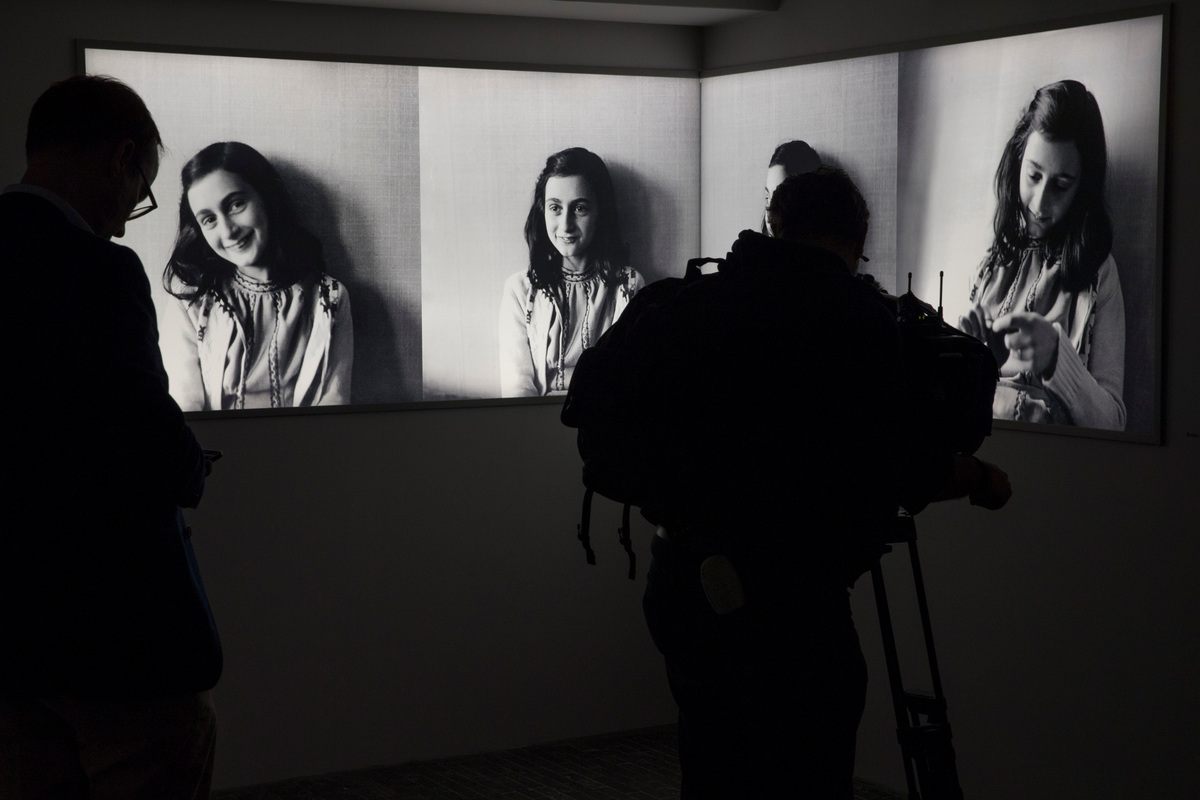
Keller ISD has opted to separate wholesale any “challenged” books until a further review can take place. That knee-jerk policy is the wrong tack. It opens the district to mockery and leads to overreaction taking the place of common-sense judgment.
Previously, the district had been doing a lengthy review of challenged works after a Texas Education Agency investigation uncovered books in Keller ISD libraries that had sexually explicit material.
On Tuesday, Jennifer Price, the district’s curriculum director, told staff in an email to quickly pull all titles flagged for review from libraries and classrooms, regardless of what recommendations had already been made.
It’s a classic bureaucratic decision — overly cautious, unnecessarily duplicative and ignoring the inevitable unintended consequences.
It’s also been blown out of proportion among national news sources.
In a written statement Thursday, Keller Superintendent Rick Westfall clarified that the challenged books are removed and in a “Parental Consent Area” and that he anticipates “that books like the Bible, Anne Frank’s Diary: The Graphic Adaptation, and other titles will be on shelves very soon.”
Due to the national exposure, even the U.S. Holocaust Museum appeared to weigh in on someone flagging the Anne Frank graphic novel, writing on Twitter: “Anne Frank is among the most well-known of the six million Jews who died in the Holocaust. For many students around the world, her diary is the first encounter they have with the history of Nazi Germany’s attempt to murder all the Jews of Europe during World War II.”
There are offensive books and inappropriate books, and then there are people making a political statement via books. Flagging the Bible, an Anne Frank book or Uncle Tom’s Cabin (as an example), is one way to send a message and frankly, waste the time of people paid on the taxpayer’s dime to teach our children.
With such a wide-open policy, it’s too easy for book-flagging to devolve into political point-scoring: If this offends you, well, then this offends me. It’s hard to imagine anyone raising a legitimate issue with Anne Frank’s story, in any depiction.
We agree with and understand the need for parents to be involved in their children’s education. They have every right to object to curriculum or material that seems too mature, graphic, or unsuitable for them. This is especially true of elementary and middle school-aged children.
But we also presume teachers, librarians and other staff have jobs to do, and tediously removing and reviewing any book that’s flagged is a waste of time. It also loses the point of education altogether, which is to expand children’s knowledge of the world in which they live.
At this point, especially given the wide range of availability of these books elsewhere — at the public library, online, or in various apps such as Audible — school administrators need to ask themselves: What’s this really about? Is there a better way to handle this?
Administrators in Keller and other districts should listen to the community — and that includes voters and taxpayers, not just parents. They should make distinctions between explicit content and that which merely induces provocative thinking.
If a particular book is flagged, it should be reviewed while still available in libraries. As for books used in curriculum, parents should be informed ahead of time of the list of books their children will be reading in English or literature classes. Families should be allowed to decline or opt their children out of reading any book that they deem inappropriate.
If a handful of parents object to a certain title, naturally, a teacher or administrator may want to reconsider teaching that particular book.
Books are powerful tools for broadening a child’s mind. Some are age-inappropriate for children, but some are incredible. Parents should be let into this process without being given the ability to make political statements through book-flagging and wasting staff time to review every grievance.
BEHIND THE STORY
MOREHey, who writes these editorials?
Editorials are the positions of the Editorial Board, which serves as the Fort Worth Star-Telegram’s institutional voice. The members of the board are: Cynthia M. Allen, columnist; Steve Coffman, editor and president; Bud Kennedy, columnist; Ryan J. Rusak, opinion editor; and Nicole Russell, editorial writer and columnist. Most editorials are written by Rusak or Russell. Editorials are unsigned because they represent the board’s consensus positions, not the views of individual writers.
Read more by clicking the arrow in the upper right.
How are topics and positions chosen?
The Editorial Board meets regularly to discuss issues in the news and what points should be made in editorials. We strive to build a consensus to produce the strongest editorials possible, but when we differ, we put matters to a vote.
The board aims to be consistent with stances it has taken in the past but usually engages in a fresh discussion based on new developments and different perspectives.
We focus on local and state news, though we will also weigh in on national issues with an eye toward their impact on Texas or the Dallas-Fort Worth area.
How are these different from news articles or signed columns?
News reporters strive to keep their opinions out of what they write. They have no input on the Editorial Board’s stances. The board consults their reporting and expertise but does its own research for editorials.
Signed columns by writers such as Allen, Kennedy and Rusak contain the writer’s personal opinions.
How can I respond to an editorial, suggest a topic or ask a question?
We invite readers to write letters to be considered for publication. The preferred method is an email to letters@star-telegram.com. To suggest a topic or ask a question, please email Rusak directly at rrusak@star-telegram.com.
This story was originally published August 18, 2022 at 5:19 PM.