
Bipartisan Senate gun deal brokered by Cornyn isn’t perfect. But here’s why it’s a solid start
It would be easy to dismiss the bipartisan deal on gun legislation in the Senate as going too far or not far enough, depending on your perspective.
Plenty of partisans have already done so, whether out of opposition to red-flag laws or frustration over what the plan doesn’t include, like an assault weapons ban. Despite its modest measures, senators are still bogged down over language on provisions such as domestic violence.
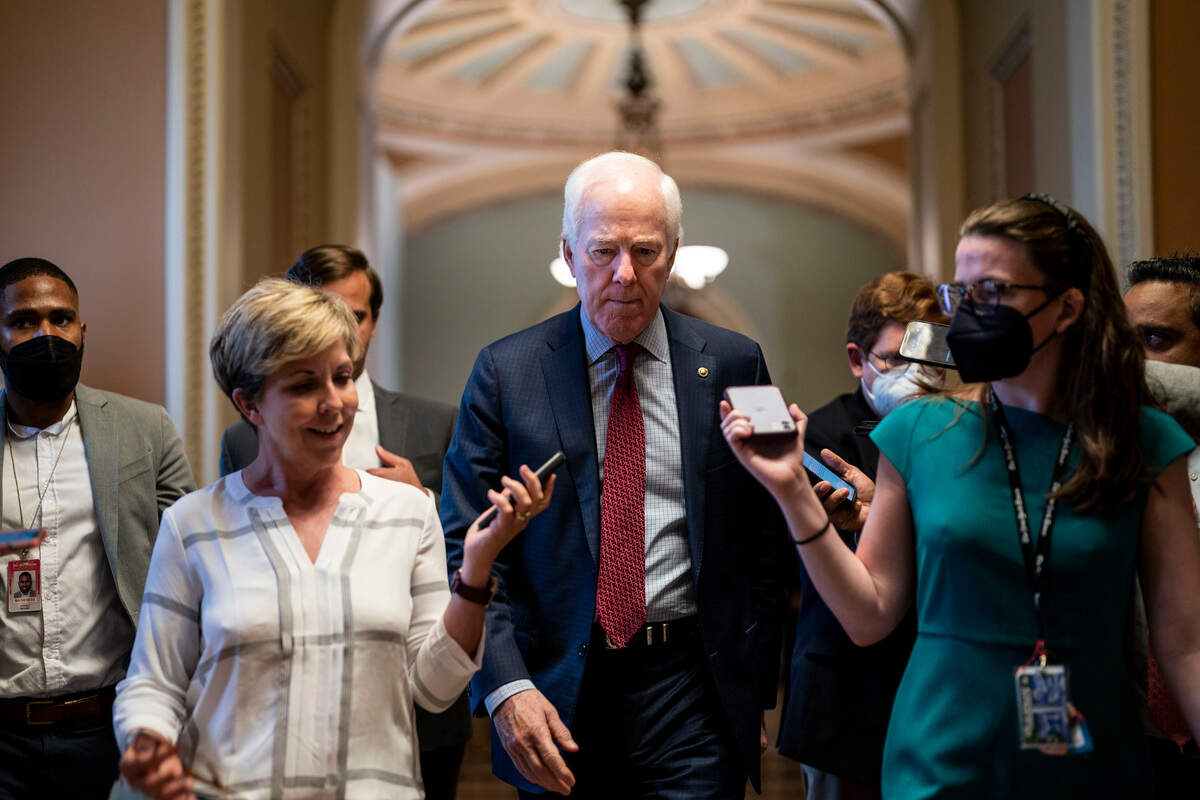
Despite the difficulties, senators must continue and reach a deal. Sen. John Cornyn, the Texan leading Republicans willing to consider the package in the wake of the Uvalde massacre, has reached deals for incremental improvements in gun laws before. For his trouble, he drew raucous boos from activists at the Texas GOP convention in Houston on Friday. We urge him to stay at it and do it again.
If lawmakers can reach agreement in the next few weeks, it will be refreshing to finally see movement on a huge issue facing the nation. Gun safety has been tied in partisan knots for too long. Bipartisan support for effective changes that don’t sacrifice Second Amendment rights is a breath of fresh air.
Nothing in the deal will guarantee a decrease in gun violence overall or mass shootings in particular. But it will make it harder for people who shouldn’t have guns to get them and boost school security and mental health resources. It’s a start.
The firearm provisions are solid. Providing resources for states to craft red-flag laws is crucial. Concerns that such laws could be overly broad or empower judges, law enforcement or even vengeful family members to abuse someone’s gun rights are valid. But with balance and oversight, these laws are a tool that helps law enforcement deal with a potentially imminent threat.
Having state discretion is key. A one-size-fits-all federal law would be unworkable and diminish accountability. Offering support and flexibility for states to experiment is a better way to go. Texas should be a leader on the issue, a way to prove that strong Second Amendment support can co-exist with giving law enforcement tools to prevent tragedies.
The Senate plan would also address young adults getting highly destructive rifles by making more juvenile records part of background checks for buying weapons. Cornyn maintains that the Uvalde shooter’s intentions should have been obvious.
Of course, a background check is only as good as the records it relies on and the compliance of thousands of jurisdictions. We’d prefer raising the age for rifle purchases to 21, and Texas should do so when lawmakers meet next year.
But given how few gun killings are committed with rifles — attention-grabbing mass shootings are awful but still quite rare as part of overall gun violence — this is a reasonable compromise.
The plan leaves a lot to the states. In Texas, that could mean inaction. But we’re encouraged that House Speaker Dade Phelan offered a list of budgetary measures for the state to take in the six months before lawmakers get back to work in Austin. Phelan, R-Beaumont, wants to spend more than $100 million to boost funding for student access to mental health services, create additional pediatric crisis response teams, expand pediatric psychiatric facilities, active-shooter training for police and schools, and more.
He also endorsed Lt. Gov. Dan Patrick’s plan to spend $50 million on bulletproof shields for school police to be able to respond faster to a shooter.
These are good steps, but only initial ones. Lawmakers need to work on gun measures in January, including a red-flag law and raising the rifle purchase age.
It will be arduous, perhaps impossible, given the pro-gun rights politics that dominate Texas and particularly the base of the Republican Party. But if the efforts in Washington bear fruit, perhaps state lawmakers can take a positive cue from their federal counterparts, for once, and compromise.
BEHIND THE STORY
MOREHey, who writes these editorials?
Editorials are the positions of the Editorial Board, which serves as the Fort Worth Star-Telegram’s institutional voice. The members of the board are: Cynthia M. Allen, columnist; Steve Coffman, editor and president; Bud Kennedy, columnist; Ryan J. Rusak, opinion editor; and Nicole Russell, editorial writer and columnist. Most editorials are written by Rusak or Russell. Editorials are unsigned because they represent the board’s consensus positions, not the views of individual writers.
Read more by clicking the arrow in the upper right.
How are topics and positions chosen?
The Editorial Board meets regularly to discuss issues in the news and what points should be made in editorials. We strive to build a consensus to produce the strongest editorials possible, but when we differ, we put matters to a vote.
The board aims to be consistent with stances it has taken in the past but usually engages in a fresh discussion based on new developments and different perspectives.
We focus on local and state news, though we will also weigh in on national issues with an eye toward their impact on Texas or the Dallas-Fort Worth area.
How are these different from news articles or signed columns?
News reporters strive to keep their opinions out of what they write. They have no input on the Editorial Board’s stances. The board consults their reporting and expertise but does its own research for editorials.
Signed columns by writers such as Allen, Kennedy and Rusak contain the writer’s personal opinions.
How can I respond to an editorial, suggest a topic or ask a question?
We invite readers to write letters to be considered for publication. The preferred method is an email to letters@star-telegram.com. To suggest a topic or ask a question, please email Rusak directly at rrusak@star-telegram.com.