
If Roe v. Wade goes, Texas needs robust abortion debate, not a prepackaged ban
The shocking leak of a possible Supreme Court ruling to overturn Roe v. Wade has, rightfully, cranked up the heat and volume of our never-ending abortion debate.
It’s crucial, though, to keep an eye on what the leaked draft really means. Most important to note is that it’s not final.
Justices share written opinions with their colleagues, seek input on language and positions, and argue and even cut deals. It’s a political process, usually tightly held. No one outside the justices and a handful of clerks know whether the decision to overturn Roe is done or whether Justice Samuel Alito’s initial work — from three months ago — will be the final word.
There’s a frequent misperception, too, that a ruling such as Alito’s would mean abortion is illegal in the U.S. That’s not the case. Congress could, in theory, pass a law deeming it so, or it could legalize the procedure nationwide. Unless that happens, each state will make abortion policy.
Texas, like many other conservative states, has already done so. A law enacted last year, written by Republican Rep. Giovanni Capriglione of Southlake, creates a “trigger” to ban most abortions after a definitive reversal of Roe. It has narrow exceptions for a woman’s life and health.
Of course, the ruling would shift abortion policy making from the courts to legislatures. State lawmakers could and should reflect the will of all their voters and seek reasonable compromise.
It’s infuriating that in Texas, that may not be the case. The trigger law was enacted last year, but it got little notice because of the state’s other monumental abortion law. That one, which bars abortions after a fetal heartbeat is detected but is policed through civil lawsuits, has flummoxed courts because it doesn’t involve state enforcement.
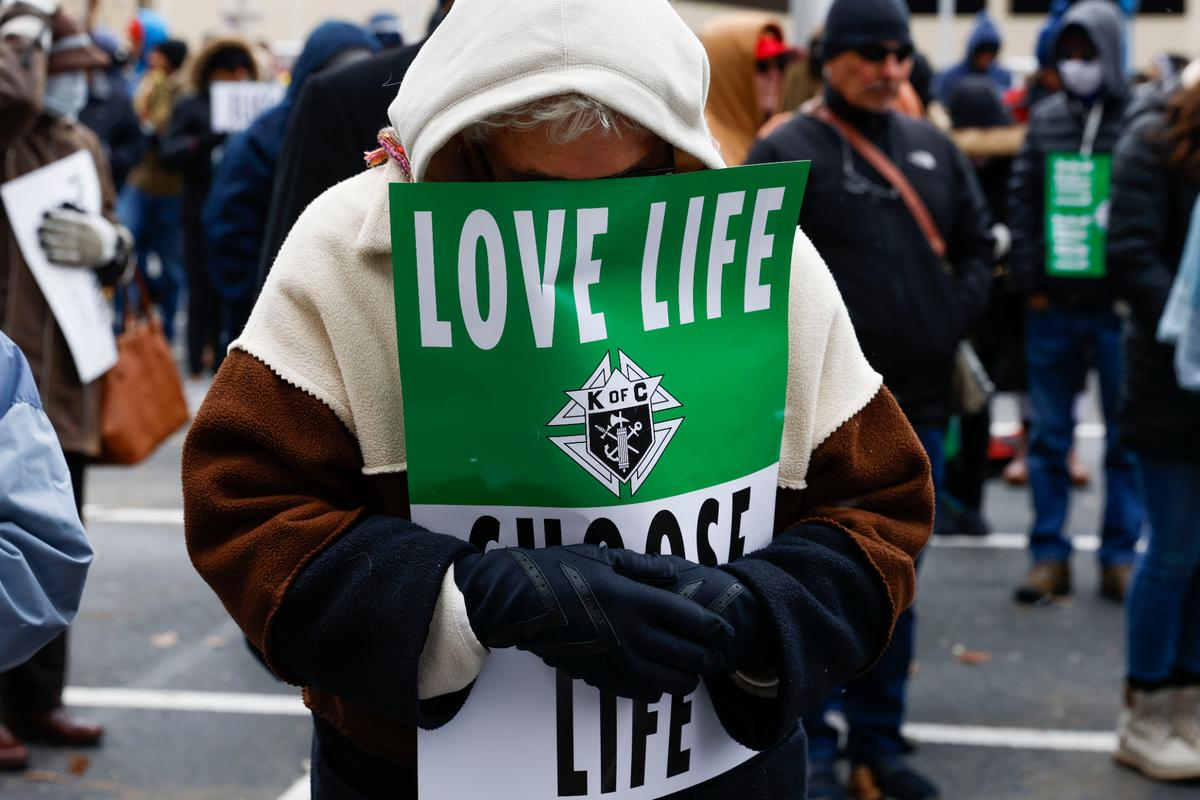
Its novelty understandably drew attention that the trigger law didn’t receive. But such a huge change should be the subject of robust debate, especially if it moves from possibility to reality. The Legislature must revisit the topic and allow the people’s voices to be heard throughout the process.
If Roe is overturned, Texas’ biggest immediate task on abortion will be to curtail extremism. In recent weeks, a few Republicans have actually discussed whether the death penalty would be appropriate for a woman who received an abortion. Thank goodness, that’s a minority position; the mainstream anti-abortion movement has always focused on targeting doctors, not pregnant women.
But once the window of possibility shifts with a Supreme Court ruling, the loudest voices will make more attempts at such outlandish policies. They must be defeated. The vast majority of Texans view abortion with some nuance. Our laws should reflect that.
The spotlight should also fall on candidates for district attorney positions, in Tarrant County and elsewhere. DAs may have to decide how vigorously to purse abortion crimes. The safe thing for a candidate to say in a campaign is that he or she will enforce the law.
But resources are finite, and crime is rising. Tarrant County Republican hopefuls Matt Krause and Phil Sorrells, who meet in a May 24 runoff, and Democratic nominee Tiffany Burks must outline exactly how their offices would handle potential abortion cases. Also taking on new importance is the race for attorney general, where both parties have runoffs.
In that race, voters have a chance to be heard on this topic soon; in others, it will come in November. Millions of Texans generally don’t vote in any election not involving the presidency. Gallup estimates that more than half of Texas voters believe abortion should be legal in at least a few circumstances.
Here and elsewhere, the extremes have never represented a majority — except at the ballot box.
If Texans want a change, they can order one up in November.
BEHIND THE STORY
MOREHey, who writes these editorials?
Editorials are the positions of the Editorial Board, which serves as the Fort Worth Star-Telegram’s institutional voice. The members of the board are: Cynthia M. Allen, columnist; Steve Coffman, editor and president; Bud Kennedy, columnist; Ryan J. Rusak, opinion editor; and Nicole Russell, editorial writer and columnist. Most editorials are written by Rusak or Russell. Editorials are unsigned because they represent the board’s consensus positions, not the views of individual writers.
Read more by clicking the arrow in the upper right.
How are topics and positions chosen?
The Editorial Board meets regularly to discuss issues in the news and what points should be made in editorials. We strive to build a consensus to produce the strongest editorials possible, but when we differ, we put matters to a vote.
The board aims to be consistent with stances it has taken in the past but usually engages in a fresh discussion based on new developments and different perspectives.
We focus on local and state news, though we will also weigh in on national issues with an eye toward their impact on Texas or the Dallas-Fort Worth area.
How are these different from news articles or signed columns?
News reporters strive to keep their opinions out of what they write. They have no input on the Editorial Board’s stances. The board consults their reporting and expertise but does its own research for editorials.
Signed columns by writers such as Allen, Kennedy and Rusak contain the writer’s personal opinions.
How can I respond to an editorial, suggest a topic or ask a question?
We invite readers to write letters to be considered for publication. The preferred method is an email to letters@star-telegram.com. To suggest a topic or ask a question, please email Rusak directly at rrusak@star-telegram.com.
This story was originally published May 3, 2022 at 12:30 PM.