
Finally! Thank goodness a court stopped death penalty in case of Texas mom Melissa Lucio
In his brilliant novel about justice and revenge, hope and humanity, “Les Misérables,” Victor Hugo wrote, “Death belongs to God alone. By what right do men touch that unknown thing?”
The sentiment captures just why death row executions are uncomfortable, even when they are rightly meant to exact justice. Death is not only unknown to the rest of us but final: When the state is responsible for putting a person to death for a crime committed, there must be no doubt of that person’s guilt.
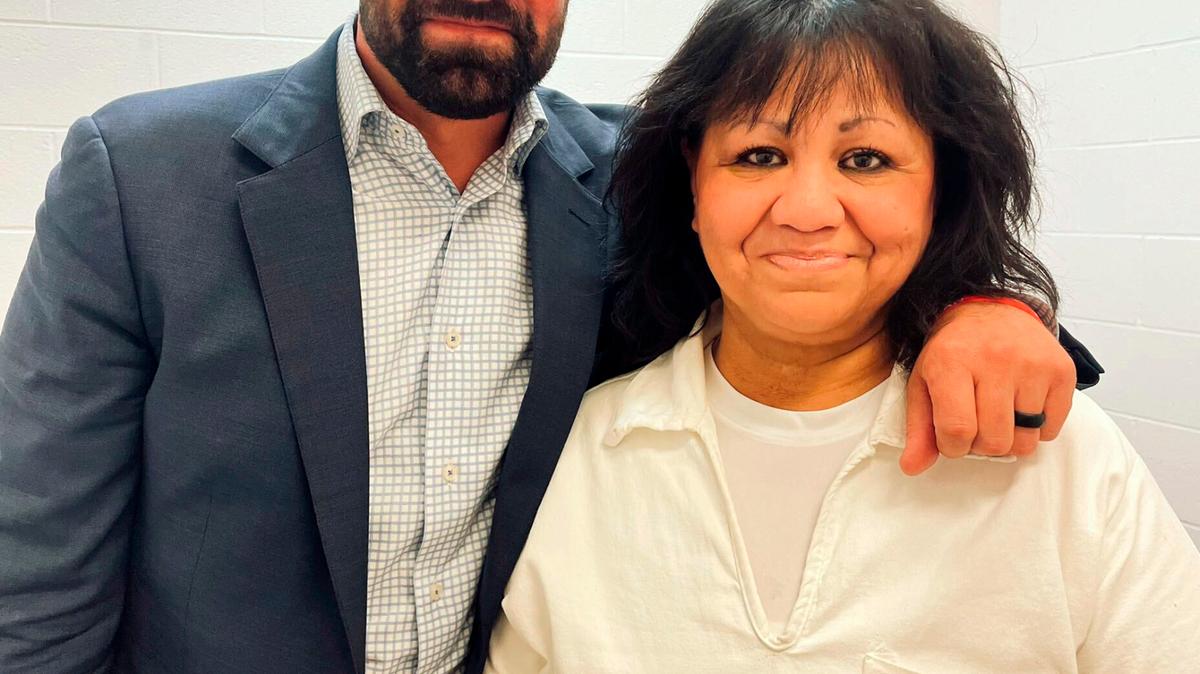
This does not appear to be the case with Melissa Lucio, 53, the mother of 14 who is on death row for the alleged 2007 murder of her 2-year-old daughter, Mariah. Lucio was scheduled to be put to death Wednesday.
The Texas Court of Criminal Appeals halted the execution Monday, sending Lucio’s case back to the Cameron County court where she was originally convicted. The court’s ruling came just minutes before the Texas Board of Pardons and Paroles was scheduled to make its determination.
The court’s ruling was sweeping, ordering reconsideration of whether Lucio is innocent and whether there were mistakes made in her trial. Her case has drawn attention for the breadth of those arguing on her behalf, including a large, bipartisan group of state lawmakers.
Lucio’s attorneys have appealed her conviction multiple times, asserting that her confession of murder was coerced after an exhausting night of interrogation. Lucio’s confession played a key role in her conviction, and it poses problems for her own defense.
One of Lucio’s attorneys is with the Innocence Project, an organization which aims to ensure people wrongfully convicted of alleged crimes are freed. The organization contends that after Mariah fell down the stairs and subsequently died, Lucio was questioned for five hours without an attorney.
Despite claiming she was innocent “more than 100 times,” exhausted and in shock, at 3 a.m. Lucio agreed she was responsible for some of her daughter’s injuries that led to her death. Her attorney at the time presented a poor defense to ensure a jury would find her innocent, the Innocence Project contends.
Her attorneys say new evidence can prove Lucio’s daughter Mariah’s death — after a tumble down the stairs in the family’s apartment in Harlingen — was a tragic accident.
Lucio’s attorneys say the jurors who convicted her never heard about forensic evidence showing that Mariah’s various injuries were actually caused by a fall days earlier. They also say Lucio’s defense wasn’t allowed to present evidence questioning the validity of her confession.
The attorney general’s office maintains that there was proof Mariah had been severely abused prior to her fall.
In 2019, a three-judge panel of the 5th U.S. Circuit Court of Appeals found differently. The judges overturned Lucio’s conviction, ruling she was deprived of “her constitutional right to present a meaningful defense.”
However, two years later, the full court said the conviction had to be upheld for procedural reasons, even though the credibility of Lucio’s confession was clearly in doubt. Three jurors and one alternate in Lucio’s trial all signed affidavits saying they now question her conviction.
Claims of new evidence must be taken seriously. If there is any doubt whatsoever that Lucio is guilty, she should be given a new trial, even though that will cost the state additional time and resources: When a person’s life stake, and innocence is in question, the state cannot afford to be wrong.
More than 100 Texas legislators have agreed that Lucio’s execution should be delayed and a new trial granted. The co-chairs of the Texas House’s bipartisan Criminal Justice Reform Caucus, Reps. Jeff Leach, R-Allen, and Joe Moody, D-El Paso, recently visited Lucio in prison and have been lobbying for months for a new trial.
Leach and others were lobbying the Texas Board of Pardons and Paroles to recommend stopping the execution and ordering a new hearing in the case. The board was scheduled to make its recommendation to Gov. Greg Abbott on Monday before the criminal court stepped in.
Death row executions shouldn’t be subject to lawmaker consensus, but in this case, when a Republican such as Leach calls for a redo, he’s not trying to gum up the system by wasting resources.
“As a conservative Republican myself, who has long been a supporter of the death penalty in the most heinous cases ... I have never seen a more troubling case than the case of Melissa Lucio,” Leach wrote to Abbott and the clemency board.
BEHIND THE STORY
MOREHey, who writes these editorials?
Editorials are the positions of the Editorial Board, which serves as the Fort Worth Star-Telegram’s institutional voice. The members of the board are: Cynthia M. Allen, columnist; Steve Coffman, editor and president; Bud Kennedy, columnist; Ryan J. Rusak, opinion editor; and Nicole Russell, editorial writer and columnist. Most editorials are written by Rusak or Russell. Editorials are unsigned because they represent the board’s consensus positions, not the views of individual writers.
Read more by clicking the arrow in the upper right.
How are topics and positions chosen?
The Editorial Board meets regularly to discuss issues in the news and what points should be made in editorials. We strive to build a consensus to produce the strongest editorials possible, but when we differ, we put matters to a vote.
The board aims to be consistent with stances it has taken in the past but usually engages in a fresh discussion based on new developments and different perspectives.
We focus on local and state news, though we will also weigh in on national issues with an eye toward their impact on Texas or the Dallas-Fort Worth area.
How are these different from news articles or signed columns?
News reporters strive to keep their opinions out of what they write. They have no input on the Editorial Board’s stances. The board consults their reporting and expertise but does its own research for editorials.
Signed columns by writers such as Allen, Kennedy and Rusak contain the writer’s personal opinions.
How can I respond to an editorial, suggest a topic or ask a question?
We invite readers to write letters to be considered for publication. The preferred method is an email to letters@star-telegram.com. To suggest a topic or ask a question, please email Rusak directly at rrusak@star-telegram.com.
This story was originally published April 25, 2022 at 1:42 PM.