
Forest Hill’s latest political drama: Should council be able to suspend a member?
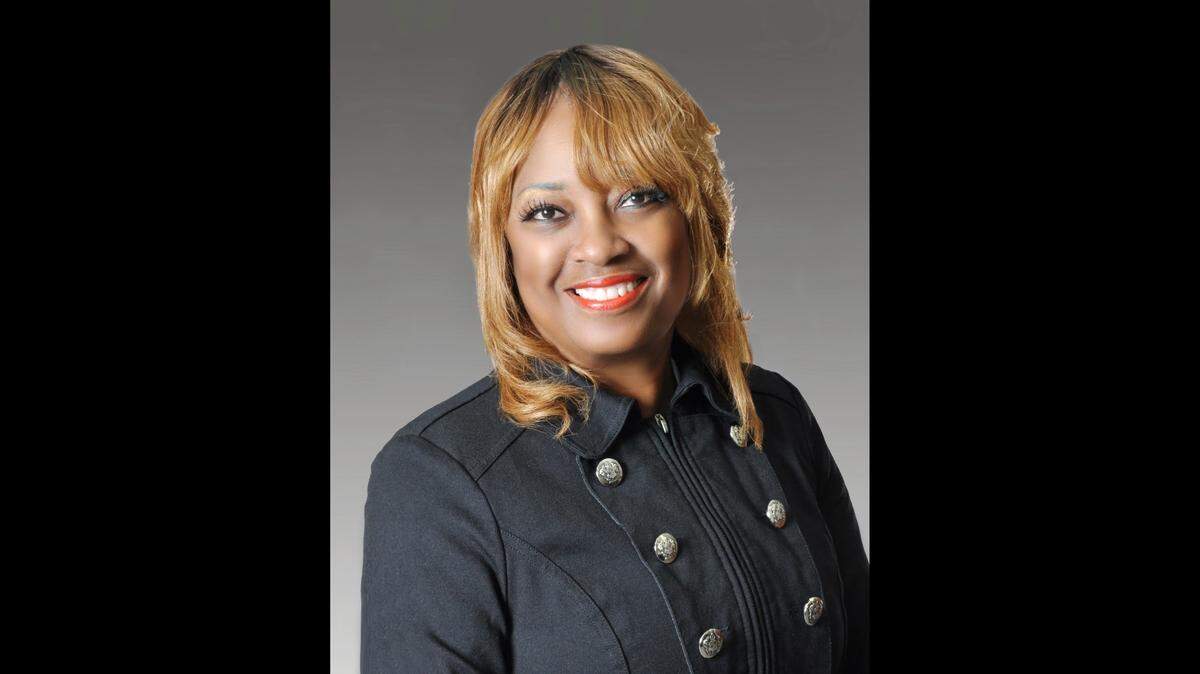
Plenty of politicians have surely sat with their colleagues and daydreamed of having the power to boot them out of office.
In Forest Hill, they’ve gone and done it.
The small city in southern Tarrant County, home to far more than its share of political turmoil, has suspended a City Council member. Beckie Duncan Hayes will miss four months of the three-year term she won in November 2020, based on a 4-2 vote of her council colleagues.
The stated reason was that a contractor who performed foundation work on Hayes’ home did not obtain the necessary municipal permit. During an hours-long meeting Nov. 16 on the matter, members defending Hayes hinted at political motivations.
The city charter allows for suspensions, and the council gets to decide the appropriate length. It’s an unusual provision that no other city in Tarrant County appears to have in its charter. The suspension may be legal, but it’s anti-democratic, and Forest Hill voters should amend their charter to eliminate a power so easily abused and arbitrarily applied.
In the meantime, the Tarrant County district attorney and perhaps the U.S. Attorney’s Office should at least monitor the situation and perhaps intervene to protect the rights of Forest Hill voters.
Council members voting against Hayes argued that an elected official must meet the highest standards in following city ordinances, and we certainly agree. Even if the onus was on the contractor, a wise city official would make sure that business involving her home followed the letter of the law. (Hayes declined our request for an interview.)
But the suspension is overkill. The allegations against Hayes don’t merit losing more than 10 percent of her term. And worse, pulling her from the council punishes voters who did nothing wrong.
Council members are elected citywide, so it’s not that there’s a crisis-level lack of representation for certain voters. But elections matter, and Hayes won hers. If a council member commits an offense serious enough to merit removal of office, that’s what recall elections are for.
But recall is a higher bar, as it should be. It requires the gathering of a large number of valid signatures from voters and success in an election. By suspending Hayes, the other council members could act as judge and jury and hand down their preferred sentence in a matter of hours.
Council member Sonja Coleman, who voted against the suspension, had the right word for it during the council’s debate: “ridiculous.” She suggested the majority had decided in advance how it wanted to handle the matter.
“It doesn’t just impact [Hayes]” she said. “It impacts the city, it impacts everybody, everything that we’re trying to do now to try to forge this city forward.”
She suggested that newer council members were trying to bring change to Forest Hill and that the suspension was the product of resistance to change. That kind of political dispute is exactly what makes the suspension power a bad idea. The council had options short of it, such as a written reprimand or a more formal censure.
This imbroglio is just the latest in a string of them in Forest Hill. In 2019, Mayor Lyndia Thomas and Hayes, who was mayor pro tempore at the time, resigned after council members questioned a city reimbursement for their tickets to attend an event featuring former first lady Michelle Obama. Hayes was handily reelected in November 2020.
And just last month, the longtime city manager departed amid accusations of improper sick-leave payments. The job is filled on an interim basis, but this kind of political machination won’t make it easy to find a strong replacement.
Forest Hill is far from the first small town to have personal disputes spill over into city work. But when a situation is arbitrarily addressed in a way that defies the voters’ will, that’s a bigger problem than any political clashes among council members.
BEHIND THE STORY
MOREHey, who writes these editorials?
Editorials are the positions of the Editorial Board, which serves as the Fort Worth Star-Telegram’s institutional voice. The members of the board are: Cynthia M. Allen, columnist; Steve Coffman, editor and president; Bud Kennedy, columnist; Ryan J. Rusak, opinion editor; and Nicole Russell, editorial writer and columnist. Most editorials are written by Rusak or Russell. Editorials are unsigned because they represent the board’s consensus positions, not the views of individual writers.
Read more by clicking the arrow in the upper right.
How are topics and positions chosen?
The Editorial Board meets regularly to discuss issues in the news and what points should be made in editorials. We strive to build a consensus to produce the strongest editorials possible, but when we differ, we put matters to a vote.
The board aims to be consistent with stances it has taken in the past but usually engages in a fresh discussion based on new developments and different perspectives.
We focus on local and state news, though we will also weigh in on national issues with an eye toward their impact on Texas or the Dallas-Fort Worth area.
How are these different from news articles or signed columns?
News reporters strive to keep their opinions out of what they write. They have no input on the Editorial Board’s stances. The board consults their reporting and expertise but does its own research for editorials.
Signed columns by writers such as Allen, Kennedy and Rusak contain the writer’s personal opinions.
How can I respond to an editorial, suggest a topic or ask a question?
We invite readers to write letters to be considered for publication. The preferred method is an email to letters@star-telegram.com. To suggest a topic or ask a question, please email Rusak directly at rrusak@star-telegram.com.