Home-schooling is now mainstream. True school choice must include support for it | Opinion
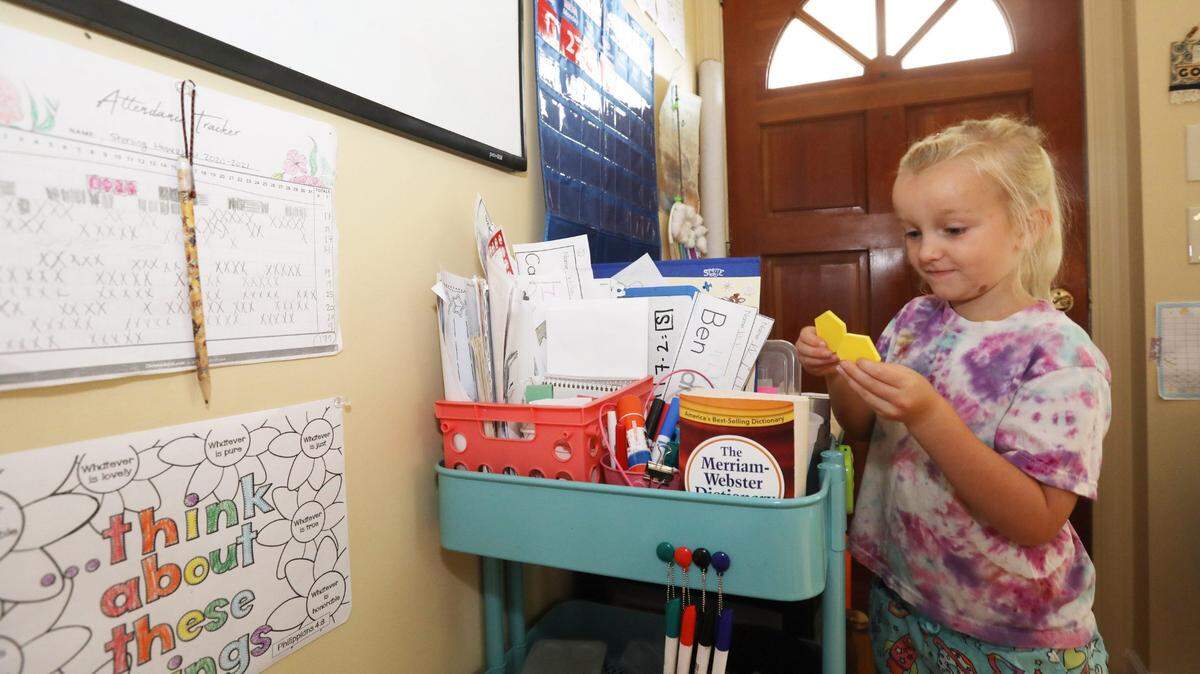
I do not recall my exact reaction when my husband suggested that we consider home-schooling our children.
Laughter seems plausible, particularly since we had no children yet when he casually worked its mention into our conversation. But my sense of home-schooling at that time was mostly that it was for families on the cultural fringe — that is, not us.
Yet, here I am years later, not only a home-schooler but finding that our decision to educate our children outselves isn’t fringy at all.
It’s actually increasingly mainstream, if not slightly cool.
According to a new analysis from the Washington Post, home-schooling is the fastest growing form of education in the U.S. – not just in conservative states like Texas.
And it’s not exclusive to conservative enclaves, either. In New York City and Washington — famously bastions of progressivism — home-school communities are growing and flourishing.
Indeed, home-schooling is now a less ideological practice with more diverse practitioners, attracting families across the political spectrum and across various racial and ethnic communities.
That’s probably because today’s home-school families are motivated by an assortment of factors, not just moral and religious education but also physical and emotional safety, social environment, curriculum, family flexibility and accommodating kids’ special needs and education goals.
For most families, like mine, it’s really a combination of reasons.
And alongside traditional home-schooling models, micro-schools, hybrids and co-ops have also exploded, providing families with a parent-lead learning environment that also provides social outlets as well as needed structure and support.
Indeed, home-schooling’s newfound social status should be seen as a challenge to the long-held notion that a quality education can only occur inside a traditional school environment.
It’s not exactly news that home-schooling ballooned during the pandemic.
Those were the days when CIVUD protocols (too strict for some and too lenient for others) and virtual learning provided a proverbial window into what was being taught in public schools and what wasn’t, much to the chagrin of parents who began seeking alternative options for their kids.
The Washington Post data shows, however, that while the number of children being home-schooled has declined slightly since its pandemic-peak, the growth of home-schooling remains stable and significant.
Before the pandemic, estimates suggested that about 1.5 million children in the U.S. were home-schooled.
The latest data suggests that number is now somewhere between 1.9 million and 2.7 million, although, because of the dearth of reporting requirements in many states, it’s likely that number is even higher.
In Texas, for example, which does not require home-schoolers to report to the state, the Texas Homeschool Coalition estimates that about 750,000 students are home-schooled.
I’d wager that number may be even greater, especially given the Post’s finding that there has been a dramatic increase in home-schooling among Hispanic families in particular.
Whatever the case, this is not a blip but a fundamental shift in how our culture views education.
Unsurprisingly, not everyone is pleased.
Home-school critics argue that the loose or nonexistent regulation will inevitably result in substandard or parochial education.
But one only need look at standardized testing results in a district like Fort Worth ISD, where minority students in particular consistently cannot read or perform math at grade level, to recognize that attending school in no way guarantees that a student receives a quality education.
Then there are the detractors who deride home-schoolers for the same reasons they criticize private school participation — that it takes resources away from public schools.
Public schools do indeed serve an important role in our communities, but they have never been a panacea.
And with more and more families finding that public schools do not meet the needs of their individual students and circumstances, it behooves state governments to support alternative forms of education, like home-schooling.
The Legislature has had trouble reaching a deal on school-choice legislation. They’ll try yet again in a new special session, but there’s no guarantee the fourth time will be the charm.
That’s unfortunate. Parents deserve choices in their children’s education. And to give them the most possible, any bill should include support for home-schoolers.