Denton crisis pregnancy center hit with abortion vandalism. But it won’t be deterred
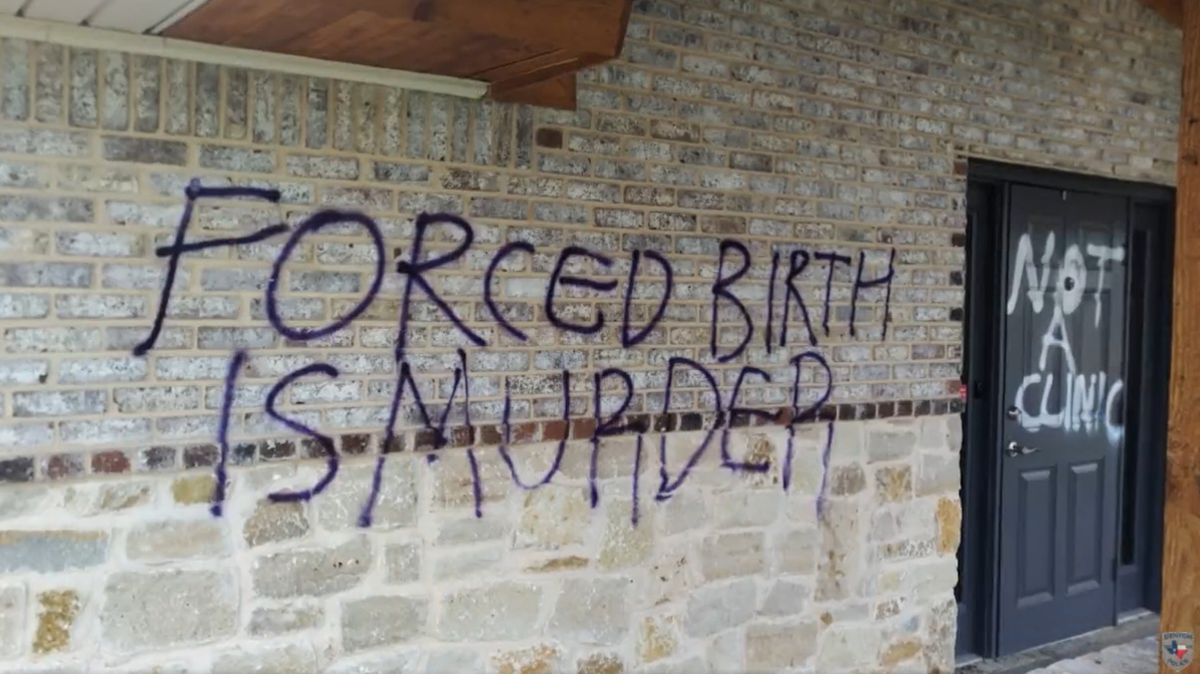
There was an obvious irony in the message sprayed by a vandal on the fresh stone facade of Loreto House, a Denton crisis pregnancy center, last weekend.
“Forced birth is murder,” it read.
I’ve heeded the call of those who have asked, in the days since a leaked opinion suggested the decision in Roe v. Wade may soon be vacated, for each of us to listen openly to the other side’s arguments. So, I tried to understand what the author of this phrase could mean.
Even my wildest imagination can’t quite get there.
To equate the literal act of bringing forth life, with murder – life’s destruction, often violent and always at the hand of another — is a sign of just how topsy-turvy this debate has become.
It’s even more confounding that some abortion supporters are targeting pregnancy centers that provide exactly what many who support abortion say they want: options for women.
“Our guests,” as Loreto House’s executive director Randy Bollig calls the women and men who enter the center doors (around 30 every day), “we approach them where they’re at.”
Sometimes, that means performing a sonogram for an “abortion-minded” woman whose heart often changes at the sight of her child’s beating on the screen.
Sometimes, it means providing diapers, maternity clothes and other material support for an expectant family with limited resources.
Sometimes, it means counseling and educating people who are overwhelmed and unprepared for the pressures of parenthood.
Loreto House is very clear about not being a medical clinic. It doesn’t refer for abortions but does provide factual information about their impact on women and the laws that regulate the abortion industry.
“We don’t have a dog in the hunt, as the abortion providers do,” Bollig told me, interrupting our phone conversation to assist with a guest who had entered the center that morning, fearful of the boyfriend who had accompanied her.
Apparently, meeting women where they’re at also means confronting the men who want them to be elsewhere. At an abortion clinic, perhaps?
Bollig says the center is kept busy by a constant flow of women and families needing help, support and alternatives to abortion. He expects it to be busier still if Roe is overturned and Texas’ trigger law outlawing most abortions is activated.
As for the vandalism and harassment of his staff, he expects that to increase, too.
Why centers that support women in times of difficulty without judgment are the particular targets of abortion activists is truly mind-boggling.
But Loreto House is one of a growing number of crisis pregnancy centers across the nation that have been attacked in the days since the Supreme Court draft opinion was leaked.
Centers in Maryland, Virginia, Wisconsin and Oregon were all recently vandalized, some sustaining serious and costly damage.
Catholic Churches have become targets, too.
Holy Rosary Catholic Church in downtown Houston was defaced, it’s entrances plastered with pro-abortion messages in graffiti.
In nearby Katy, vandals at St. Elizabeth Ann Seton Catholic Church attempted to desecrate the Eucharist.
And at St. Bartholomew, also in Katy, Father Christopher Plant reported on Twitter on Monday morning that its tabernacle — the most sacred item in the church — had been stolen. He asked for prayers for those who “committed this criminal sacrilege.”
Bollig told me he expects the attack on Loreto House will be elevated to a hate crime because of the center’s Catholic affiliation. The FBI’s Dallas Field Office could not confirm this but said it was “aware of the incident” and in contact with local authorities.
Of course, even these attacks will not deter the work of Loreto House or the Catholic Church’s stalwart defense of the unborn.
“[Abortion] isn’t going to go away,” Bollig told me, even if Roe is overturned.
If only the attacks on those who are helping women would.