Tinslee Lewis’ return home brings meaning to suffering and hope this Easter
There is something profoundly fitting in learning this Holy Week — when Christians, reflecting on the life of Jesus Christ, consider the meaning of human suffering — that little Tinslee Lewis is home with her family and free from the confines of the hospital where she has spent her entire young life.
Tinslee is the Fort Worth girl whose fragile existence has been the subject of a protracted legal battle over a 20-year-old Texas law, the Texas Advance Directives Act.
The law, among other things, allows a doctor who disagrees with a patient’s decision to maintain life — and the patient or family wishes to continue life-extending treatment — can appeal to a hospital bioethics committee for a hearing.
If the committee agrees with the physician’s assessment, the patient or family has 10 days to find and arrange alternative care, after which time life-extending treatment can be terminated. The ruling is binding and there is no appeals process.
There have been several legislative efforts to alter and tweak the largely redeemable law, all of which have been unsuccessful.
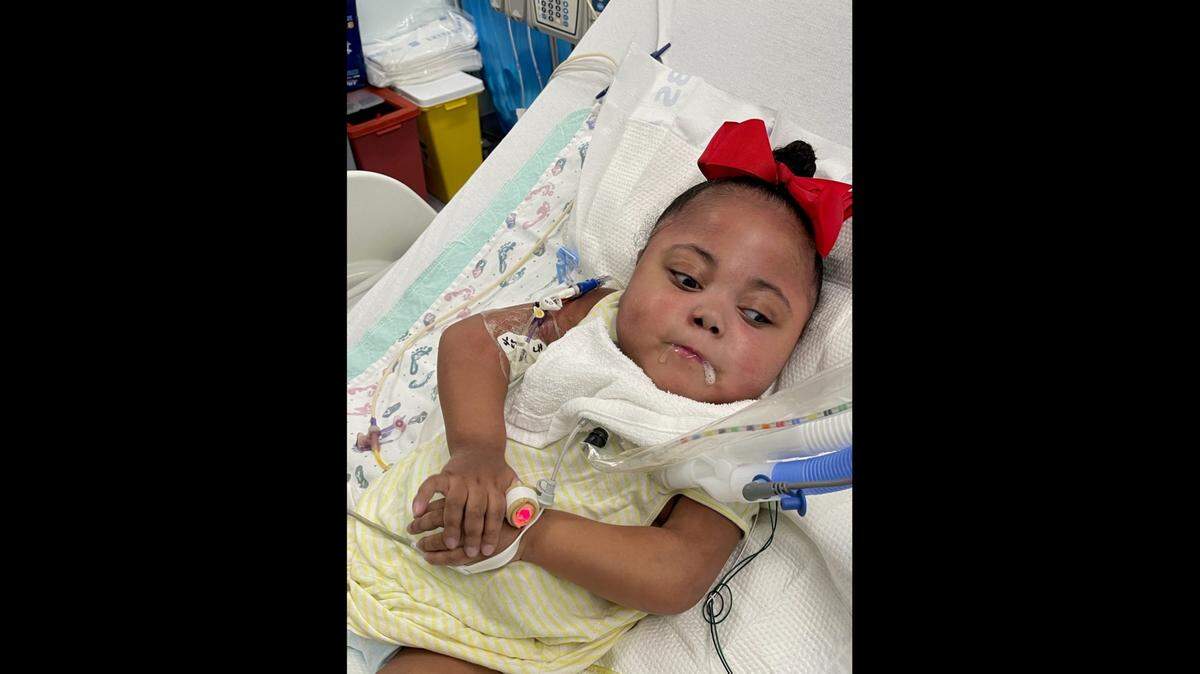
In 2019, when Tinslee wasn’t yet a year old, a committee at Cook Children’s Hospital determined that her state of health — which includes multiple chronic and systemic conditions and requires ventilation — was intractable.
Keeping Tinslee on life support was causing her unnecessary suffering, they said. Continuing her life-sustaining treatment was futile.
There is no doubt that in her short life, Tinslee has suffered more than most of us ever will.
Her mother, Trinity Lewis, for good or naught, has fought tooth and nail to keep her daughter alive. She knows quite a bit about suffering, too.
Whether that suffering has been wholly unnecessary is less certain.
It has certainly been meaningful.
The same might be said about the futility of Tinslee’s care.
While the legal turmoil over whether Cook Children’s could terminate Tinslee’s medical treatment swirled around the Lewis family, the girl still received care from the hospital staff — good care, according to her advocates.
She is still alive some two years later.
And while the hospital and Lewis’ legal team battled over the constitutionality of the Texas law, all the way up to the U.S. Supreme Court (which declined to review the case), Tinslee’s treatment caused her unstable condition to improve in some respects.
She has been undergoing occupational therapy, is being weaned off pain medication and received a tracheotomy in 2021.
Last week, Lewis posted on social media that her daughter had left the hospital.
“Today my baby came home and I’m filled with joy and emotions right now,” she posted on Facebook last Thursday.
The tracheotomy, is what has “opened the door for her no longer needing a hospital-level of care,” said Kimberlyn Schwartz, director of media and communication for Texas Right to Life, the pro-life organization that has helped the Lewis family.
“I can verify that she is stable,” Schwartz added, but she couldn’t provide further information about Tinslee’s status without permission from the family.
One would expect, and certainly hope, that Lewis and her advocates have no delusions about the prospects for Tinslee’s future.
Her medical condition is so critical that she will never recover and lead a normal life, even under the best of circumstances.
But that, of course, was never really what this case was about.
It has been an epic battle over the value of life, even life that is costly to maintain with little hope for a future — the least of these, if you will.
As I wrote two years ago, in the wake of the hospital’s initial decision to withdraw care from Tinslee, it’s reasonable to believe that ceasing medical interventions and allowing Tinslee to pass from this life into the next is a life-honoring action.
But Tinslee’s homecoming is also a reminder that there is also great meaning to be found in human suffering.
Great meaning and also great hope.