
Will James Talarico turn Texas blue? Not so fast — poll trend favors GOP | Opinion
AI-generated summary reviewed by our newsroom.
- Talarico has a thin lead in polls over Sen. John Cornyn for the Senate seat.
- The poll shows Texas voters now identify 50% Republican and 40% Democrat.
- Poll respondents rate the economy and inflation as the top issue for 24% of voters.
The news is good for Texas Democrats.
Unless you actually read it.
Austin Democrat James Talarico has a thin lead in polls over U.S. Sen. John Cornyn for his Senate seat and a wider lead if Attorney General Ken Paxton is the Republican nominee.
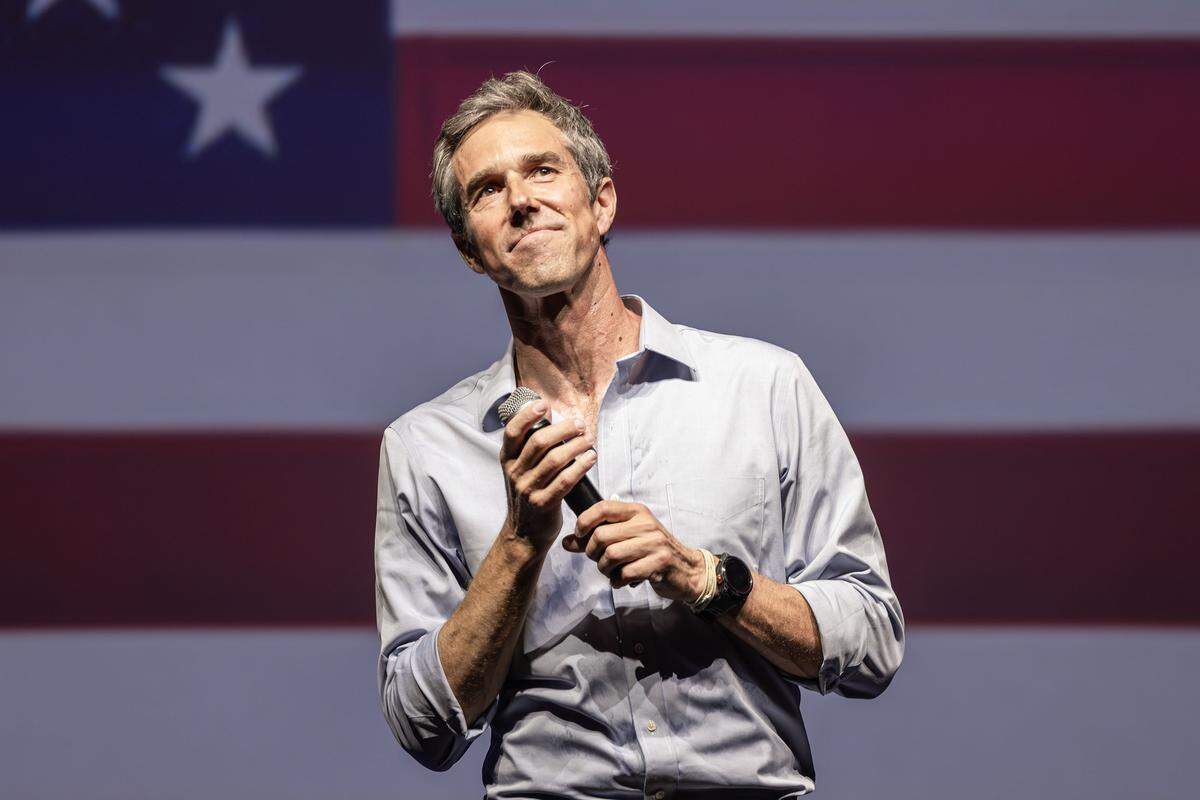
Democratic candidates Gina Hinojosa and runoff favorite Vikki Goodwin are already closer to Gov. Greg Abbott and Lt. Gov. Dan Patrick than Democrats Lupe Valdez and Michael Collier were back in 2018. That was the year when bottle-rocket Senate candidate Beto O’Rourke’s challenge to U.S. Sen. Ted Cruz lifted Democrats within range of a statewide victory for the first time since 1994.
Another bad sign for Republicans: Voters are now more intensely worried about money than they were in 2018.
Three times as many voters in the University of Texas/Texas Politics Project poll now say their family is worse off. Inflation and the economy combined are now the No. 1 issue for 24% of voters.
And Texas voters have even lost our bravado. By 47%-42%, voters now say the state is on the wrong track.
That should all add up to a close election in November.
Party identification is still a problem for Texas Democrats
But when you read on, there is one big problem for Texas Democrats:
They’re Democrats.
Even though Texas voters are completely unhappy with their leaders, the state and their family situation, they are also more conservative now than in the 2018 poll.
Back then, those voters polled mostly said they were Republicans, 46%-43%. That 3-point margin was what Cruz and Paxton won by that fall in the closest races on the ticket.
Now, based on the poll, Texas is 50% Republican and 40% Democrat.
The baked-in winning margin for Republicans is now 10%. Not 3%.
In the new poll, 43% of Texas voters have a favorable view of the Republican Party. Back in 2018, that number was 35%.
Meanwhile, 50% of Texas voters now have an unfavorable view of the Democratic Party.
Texas voters are more religious, but can that help Talarico?
The rightward turn extends to religion. Texas voters are more Christian now than in 2018.
Three-fourths of Texans — 75% — now say their faith is important in their lives. That’s up from 71%.
Catholics make up 25% of voters. In 2018, that figure was 17%.
And in a significant shift, 35% of Texas voters now say the Bible is the literal word of God. That’s up from 28%.

Talarico’s background as a Presbyterian seminary student may at least help him speak to devout voters and rally mainline Christians.
But Democrats’ brand is damaged nationally and statewide after a struggle between factions and a fumbled 2024 presidential campaign.
In a recent podcast for The Atlantic, O’Rourke was asked whether national Democrats’ shift to progressive liberal politics has hurt the party since his more centrist 2018 campaign against Cruz.
In the recent primary, Senate candidate Jasmine Crockett took more moderate positions than Talarico on energy, tech industry regulation and national defense. But Talarico drew more national support and won.
“I had probably one of the most bipartisan voting records in Congress,” O’Rourke told senior editor David Frum, a former speechwriter for President George W. Bush. “But I would go to communities where people would say, ‘Man, I love you because you’re one of the most progressive guys I’ve ever seen here.,’ And I’d go to other communities, and people would say, ‘I love you because you’re so conservative.’ “
He spelled out how national Democrats have failed party voters in Texas.
“It’s really the Wild West out here,” he said.
“ There’s no Texas Democratic Party relative to, say, the Pennsylvania Democratic Party or the California Democratic Party. This is a party that had been allowed by national Democrats and the [Democratic National Committee], probably going back to the 2008 presidential election and the loss of the 50-states strategy from Howard Dean, to just wither on the vine.”
Texas voters are unhappy.
The question is whether they’re unhappy enough to vote for a Democrat.
This story was originally published April 30, 2026 at 12:48 PM.