What can Texas do about floods? Plenty. Lessons ignored from 1987 bus disaster | Opinion

AI-generated summary reviewed by our newsroom.
- Kerr County failed to implement flood alert systems after the 1987 tragedy.
- July 4 flooding mirrored the deadly 1987 event, with warnings issued too late.
- Repeated flood disasters highlight gaps in planning across Texas Hill Country.
The Guadalupe River is full of memories, and danger.
In 1932, it rose 35 feet, washing away dozens of cabins from Camp Mystic and other youth camps in western Kerr County. But the water rose in the daytime, so not a single camper died.
But when the unforgiving Guadalupe rose again in 1987, 10 children died. They were on a church bus and van that were washed away.
The Rev. Richard Koons remembers.
He was the pastor driving the bus.
With news just breaking on July 4 of the latest Guadalupe River tragedy, he wrote a Facebook post about 9 a.m. that began with three chilling words: “It’s happening again!!!”
“I couldn’t believe what I was seeing — I knew what those families were going through,” Koons, 64, of Mesquite said in a phone interview.

“The helicopter rescues. The water 30-35 feet deep. How fast it happened and how people described the wall of water. Finding out in the middle of the night.
“That was us,” he said.
The Balch Springs Christian Academy bus and van carried a total of 43 adults and kids. They were evacuating the Pot O’ Gold Ranch near Comfort, 35 miles east of Camp Mystic.
Hollywood even made a TV movie about it: “The Flood: Who Will Save Our Children?” Actor Joe Spano played Koons.
Kerr County had 11 inches of rain that night. Camps were warned in the middle of the night to evacuate.
The last Pot O’ Gold campers waited too late. They left at 7 a.m., and the bus and van didn’t make it through a low-water crossing. Wall after wall of floodwaters pounded them.
One girl held onto a tree for an hour and a half. But she couldn’t hold onto a rope from a helicopter.
One boy was never found — only his school ring.
Koons’ wife, Lavonda, was one of the last passengers rescued. She was a mile downstream.
She saw the July 4 flooding video first and showed Richard.
“First I just saw this little snippet about flooding in the Hill Country,” she said.
“Then an hour or two later, the first thing I saw was all these photos of little missing girls,” she said.
“I knew immediately — here we go again.”
Both Lavonda and Richard Koons know exactly what comes next.
“The reality sets in,” he said.
“Then comes the grief, and shock, and the funerals..”
Lavonda Koons said the shock is “just trying to wrap your brain around what happened.
“I remember wondering if I would ever be the same again,” she said.
You wonder if today’s Kerr County officials ever saw the movie.
They didn’t add sirens, or automatic flood alarms, or volunteer storm watchers.
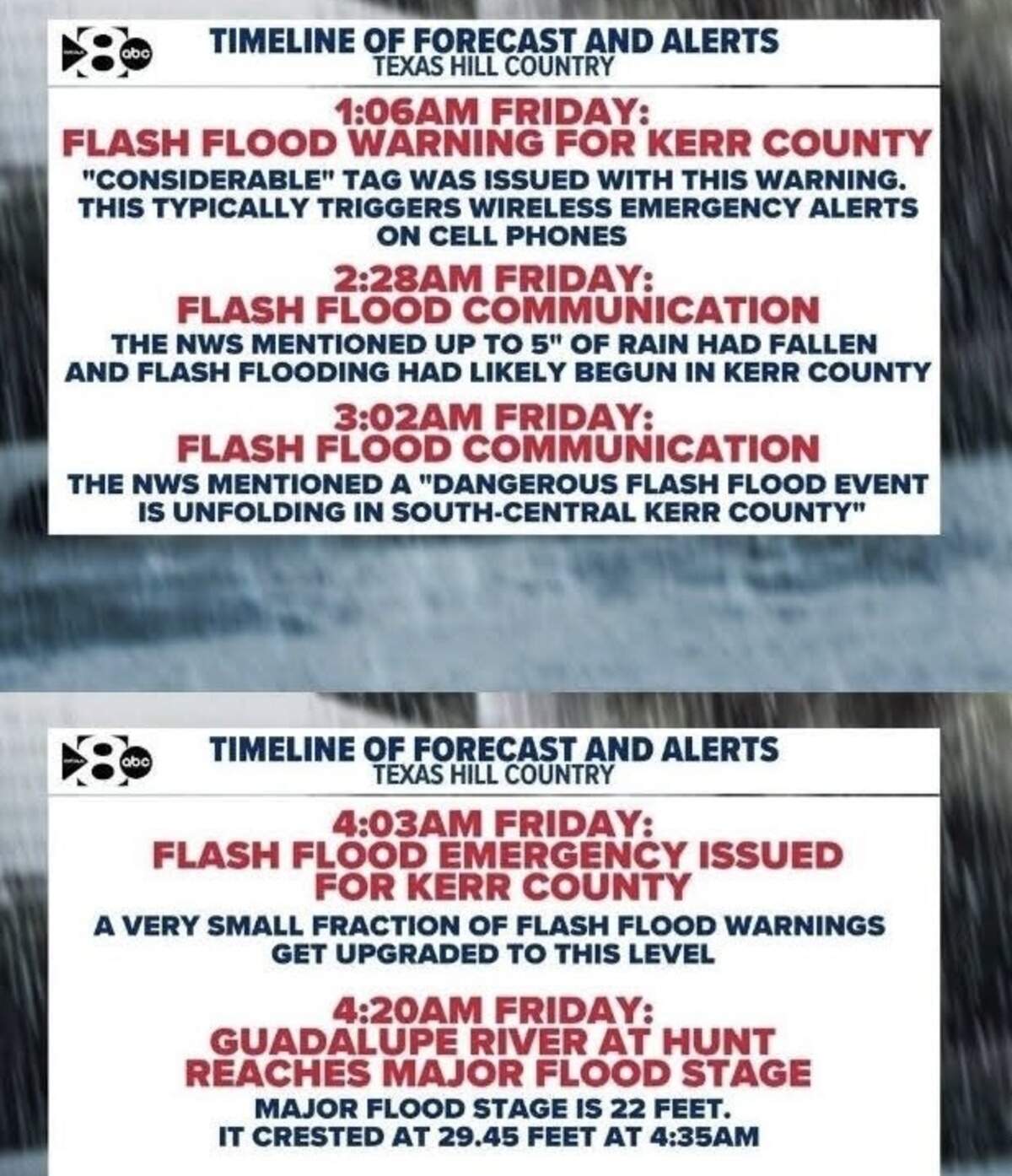
The first warning that a flood was on the way came out at 1:14 a.m., enough time to notify camps and move campers. The nearby Mo-Ranch camp evacuated then, before the waters rose.
The emergency alert about an imminent, catastrophic flood came at 4:03 a.m., when the river in Kerrville was still 2 feet deep.
Kerr County Judge Rob Kelly seemed defeated.
“Rest assured no one knew this kind of flood was coming,” he said, which might have been true up until 4:03 a.m.
So is Kerr County worried about floods, or not?
“We have floods all the time,” he said the morning of July 4. “This is the most dangerous river valley in the United States, and we deal with floods on a regular basis.”
Seems like the most dangerous river valley in the United States would have an automatic flood warning system.
Richard Koons said it a different way: “The Guadalupe is the Guadalupe.”
“When it happened to us, they said, ‘It’s been 50 years since something like this happened.’ Now, it’s been 40 years since something like this happened.“
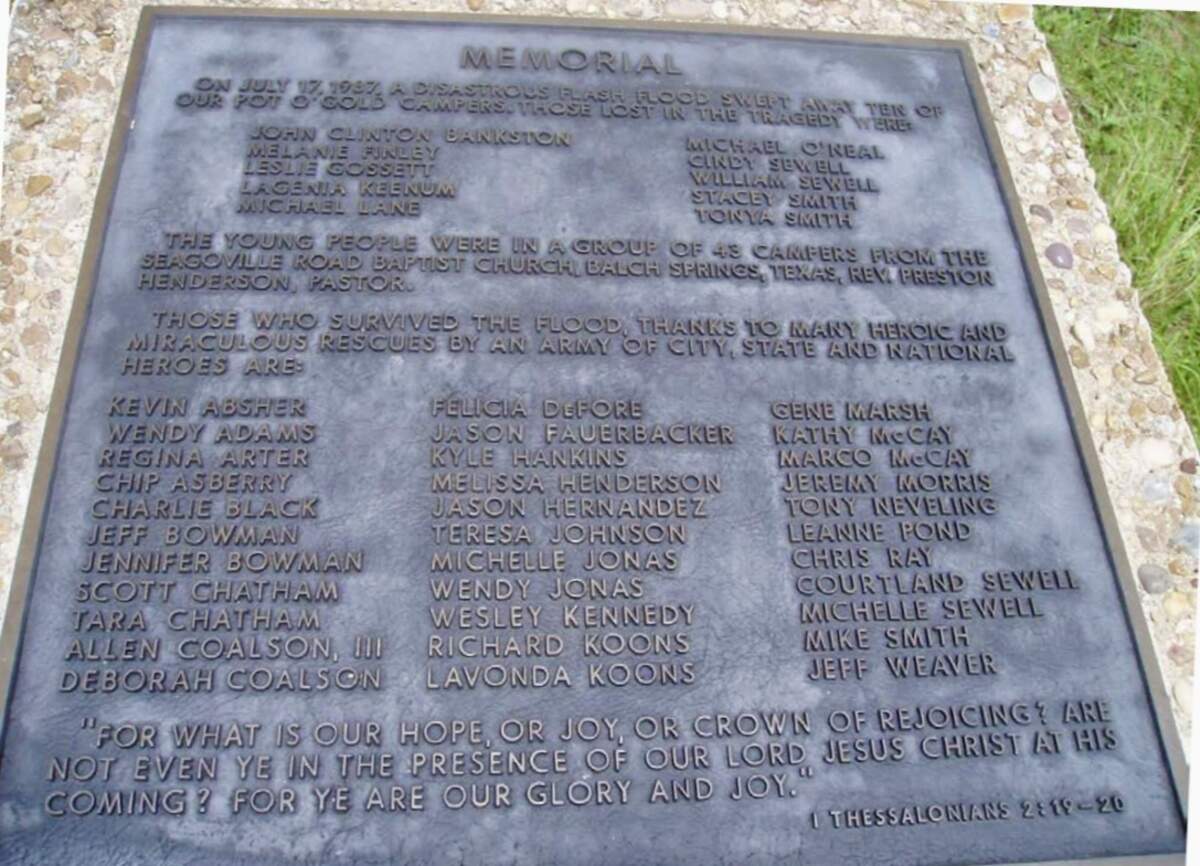
A year after the Comfort bus tragedy, survivors and campers gathered overlooking the Guadalupe on the Pot O’ Gold Ranch.
They dedicated a bronze memorial plaque on a concrete base. It remembered those killed and the “heroic and miraculous rescues by an army of city, state and national heroes.”
Then Kerr County started to forget.
On July 4, floodwaters covered the memorial.
This story was originally published July 6, 2025 at 5:30 AM.