Remembering a father who loved basketball and revered Dunbar Coach Robert Hughes | Opinion
(Adapted from columns published Feb. 8 and Feb. 13, 2003.)
Bud Kennedy loved basketball.
Not me. My father.
On a February night in 1970, he stood in line a half-hour at Texas Christian University to get a front-row corner seat and watch the Panthers of I.M. Terrell High School.
In an era when fistfights were common at basketball games — over race, or sometimes just out of plain old meanness — he told me that I was too young to come along.
“Might be a fight,” he said.
He came home marveling over the Panthers’ precision passes and their stoic coach.
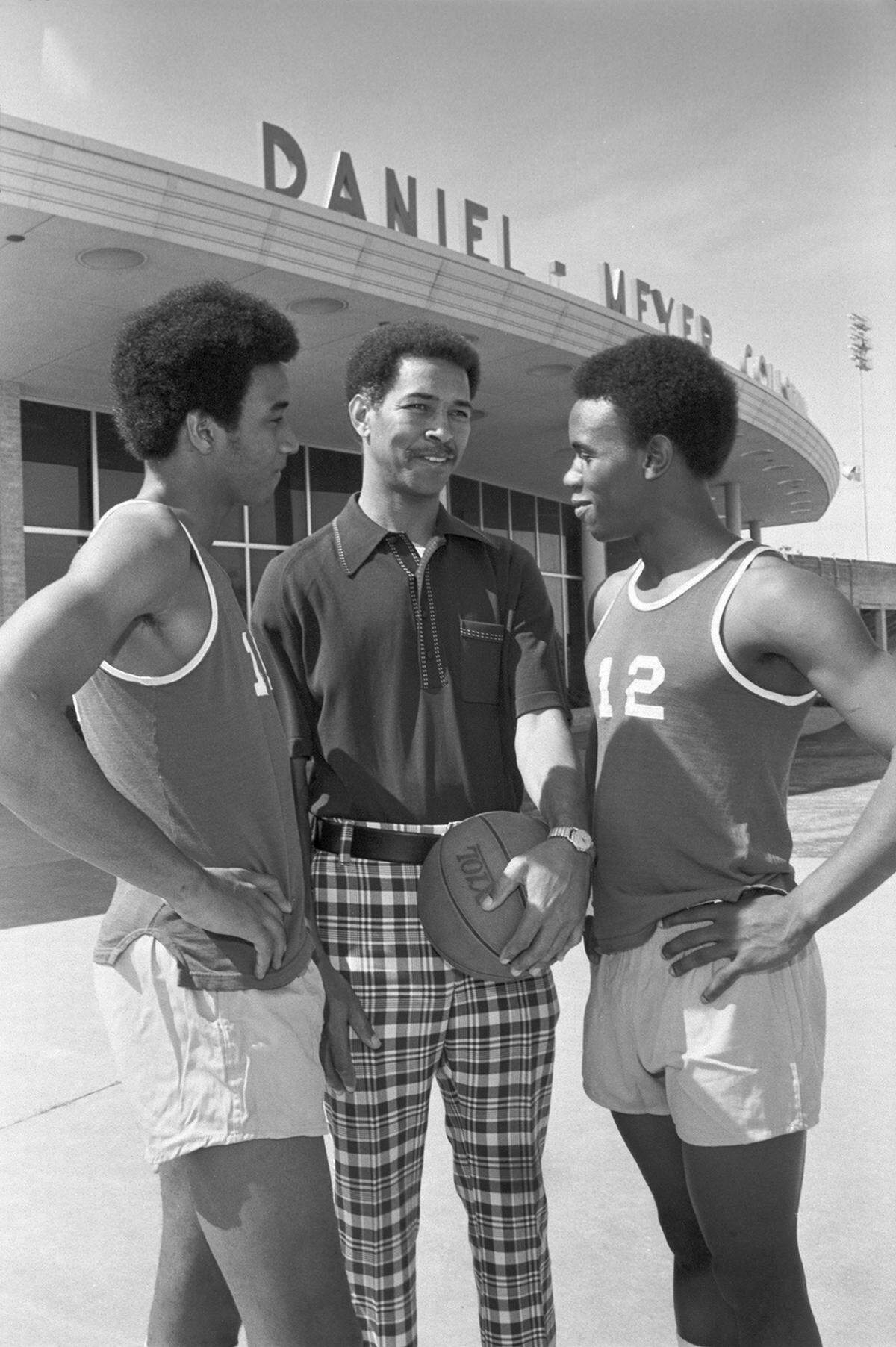
Robert Hughes, who died Tuesday at age 96, was 41 then.
“I’ve never seen a better high school basketball team than I.M. Terrell,” my father said.
The Panthers were even better than his old Oklahoma high school team, the Bray Donkeys.
So, 33 years later, I stood in line an hour at the TCU coliseum.
I got a front-row seat in the same corner behind the Dunbar Wildcats’ bench.
I watched Hughes. By then, he was 74.
America has never seen a better high school coach.
He eventually won 1,333 games in a career that has spanned two high schools, two civil rights eras and half a century.
He coached with a drill instructor’s voice and a glare that could pierce cast iron.
When he was coaching a national McDonald’s All-America team in 2001 on the Duke Blue Devils’ home court in North Carolina, he stewed as his West superstars fell behind by 15 points at halftime.
He delivered a blistering halftime lecture. One all-star called it his worst bawling-out ever.
They won by 6.
“I wanted plain vanilla, not tutti-frutti and the 31 flavors,” Hughes said. It was one of his signature lines, delivered with a tight grin.
“Throwing behind-the-back passes — that’s for when you’re up 20.”
My father taught me to respect Coach Hughes, maybe in part because they both were from Oklahoma.
In a time when Texas sports was barely desegregated, my father went to games to watch the sport’s greatest stars regardless of color. He knew that Hughes used to play for the touring Harlem Magicians with another fellow Oklahoman, superstar Marques Haynes.
But it would be a stretch to think that they shared much in common.
They both grew up on hardscrabble farms in the 1930s Dust Bowl era of Oklahoma. They both learned grim perseverance against repeated adversity. They both found respite — and when they dared, fun — in the Plains sport of basketball.
My father moved to Fort Worth in 1945 after surviving the beaches of Anzio, Italy, as an Army battlefield mess cook with the 45th Infantry Division in World War II.
He was a quiet, long-suffering man shaped by his childhood during the Depression and by a war in which 292,000 Americans died.
He loved math and cooking, and a son he and my mother, Liona, adopted for $600 from a newspaper classified ad.
And he absolutely loved basketball.
When I was little, I would find him staying up late in our old house on Alamo Avenue near the railroad yard.
He would sit with only one lamp turned on, listening to the radio replay of TCU Horned Frogs games starring Hughes’ former Terrell star, James Cash.
By the time I became a basketball scorekeeper at Arlington Heights, my father rarely went out at night. But one New Year’s Eve, we were about to play Terrell for a nondistrict tournament championship.
We were ranked No. 2 in the state.
But my father shook his head.
“You’re good,” he said, “but you’ll have to be more than good to beat Coach Hughes.”
We won that night and celebrated with a now-unthinkable champagne toast.
But on more than 1,300 nights, Hughes won.
And my father watched proudly from a skybox seat.
This story was originally published June 13, 2024 at 1:14 PM.