Here’s the story on Willie Nelson’s ‘Pretty Paper.’ It’s real. And it was in Fort Worth
READ MORE
Christmas in Fort Worth
Fort Worth (and North Texas) has influenced American celebrations of Christmas more than you may know. Check out these stories for some Fort Worth ties to the holiday.
Expand All
Adapted from columns Dec. 25, 2004; Dec. 24, 2010; and Dec. 24, 2016.
The mystery of Fort Worth’s Christmas song is solved.
It took help from readers in Palo Pinto County, plus one surprised family near Houston.
Since 1963, we’ve heard songwriter Willie Nelson’s sad ballad “Pretty Paper,” plucking heartstrings with a lyric about holiday shoppers rushing past a disabled street vendor selling “pretty paper, pretty ribbons” for pennies while crawling “all alone on a sidewalk” downtown.
Readers who shopped at the old Leonards Department Store in downtown Fort Worth remember that vendor.
So did Nelson, a Fort Worth country music radio personality, door-to-door vacuum salesman and Southern Baptist Sunday school teacher until he moved to Nashville in 1963.
The late country music writer and expert Chet Flippo of CMT.com grew up here and even worked at Leonards. He has called “Pretty Paper” a “lasting tribute” to that vendor:
Crowded streets — busy feet hustle by him
Downtown shoppers, Christmas is nigh
There he sits all alone on the sidewalk
Hoping that you won’t pass him by
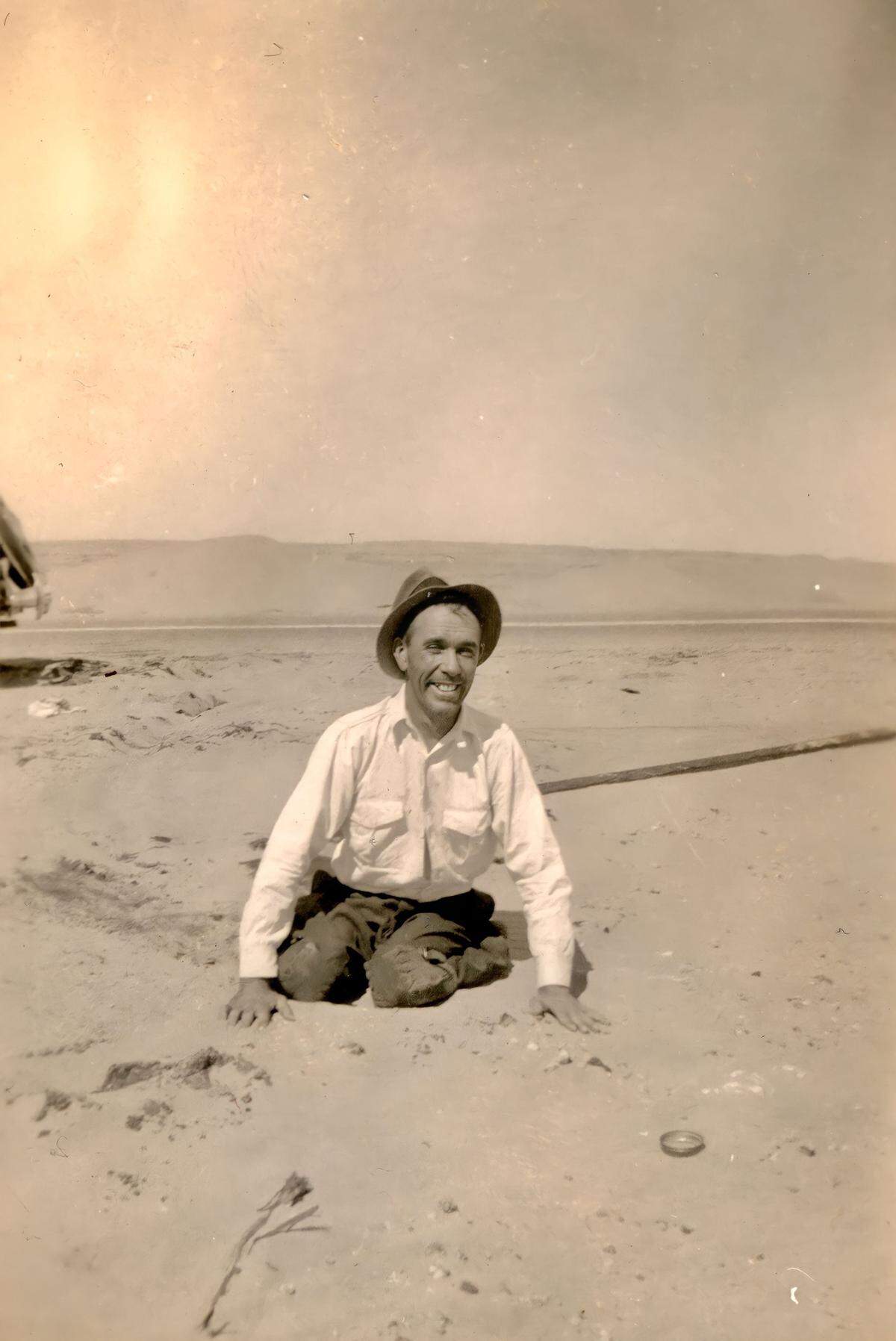
But until recent years, we never knew the man’s name.
He crept on all fours along Houston or Throckmorton streets outside Leonards and also on Main Street in Houston, wearing clunky gloves and kneepads made from old tire tread and a custom leather vest with a pencil rack and coin box sewn onto the back.
First, readers remembered that the man commuted from Santo in Palo Pinto County.
Then rancher Bob Neely of Santo called about his former neighbor, Frankie Brierton.
“You could always hear him in town, dragging himself along the gravel street,” Neely said.
We now also know that Brierton declined a wheelchair. He chose to crawl.

That’s what he learned growing up after his legs were weakened by childhood spinal meningitis, said his daughter, Lillian Compte of Conroe, near Houston.
Frank Napoleon Brierton (1899-1973) lived in Houston before he moved to Santo and Mineral Wells.
In 1940, according to the Houston Post archives, he even helped kick off a Christmas charity campaign.
“Brierton, street salesman of pencils ... is paralyzed from the waist down,” the Post reported.
In 1941, he was struck by a car in Houston and treated for injured ribs.
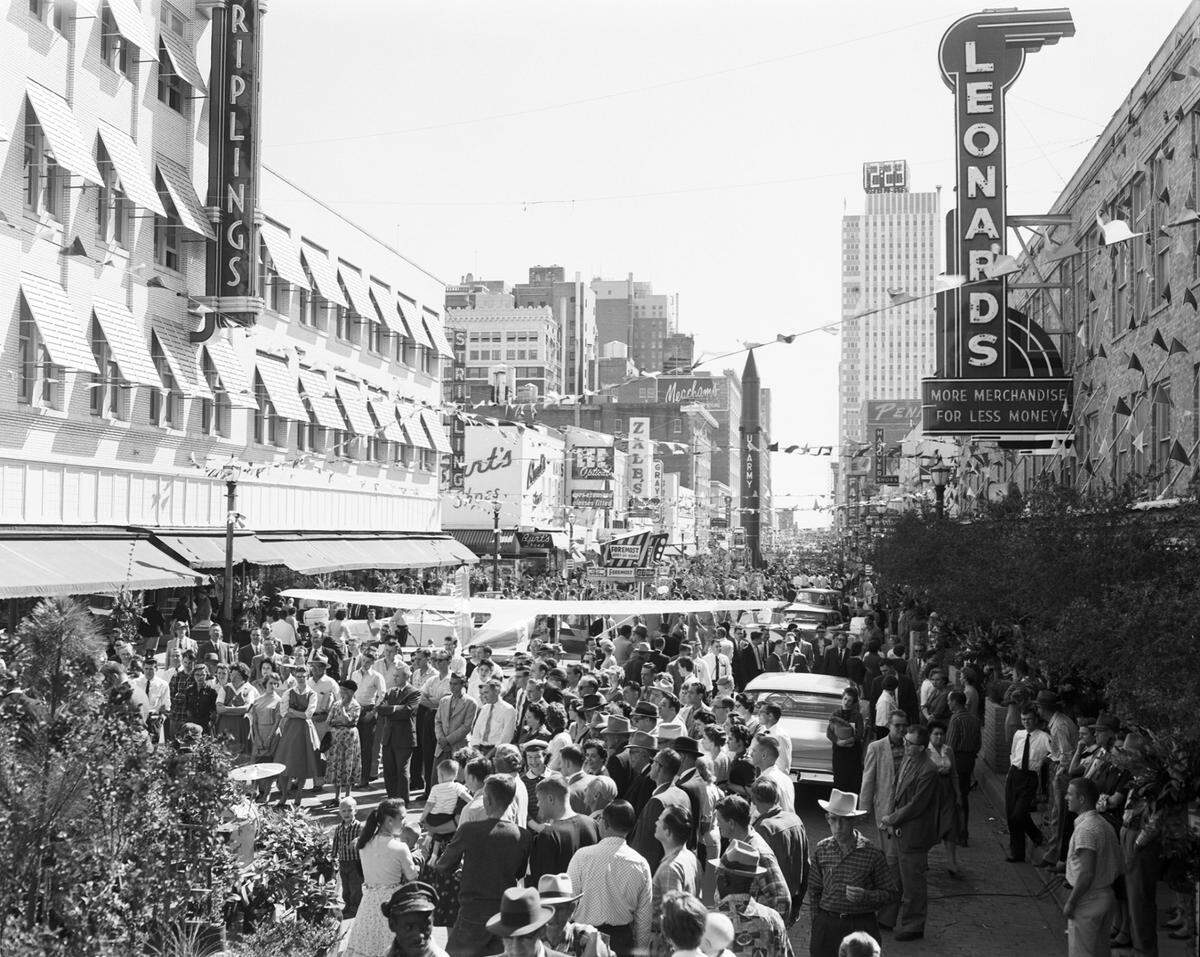
“Brierton . . . was crawling on his hands and knees from the sidewalk into the street,” the Houston Chronicle reported.
When I contacted Lillian Compte, she couldn’t figure out why anybody would be asking about her father.
Brierton was 74 when he died in 1973. He is buried in Mineral Wells.
I asked about “Pretty Paper.”
“It’s a pretty song,” she said.
“I just never thought of it being about my father.”
‘Here was this poor man who had nothing’
Former downtown store clerk Ernestine Wakefield of Amarillo has written online about how she watched the man from her job in W.C. Stripling’s, across the then-busy 200 block of Houston Street. That block is now the Worthington Renaissance hotel.
“I was just a West Texas girl in the big city then, and here was this poor man who had nothing,” she said by phone in 2004.
“I cried every time I looked out that store window.”
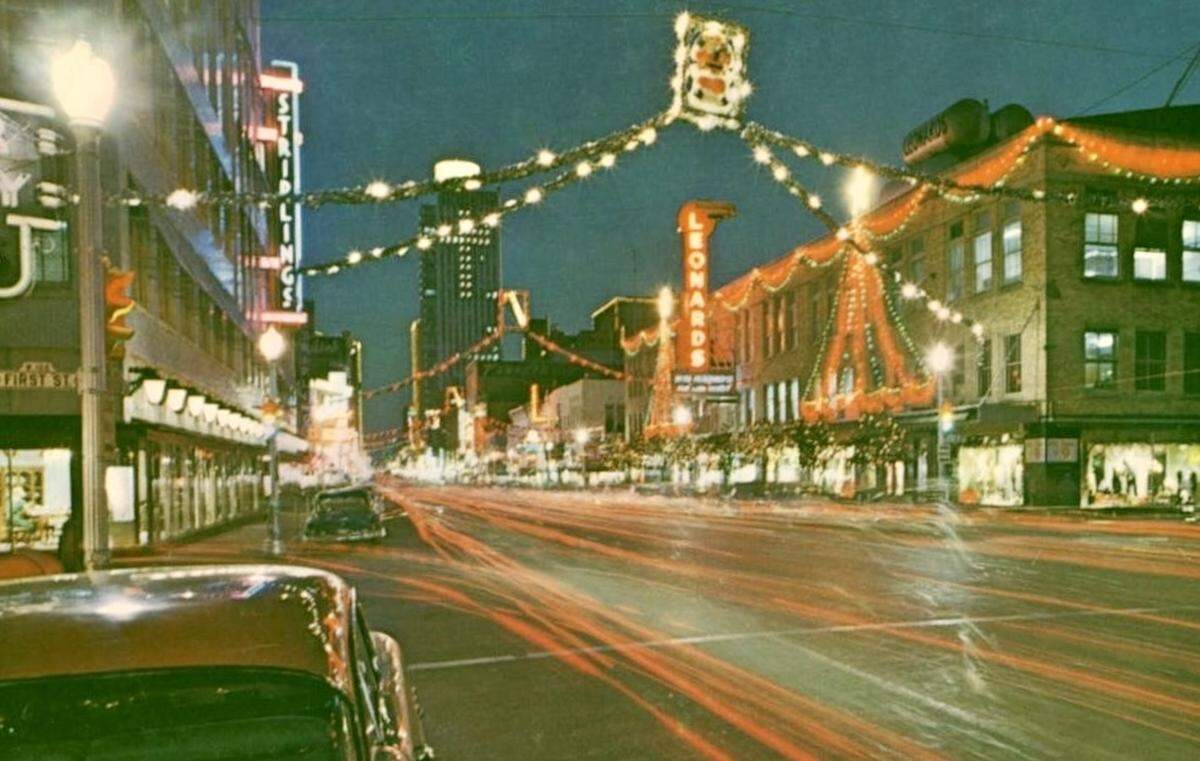
Nelson has often told how “Pretty Paper” is based on trips to Leonards, America’s first supercenter. It was twice the size of a modern-day Wal-Mart, covering four blocks smack in the middle of downtown.
Nelson had come to Leonards since his childhood days in the Hill County town of Abbott. It was one of the busiest department stores in America and also the biggest grocery store in the Southwest.
He sold pencils. He crawled around on his hands and knees. But we never did without.
Lillian Compte of Conroe
daughter of real-life ‘Pretty Paper’ street vendor Frankie BriertonSinger Roy Orbison made the song a hit first. He also knew Leonards from his childhood years living just across the river in north Fort Worth in the 1940s as the son of two defense workers at the “bomber plant,” now Lockheed Martin Aeronautics.
In the 1950s and ’60s, Leonards and Stripling’s were so busy at Christmas that up to 200 people would cross Houston Street every time the light changed. The crowd was so thick that some pedestrians had to wait through two lights.
Street vendors, hymn singers were welcome
Brierton positioned himself on that corner, along with a vision-impaired couple, Herman and Sylvia Douglas, who sang hymns and sold pencils.
In a 2004 interview, former store manager Charlie Ringler said the Leonard family let street vendors and missionaries stay even when other downtown landlords protested.
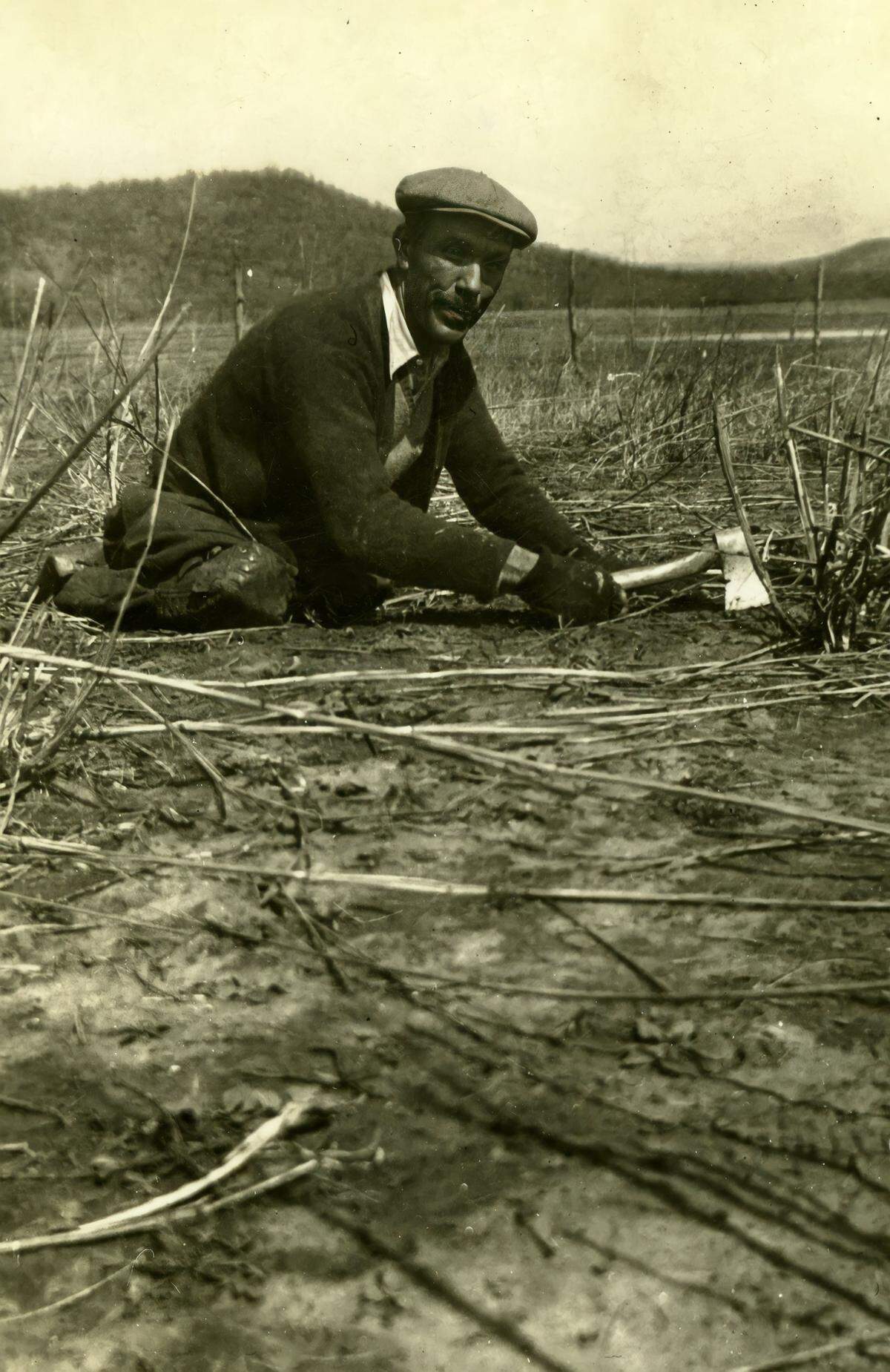
“Some people wanted them moved out, but we never moved them,” he said. “We couldn’t turn them away. As long as they were selling pencils or something, that was fine.”
Brierton worked as a street vendor in Fort Worth, Dallas and Houston, Compte said.
Besides Leonards, he also sold pencils at the Fort Worth Stock Show, at the State Fair of Texas in Dallas and on Main Street in downtown Houston, she said.
He earned a living without government assistance, Compte said.
“He was my father — that’s all I knew,” she said.
“He sold pencils. He crawled around on his hands and knees. But we never did without.”
Her son, Rick Compte, said he admires his grandfather. And Rick Compte spilled one more secret: Brierton was married seven times.
“You might say,” Rick Compte said, “that he really liked attention.”
They say Brierton never knew he was the man in the song.
This story was originally published December 19, 2023 at 10:54 AM.