45 years after the Davis mansion murders, grisly Fort Worth landmark to be leveled
First, it was a millionaire oilman’s mansion and an architectural wonder.
Then, it was a grisly murder scene.
Now, the former Cullen Davis mansion is headed for the wrecking ball.
Within the next year, the 50-year landmark at 4100 Stonegate Blvd. is expected to give way to a yet-to-be-determined new development at the home and grounds where police and witnesses said a late-night intruder killed a man and a little girl and shot two more people on Aug. 2, 1976.
An application was filed in May to demolish the house, built in 1971 for the equivalent of $40 million today. But that will expire July 20, according to a city official.
Instead, co-owner Kyle Poulson said he and three partners plan to demolish the mansion after they develop plans with city and neighborhood officials for either residential development, a retirement community or an office complex on the site.
The split-level building lacks disability access to the various rooms and floors, some up or down narrow stairways, and it contains some asbestos, Poulson said.
“We were really trying to keep it,” he said: “The architecture’s really cool.”
Designed by Fort Worth architect Albert Komatsu, the mansion intermittently became a welcome center for the surrounding Stonegate development, a steakhouse, a Tex-Mex restaurant and then a church.
It operated the last 10 years as a wedding and event venue, Stonegate Mansion.
“If they tear it down, it’ll be like yanking out my heart,” said Craig Ryon, who owned it as Stonegate Mansion.
He said he tried to restore Komatsu’s original design and extensive landscaping, some of which has since died in the winter freeze.
An insurance company wanted to buy it for a headquarters before the COVID-19 pandemic weakened office demand, he said.
He loves the mansion for its design and grounds, not for the notoriety, he said.
“We shied away from the history,” he said.
“It’s the architecture and the gardens that made it special. .... When I go over the [South Hulen Street] bridge, I’d always look left and say, ‘There she is.’ “
An older generation says, “There she was.”
Andrea Wilborn, Davis’ stepdaughter, was 12 in 1976 when she was shot dead at the bottom of the basement stairs. Former TCU basketball player Stan Farr, 30, was found dead in the kitchen.
Farr was there as a guest of Davis’ estranged wife, Priscilla. She was living there during her divorce from Cullen.
Priscilla Davis was shot in the chest but survived, as did chance visitor Gus “Bubba” Gavrel. (She died of cancer in 2001, as Gavrel did in 2018.)
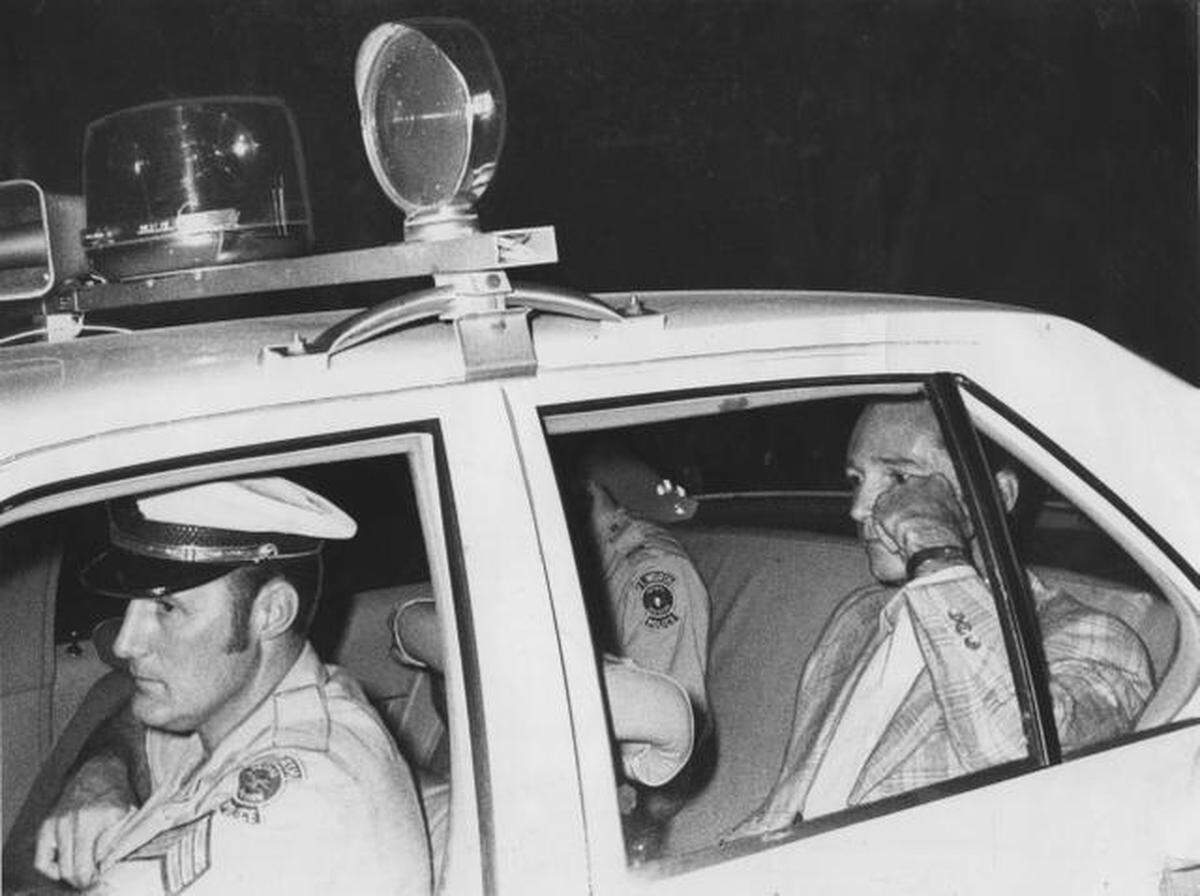
Cullen Davis was arrested the same night. He was later acquitted and also acquitted on another criminal charge after a two-year-long series of spectacular trials and retrials retold in books and in the 1995 Heather Locklear movie “Texas Justice.”
Davis is now 87. In 1990, he agreed to pay Farr’s family a civil court settlement.
At the time of the trials, he was the richest murder defendant in U.S. history.
Michael Crain, the Fort Worth City Council member who represents the neighborhood, was 4 at the time of the mansion murders.
But he also knows Fort Worth friends who grew up playing with Andrea.
“I know this was the Trial of the Century before O.J. [Simpson],” he said.
He wants landowners and neighbors to work together on a plan for new development, he said.
The home is a piece of history, he said, “but is it really a history people want to remember?”
Some of us can never forget.
This story was originally published July 17, 2021 at 5:45 AM.