Authors say ‘Forget the Alamo’: ‘Fighting for slavery as much as for liberty.’ | Opinion
AI-generated summary reviewed by our newsroom.
- Some state leaders and activists pushed Bullock Museum to cancel the panel.
- Authors link Texas origins to slavery; historians say that emphasis isn’t new.
- After the cancellation, the book jumped from No. 289 into Amazon’s top 50.
(First published July 3, 2021.)
The Great History War of 2021 has reached Texas, where state officials are so upset over the new book “Forget the Alamo” that they told the authors to forget speaking at the state history museum.
I have never seen an authors’ history talk make headlines. Definitely not in Texas.
But that’s what happened Thursday, when the Bullock State History Museum in Austin abruptly canceled a livestream panel about the new book that contends white Southerners moved to Texas to farm cotton, then fought the Texas Revolution and the Battle of the Alamo to establish a slave state and make more money.
I don’t think it would surprise anyone to hear that Texas is all about making money.
But “Forget the Alamo” (Penguin Press, 416 pages, $32) challenges the state’s origin myths, from the 1836 defeat at the Alamo church in San Antonio to the very idea that Texans and Tejanos were fighting to secede from a heavy-handed, unfair Mexican federal government.
“The people at the Alamo were fighting for slavery as much as they were fighting for liberty,” said Chris Tomlinson, co-author of “Forget the Alamo” and a Houston Chronicle columnist.
That was what he was going to tell hundreds of viewers on a virtual panel, Tomlinson said. But four hours before the livestream was to begin, a co-host from the Writers’ League of Texas emailed to say the Bullock had withdrawn.
Lt. Gov. Dan Patrick, a Montgomery County Republican, wrote on Twitter that he was among state leaders and conservative activists who wanted it stopped.
“This fact-free rewriting of TX history has no place @BullockMuseum,” Patrick wrote on Twitter.
If you’re not from here, please understand something:
Texas is absolutely fascinated with itself.
Two of the 12 public school years — fourth and seventh grades — are devoted to Texas history. A new state law even uses a spooky term: “patriotic education.”
This new popular history book by Tomlinson, Vanity Fair author Bryan Burrough (“The Big Rich”) and former Democratic political consultant Jason Stanford would have been controversial anytime, particularly for its provocative title.
But it happens to hit the racks at the height of a national political debate over whether America was founded on Christianity or on slavery, and over how schools should teach about slavery and racism.
“Everything we’re saying has been said before, but we’ve touched a nerve right now, and the only recourse was to shut us down,” Tomlinson said.
Burrough, author of the sections on early history, said the book is “not some radical interpretation of the Alamo — the radical interpretation is the Anglo-Saxon narrative that’s been discredited for 50 years.”
Burrough, an award-winning business writer, has reported from around the world.
“I’ve worked around the world, and I had to come back to Texas to face this kind of government interference,” he said.
Look, bickering about the Alamo is a long-standing form of recreation in Texas.
It’s good to argue about when the Cowboys aren’t playing.
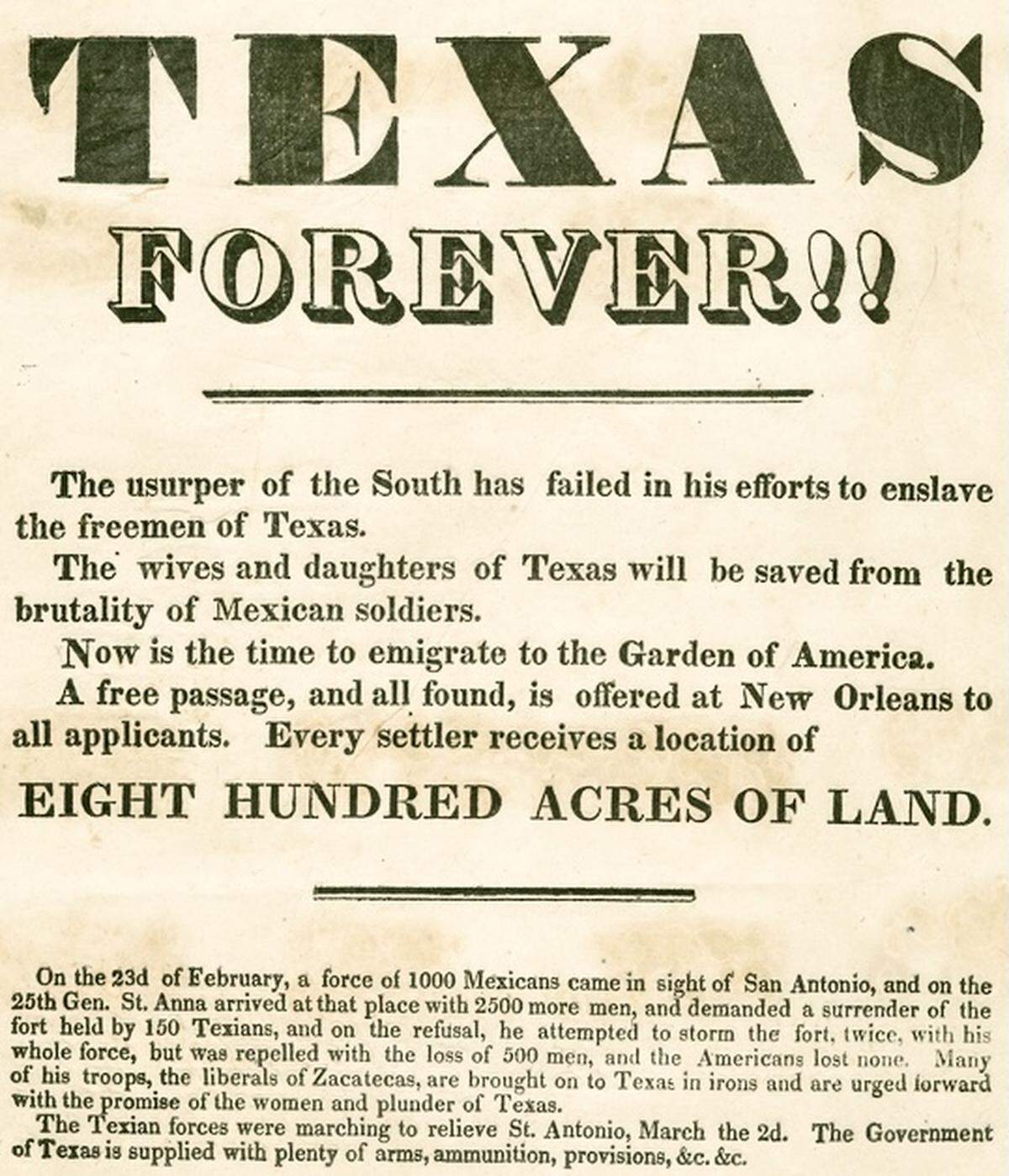
But only recently has slavery become part of the public debate. Until lately, the arguments were mostly over how to balance the Texas and Mexico sides of secession and how to fairly recognize those Tejanos who were heroes of the revolution or later ostracized or slaughtered.
University of Texas Professor Walter L. Buenger, chief historian for the Texas State Historical Association, wrote by email that “Forget the Alamo” is “nothing new” to historians.
“[It] puts the spotlight on the importance of slavery in Texas, and focuses on how the myths and stories of the Alamo were added after the fact,” he wrote.
But one of the book’s most prominent critics is former Texas Land Commissioner Jerry Patterson of Austin.
In an email, he called the book B.S. (Except he spelled it out, and not the college degree.)
“The purpose behind ‘Forget The Alamo’ is to sell copies, not to add to the body of history,” he wrote, pointing out that other states in Mexico also rebelled against the federal government.
If so, Patrick and the Bullock Museum gave the book a giant boost.
In one day Friday, it went from No. 289 in sales at Amazon.com into the top 50.
“The more our book takes hold, the more copies we sell, the more upset they get,” Tomlinson said.
All I can say is, if the late Lt. Gov. Bob Bullock were still around, he’d never kick hot-selling authors off the schedule.
He’d just make sure the museum store sold plenty of books.
This story was originally published July 3, 2021 at 5:45 AM.