2000: When the Masonic Home of ’12 Mighty Orphans’ went from all-white to all welcome
That there’ll be a party Monday to celebrate Martin Luther King Jr. is not surprising.
The location is.
The neighbors are throwing a big party Monday at the old Masonic children’s home and school campus in southeast Fort Worth.
Call it a victory party.
Because for most of the home’s 107-year history, it was closed to its Black neighbors.
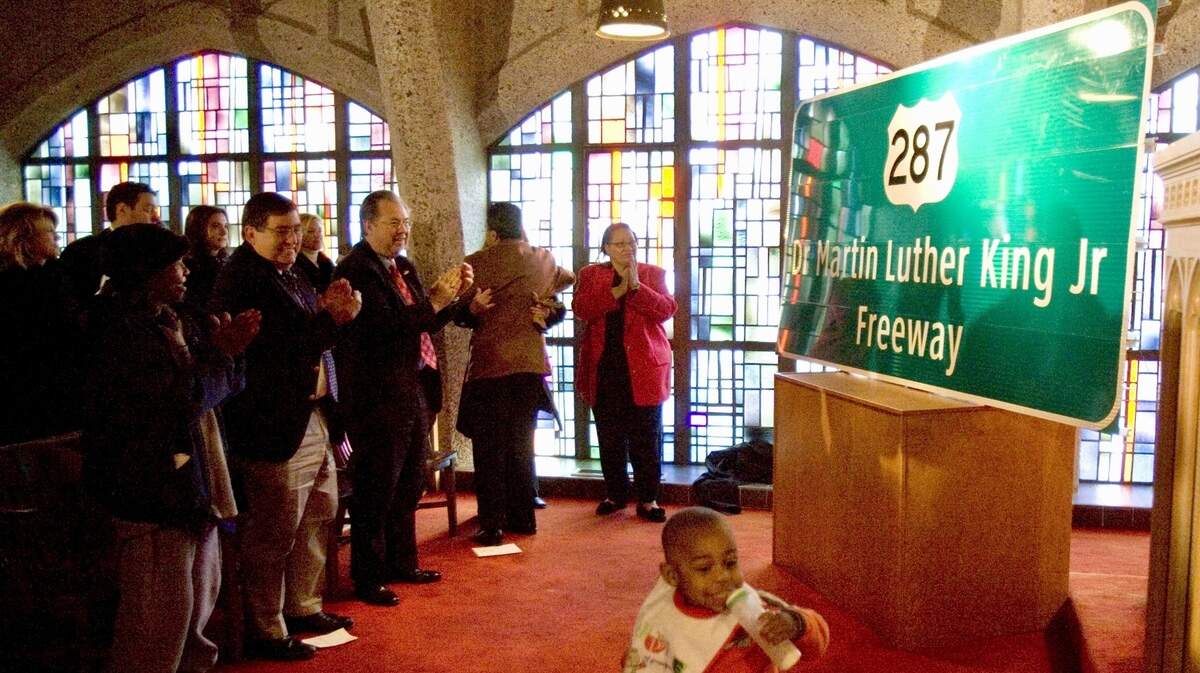
On the campus of a formerly all-white children’s home and public school, neighbors will gather in the chapel to commemorate Martin Luther King Jr.’s birthday and rededicate nearby U.S. 287 as the King Freeway.
“It shows how far we’ve come,” said retired state District Judge Maryellen Hicks. “But it also shows there’s still work to be done.”
I would like to tell you that the Masonic Home, Texas’ last legally sanctioned segregated school, opened its doors to all children in 1960.
But it wasn’t 1960.
Or 1970.
Or even 1990.
According to state accountability test records, the Masonic Home did not report admitting a Black child until 2000.
Sue Regian of Garland remembered.
Her late husband, Joe, was the school board president who urged Texas Masons to look outside their mostly white and Hispanic fraternal membership rolls and admit nonmembers’ children.
That desegregated the school, an effort funded with a combination of taxes and charity, for the first time since it had opened in 1899.
Regian recently read some of the hate mail her husband received.
“Some Masons didn’t want black people there,” she said.
“A lot of letters were really, really hateful. They said, ‘Masonic Home is going to the [n-word].’”
They didn’t say neighbors.
On Monday, the community will gather to mark King Day with a 1 p.m. ceremony in the home’s old chapel.
Fittingly, that chapel is dedicated to Joe Regian.
The home and school closed in 2005 partly because some Masons withdrew contributions but mostly because the children’s home had settled a $6.9 million lawsuit involving abuse in the mid-1990s.
The 200-acre, college-style campus in the Polytechnic Heights neighborhood was sold last year to a local real estate developer, the Mallick Group.
Developer Michael Mallick plans more than 500 homes around the historic 1920s school and dormitories and the beautiful, cut-stone 1958 chapel.
The campus is still fenced, gated and guarded, but he agreed to open the chapel Monday.
“It’s a nice statement of liberation to have Martin Luther King Day there,” he said. “There will be equal opportunity for every race there from now on.”
In the fall, Hicks, her sorority, Delta Sigma Theta, and Fort Worth Mayor Pro Tem Kathleen Hicks, her daughter, started raising $10,000 for larger state highway signs designating U.S. 287 as the Martin Luther King Jr. Freeway.
City Hall renamed the freeway in 1981. But when big signs went up in Arlington marking Interstate 30 as the Tom Landry Highway, Hicks began asking her radio audience on KKDA/730 AM to help pay for freeway signs through predominantly Black neighborhoods of southeast Fort Worth.
Mayor Mike Moncrief and U.S. Rep. Michael Burgess, R-Lewisville, are among the officials expected to attend Monday. One of the new, reflective green full-size highway signs was placed inside the chapel Friday for the ceremony.
Hicks said her group chose the Masonic chapel simply because “we haven’t ever been over there.” She said that as a family court judge, she always had a “very positive” impression of the children’s care at the Masonic Home and School.
Mallick remembered hearing how his Lebanese ancestors were once the target of discrimination.
“You can’t look back,” he said. “People thought they were doing the right thing. Now, we’re moving forward as a more open society.”
At home in Garland, Sue Regian hadn’t heard about the King ceremony.
“I think my husband would be absolutely thrilled,” she said.
Joe Regian was an executive with Restland Funeral Home in Dallas and a Garland City Council member. He always worked alongside Black employees, she said.
“He fought for a long time to integrate that home and take care of all the children that needed care, no matter what color they were,” she said.
“It’s a shame the home closed. It was needed so much.”
I was about to thank her and say goodbye.
“Wait a minute,” she said.
“Let me ask you something about this ceremony Monday. Is it OK if any Masons come?”
Yes.
Finally, the gates are open to everyone.