‘Let’s go ahead’: How one Fort Worth store owner led the way to end 1950s segregation
In a museum devoted to a legendary 20th-century American superstore, two signs might be the most important.
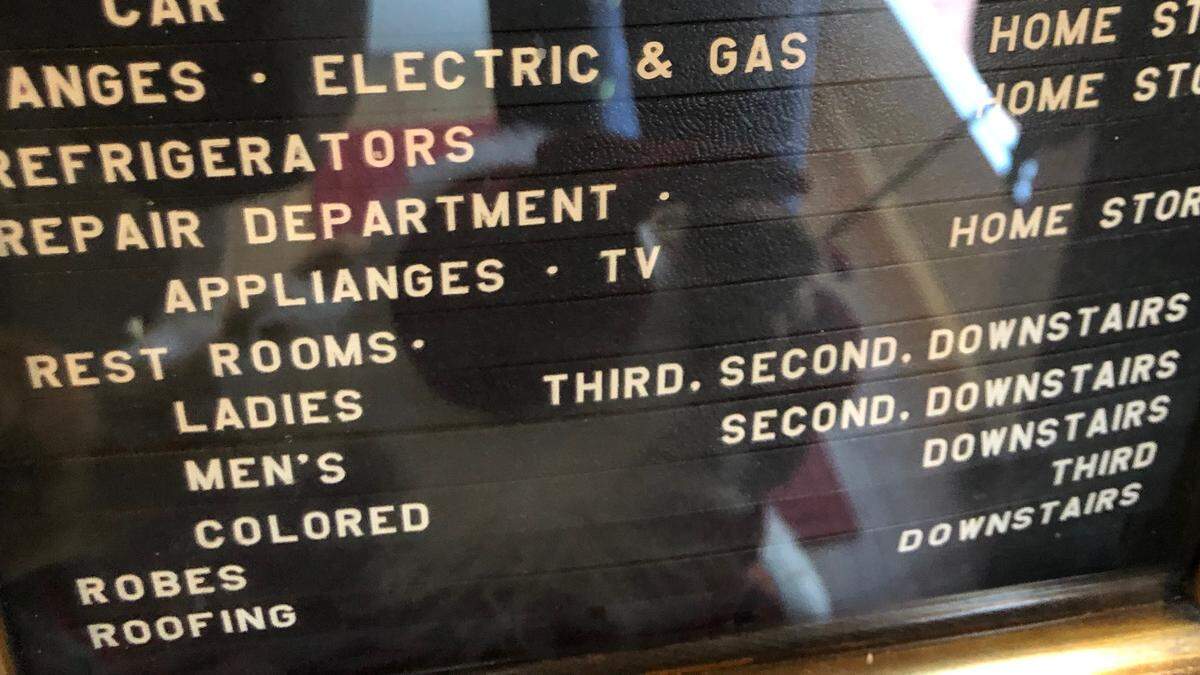
On a 1950s directory from the old Leonards Department Store downtown, family historian Marty Leonard pointed out the tiny lettering giving the old locations for different rest rooms — “Ladies,” “Men’s” and “Colored.”
But the very next exhibit is “Desegregation”: how by February 1960, Leonards became Dallas’ or Fort Worth’s first major retailer to take all signs down, welcoming everyone to dine and use public facilities side-by-side.
“Some people say I ought to take that line down from the store directory, but that was our history,” said Leonard, 82, daughter of store co-founder Marvin Leonard and host of the store’s centennial celebration Saturday at the museum, 200 Carroll St.
“Daddy realized we ought to do what was right. And that became our history.”
In a city still uneasy over a long list of racial inequities — and asking whether the “Fort Worth way” of quiet desegregation is way too slow — Leonards’ desegregation is a benchmark.
To the northern U.S., February 1960 was late for equality. But in Texas, it was comparatively early.
In a working-class Fort Worth where defense workers and packinghouse butchers of all colors worked side-by-side, brothers Marvin and Obie Leonard had long welcomed African-American shoppers, families and employees. The store, covering seven city blocks at 200 Houston St., extended credit to all and cashed anyone’s payroll check.
(That’s according to historian Walter L. Buenger’s 1998 book “Texas Merchant: Marvin Leonard and Fort Worth,” and Richard F. Selcer’s 2015 book “A History of Fort Worth in Black & White.”)
In the late 1950s, Stripling’s Department Store across Houston Street fired an African-American pastor’s wife when they moved into a white neighborhood. Its Pink Rooster restaurant was completely whites-only.
But Leonards was already starting to dismantle segregation.
The museum exhibit describes Leonards’ “practical and moral approach.”
There was no announcement.
The rules gradually went away. Then the signs came down.
In a 2002 report on Fort Worth’s racial past, the Star-Telegram quoted the late Jenkins Garrett, the department store’s lawyer:
“I talked to Mr. Marvin and said, ‘You know, the law is pretty clear. Sooner or later, you’re going to have to take the signs down. And it’s the right thing to do. So why not do it now, ahead of time?”
Garrett said Leonard told him, “Let’s go ahead.”
The way the story goes, at one point demonstrators phoned reporters to announce a cafeteria counter sit-in.
Lois “Steve” Drennan, the cafeteria manager, quietly poured them coffee.
Other downtown retailers desegregated by the time President John F. Kennedy visited in 1963. In Dallas, it took longer.
The Leonards Museum exhibit adds a bold claim:
“Because of Marvin’s quiet leadership, Fort Worth moved toward desegregation more peacefully and more quickly than any other city in the South.”
That was the original Fort Worth way.
This story was originally published December 15, 2018 at 5:13 PM with the headline "‘Let’s go ahead’: How one Fort Worth store owner led the way to end 1950s segregation."