Opinion articles provide independent perspectives on key community issues, separate from our newsroom reporting.

Bud Kennedy

The untold story of Juneteenth: Gen. Granger freed the slaves, but who was he?

(Adapted from a column published June 19, 2015.)

Freedom came to Texas June 19, 1865, yet Juneteenth is partly a mystery.

We know a U.S. Army major general sent here to take command issued five written orders, all through a staff officer in headquarters on Galveston Island.

We celebrate Order No. 3, particularly these words: “All slaves are free.”

Beyond that, Texans know almost nothing about the New York commander sent to declare liberty, or the one-paragraph order considered almost as important as the Emancipation Proclamation.

Turns out U.S. Army Maj. Gen. Gordon Granger didn’t just restate President Abraham Lincoln’s 1863 proclamation.

Granger added more.
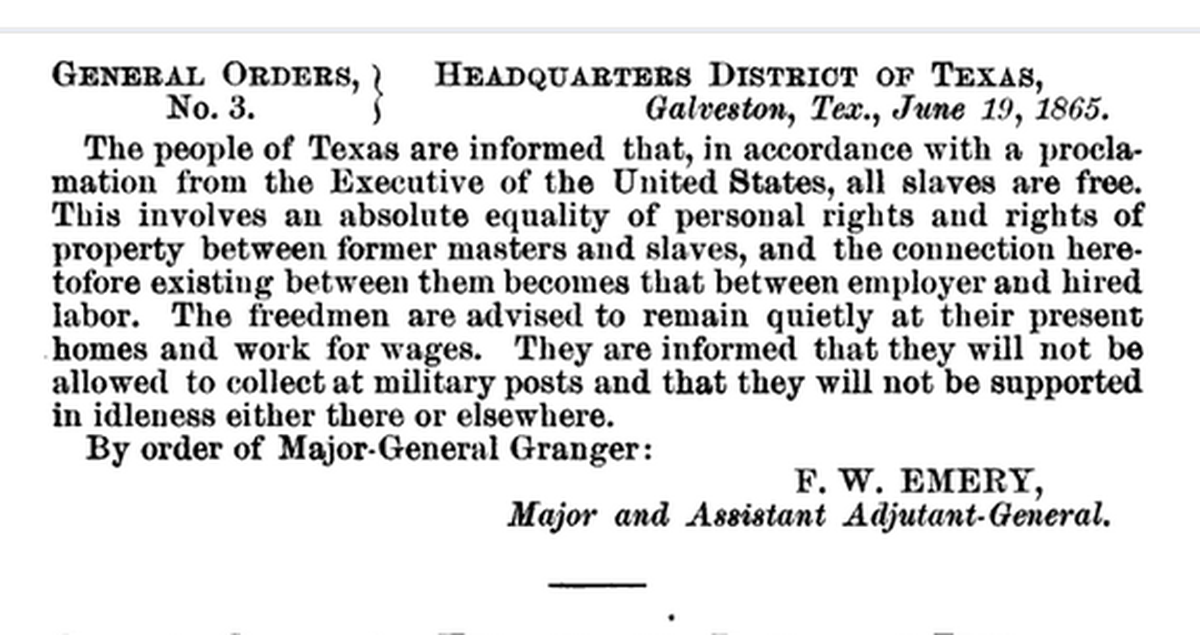
Maj. Gen. Gordon Granger’s General Orders No. 3 ordered “absolute equality.”
Maj. Gen. Gordon Granger’s General Orders No. 3 ordered “absolute equality.” U.S. war records

“He wrote a very radical statement for the time, striking in his language,” said retired New York journalist Robert Conner, author of the 2013 biography ‘”General Gordon Granger: The Savior of Chickamauga and the Man Behind ‘Juneteenth.’ ”

Faced with defeated but defiant Texans, Granger issued an order that went beyond instructions from division commander Gen. Philip Sheridan.
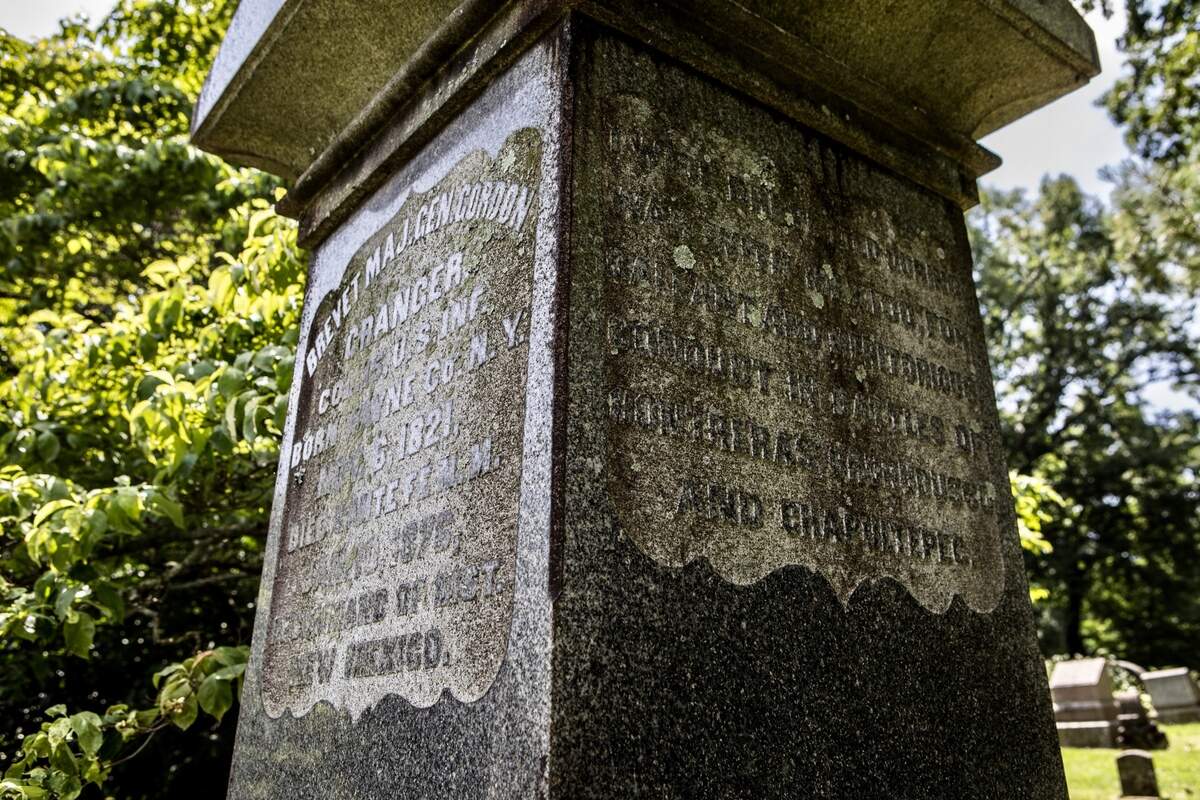
The gravestone of Gen. Gordon Granger in Lexington Cemetery, Kentucky, June 19, 2018. General Granger was a career U.S. Army Officer and a Union Major General in the Civil War. After the war he remained in the Army in commands of the Department of Texas and later the District of New Mexico. The general was buried in Lexington, his wife’s birthplace.
The gravestone of Gen. Gordon Granger in Lexington Cemetery, Kentucky, June 19, 2018. General Granger was a career U.S. Army Officer and a Union Major General in the Civil War. After the war he remained in the Army in commands of the Department of Texas and later the District of New Mexico. The general was buried in Lexington, his wife’s birthplace. Ron Garrison rgarrison@herald-leader.com

Six days earlier, Sheridan had written to Granger “all slaves are free” but “must remain at home.”

Granger’s order added “absolute equality” and defined the legal roles of “employer and hired labor.” Former slaves were only “advised” to stay.

“I think he realized he had to say something strong to wake Texans up,” Conner said by phone from Saratoga County, N.Y.

Some white Texans doubted Granger would try to end slavery quickly.

Maj. Gen. Gordon Granger. Created / Published between 1860 and 1870 (Library of Congress Prints and Photographs Division Washington, D.C. 20540 USA) No known restrictions on publication.
Maj. Gen. Gordon Granger. Created / Published between 1860 and 1870 (Library of Congress Prints and Photographs Division Washington, D.C. 20540 USA) No known restrictions on publication. Library of Congress

“ Texans could not imagine how to function” if freedmen were not “controlled,” Conner said.

Granger’s orders, issued from a now-gone office building owned by Jewish Texan pioneer Rosanna Osterman, were republished and read across Texas, but historians disagree whether they were ever read aloud there as a proclamation.

Granger, credited with saving the Union and maybe the Civil War at the 1863 Battle of Chickamauga, Tennessee, commanded Texas for less than two months, mostly establishing posts and securing cotton.

Reassigned to command New Mexico and a career dealing with Comanches and Cochise’s Apaches, Granger died at age 53 in 1876 in Santa Fe, New Mexico.
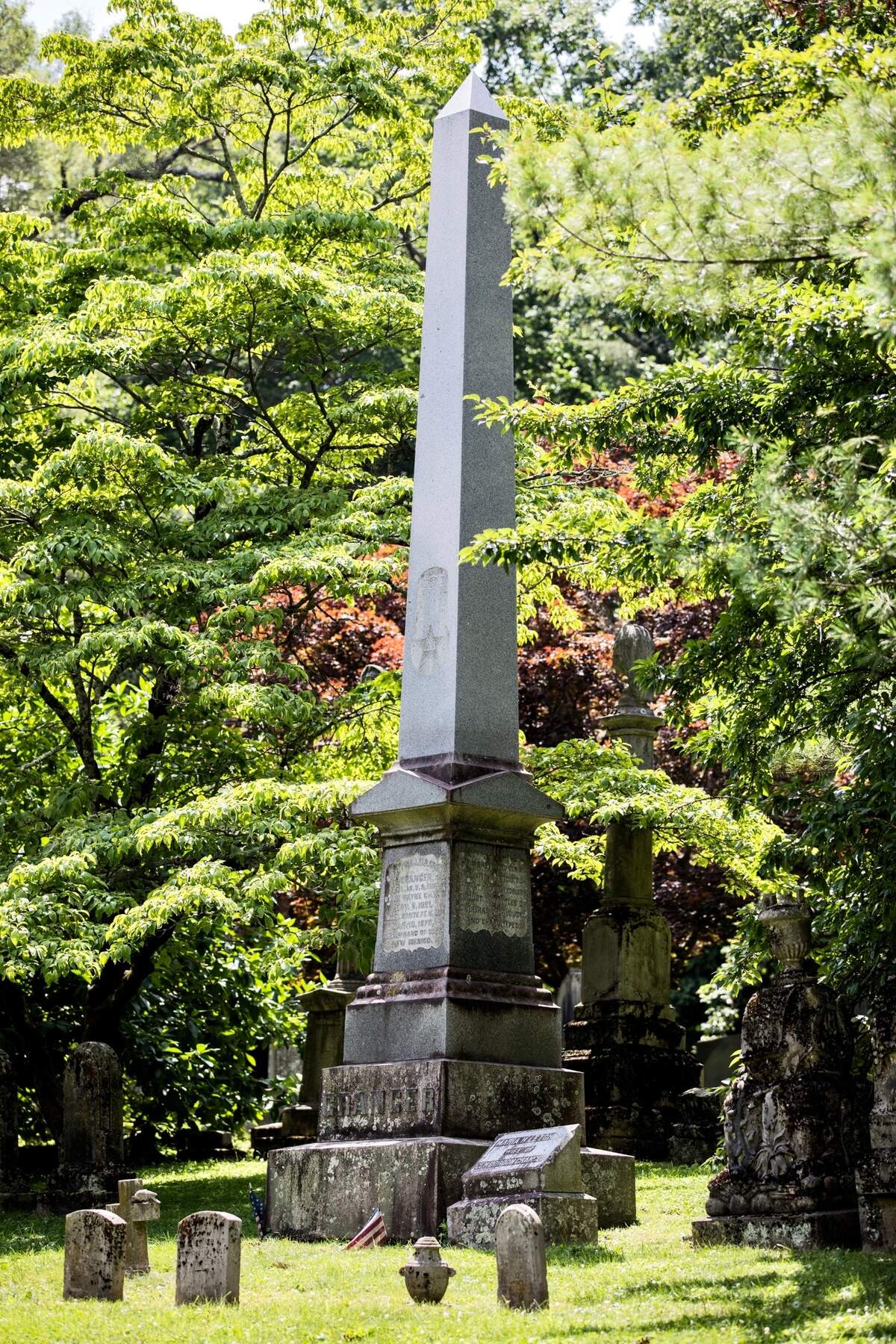
The gravestone of General Gordon Granger in Lexington Cemetery June 19, 2018. General Granger was a career US Army Officer and a Union Major General in the Civil War. After the war he remained in the Army in commands of the Department of Texas and later the District of New Mexico. The general was buried in Lexington, his wife’s birthplace.
The gravestone of General Gordon Granger in Lexington Cemetery June 19, 2018. General Granger was a career US Army Officer and a Union Major General in the Civil War. After the war he remained in the Army in commands of the Department of Texas and later the District of New Mexico. The general was buried in Lexington, his wife’s birthplace. Ron Garrison rgarrison@herald-leader.com

A giant monument towers over his grave in Lexington, Kentucky, near his wife’s birthplace.

On four sides, the marker lists Granger’s war achievements and feats of heroism.

It does not mention Texas or Juneteenth.

This story was originally published June 18, 2018 at 4:57 PM with the headline "The untold story of Juneteenth: Gen. Granger freed the slaves, but who was he?."

Related Stories from Fort Worth Star-Telegram
Bud Kennedy
Opinion Contributor,
Fort Worth Star-Telegram
Bud Kennedy is a Fort Worth Star-Telegram opinion columnist. In a 54-year Texas newspaper career, he has covered two Super Bowls, a presidential inauguration, seven national political conventions and 19 Texas Legislature sessions.. Support my work with a digital subscription
Get unlimited digital access
#ReadLocal

Try 1 month for $1

CLAIM OFFER