
2002: When the timeless Billy Graham offered Texas another ride
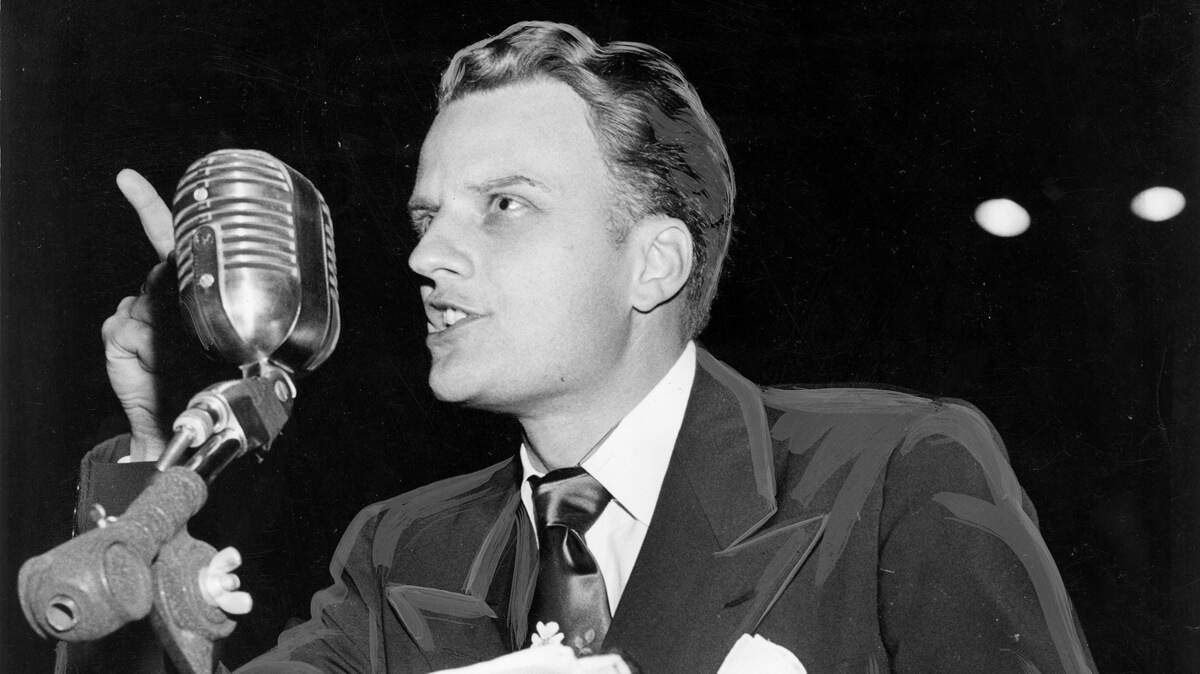
They don't make preachers like Billy Graham anymore.
“God is giving us one more chance,”" he told a packed arena here.
“I don't know when the bloodbath will be upon us. This may be the last union revival ever held in Fort Worth.”
The year was 1951.
Billy Graham is back. God is giving us one more chance — one more chance to see the greatest American spiritual leader of the 20th century.
He is more than just a preacher.
He is the human who brought strength to an uncertain America.
Near the end of a 63-year career, he has preached to former slaves in the segregated South and alongside the Rev. Martin Luther King Jr. Born before the end of World War I, he has ministered on Korean War battlefields and in once-feared Russia.
A contemporary of Bob Hope and radio commentator Paul Harvey, he outshines them both as a timeless American treasure.
At 32, he came to Will Rogers Coliseum in 1951 when Fort Worth was ready for some kind of a lift.
The city was booming economically with postwar growth — and also literally.
Gamblers, crooked law officers and graft-happy politicians battled for control of the growing city. Shootings escalated to bombings until Graham's visit. Afterward, a new police chief launched the first serious campaign to clean up corruption in Fort Worth.
Maybe the crusade's message hit home.
When he arrived in 1951, Graham declared that the United States “has been in a 30-year decline, politically, morally and emotionally.”
Graham also condemned the evils of dancing, “telling filthy stories” and “wanting social position,” and told women: “Be attractive. Keep up with current events. Keep your home clean and livable. Don't nag.”
Graham no longer says that, or at least not in the same way. His message remains friendly and positive, encouraging faith in a supreme force and in religion — in this case, faith in Jesus Christ.
Unlike some of our cash-crazy local TV preachers, he does not worship the 1-800 number or auction the promise of his prayers.
When he came back in 1971, it was at Tom Landry's invitation to open the still-unfinished Texas Stadium.
One eventful night of the crusade, the speakers included former President Lyndon Johnson.
The musicians included a man identified as “folk singer” Ray Hildebrand. Today, he is better remembered for a 1963 pop song that he wrote and sang to No. 1 on the Billboard charts — “Hey Paula.”
Now, at 83, Graham will visit us once more, renewing Texas friendships of more than 50 years.
The 1951 Fort Worth revival was the setting for Graham's first feature movie. In an era of cowboy films, it was described as a “Christian Western.” The name: Mr. Texas.
The lead character is a Texas cowboy named “Rancher Jim.” When he is thrown from his horse, he lands in the hospital and begins reading the book of John.
In the final scene, Rancher Jim says:
“All my life, I been ridin' the wrong trail. I'm turnin' back. I'm goin' God's way.
“I think it's goin' to be a wonderful ride.”
This story was originally published February 21, 2018 at 11:10 AM with the headline "2002: When the timeless Billy Graham offered Texas another ride."