
Texas already struggles with water, heat. Fort Worth, beware data centers | Opinion
Drain, pain
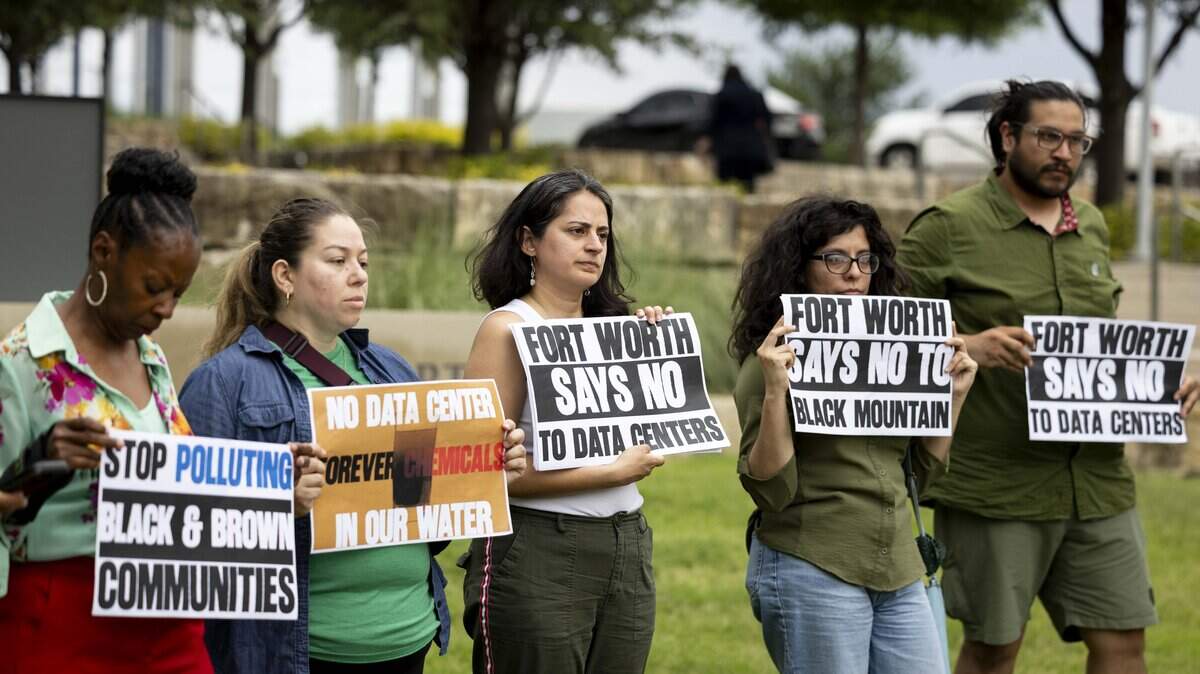
Fort Worth leaders should resist the rush to embrace massive artificial intelligence data center projects. In Texas, water is scarce, and the demand for electricity is already high. Fort Worth is particularly at risk as an urban heat zone, hotter and drier than surrounding areas.
Large AI data centers strain water resources, increase pressure on the power grid and rely heavily on energy sources that release large amounts of carbon dioxide. The Fort Worth Zoning Commission and City Council may soon vote on proposed regulations that could mitigate the harms of development within the city limits. (June 18, star-telegram.com, “Fort Worth pushes vote for $10B data center site plan to Aug. 25. What to know”) These are important proposals and deserve support.
Unfortunately, it is unclear whether data center developers and state legislators will attempt to override efforts to assert local control, especially when compliance involves significant cost. City leaders should move carefully before approving projects without adequate assurance of local control.
- Karen Myers, Fort Worth
Special care
Thank you for your story on the toddler born with spinal muscular atrophy who received the recently approved high-dose drug Spinraza at Cook Children’s Medical Center in Fort Worth. (June 15, star-telegram.com, “Fort Worth toddler first in Texas to be treated with new drug for rare disorder’)
Such stories are incredibly important for raising awareness and offering hope to families navigating rare diagnoses. When a child has a life-altering condition, every parent knows only the very best care will do.
The care and therapy for this toddler were delivered here in Fort Worth, and I am proud Cook Children’s Health Care System is on the leading edge of providing therapies such as Spinraza. Our highly specialized doctors collaborate with centers across the country to ensure children have access to world-class health care, and it’s important to recognize the advanced care being delivered in our community.
- Dr. Jonathan Nedrelow, Fort Worth, Chief Medical Officer, Cook Children’s Health Care System
Some ‘liberty’
Every morning, Fort Worth school students recite a pledge ending with “liberty and justice for all.” Do district leaders live up to those words?
At an April board meeting, more than 130 speakers testified for more than five hours against closing the International Newcomer Academy and cutting positions serving vulnerable students. The administration did not yield.
But when a right-wing social media account targeted a Muslim principal for personal social media posts, the district reassigned her immediately. (June 10, 7A, “FWISD investigating teacher for social media posts”) Colleagues have described Shayma Alzubi as an exceptional leader who never brought religious or political views into the workplace. Her reassignment seems motivated not by her job performance, but by her identity.
The district and board of managers should ask themselves whose voices they are amplifying and whose they are ignoring.
This is not liberty or justice. This district must live up to the words of the pledge.
- Susan Anderson, Benbrook
Sacred right
Thomas Jefferson was an important supporter of religious freedom and frequently alluded to a “wall of separation between church and state.” He called religious freedom “the most inalienable and sacred of all human rights.”
James Madison said: “There is not a shadow of right in the general government to intermeddle with religion. Its least interference with it would be a most flagrant usurpation.”
Forcing the Ten Commandments and biblical readings in our schools is persecution, and it needs to be stopped.
- Sandra Bakkethun, Krum