Most MLB teams have DEI programs. Why won’t any commit to them or talk about it? | Opinion
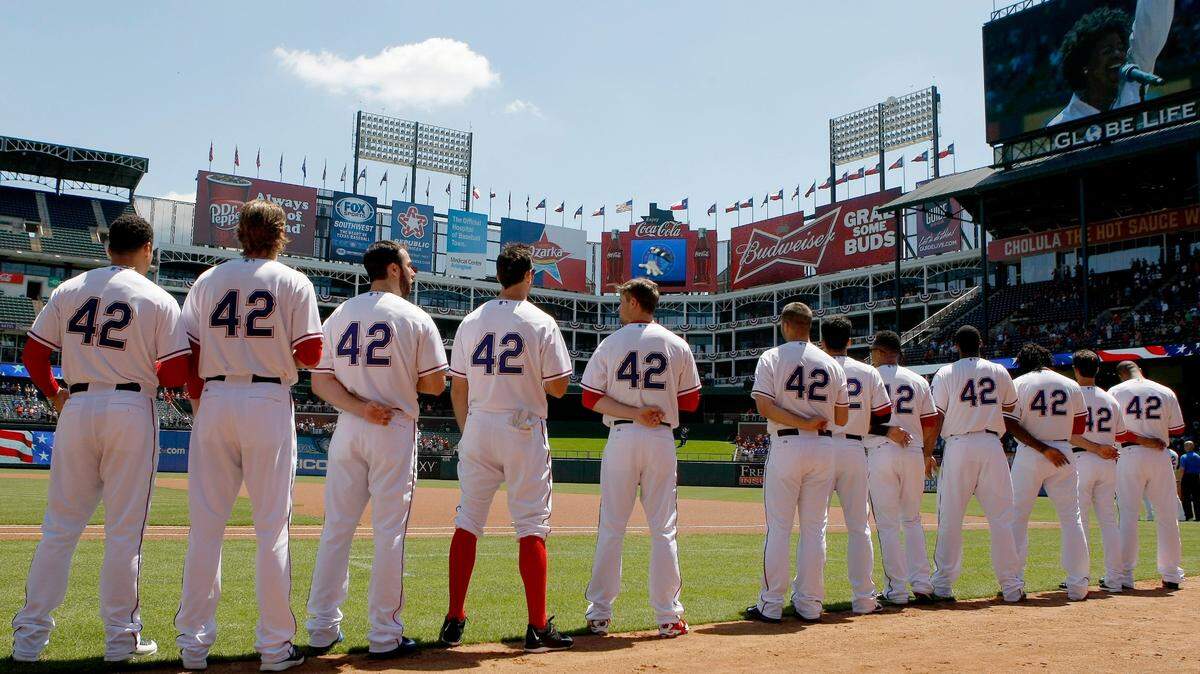
Major League Baseball is a reliable crutch for the writer in search of a tidy metaphor. As the prevailing professional entity shepherding “America’s pastime,” the league leans into its Americana, from its playing of the national anthem, and spreading giant flags not even Willie Mays could cover, reflecting my country in all its paradoxes.
Most striking to me is MLB’s role in catalyzing American civil rights movements in the Dodgers’ promotion of Jackie Robinson into a de facto all-white league. Yet the league, in perfect sync with our nation, attempts to celebrate history while fearing its shadow.
The league and the Trump administration worked in concert in more ways than one. First, the Trump administration stripped a story about Robinson’s military history from a Defense Department website. Officials defended their whitewash with the modern incantation, or slur, of the baseball star and veteran as a DEI hire, the kind of admission only someone hopelessly racist and unashamed of knowing nothing about ball.
But MLB said hardly anything in defense of the most important player in its history — the best it could offer was a bland statement from a spokesperson telling ESPN the league was “aware and looking into it.” Days after Robinson’s page was restored, the league quietly removed references to “diversity” from its careers page, with a spokesman telling The Athletic that the league was “evaluating our programs for any modifications to eligibility criteria that are needed to ensure our programs are compliant with federal law as they continue forward.”
Similarly evasive and unpersuasive, MLB commissioner Rob Manfred told league owners in February that “Our values on diversity remain unchanged, but another value that is pretty important to us is, we always try to comply with what the law is.”
So, what happens when the law is eating itself alive?
Most MLB organizations appear to have community or hiring initiatives that fall under the broad purview of DEI. However, individual teams seem to share the league’s apparent reluctance, if not outright fear, of publicly committing to their futures. I know because I checked by emailing representatives from all 30 MLB teams about respective programs and statements I located, or failing that, inquiring if they could point me to where I could research them further. I also asked each team if anything in their DEI programs had changed and if they would continue their efforts.
I provided a minimum 24-hour deadline, though most teams received 48 hours. The only team to respond with a public comment was the Texas Rangers.
“Our commitment is to make everyone feel welcome and included in Rangers baseball. That means in our ballpark, at every game, and in all we do — for both our fans and our employees,” a Rangers spokesperson wrote. “We deliver on that promise across our many programs to have a positive impact across our entire community.”
Missing in the response was a direct answer about what these programs would entail.
Some teams, such as the Rangers, have a threadbare page with little more than a general diversity statement reference to MLB’s Jackie Robinson Day. Other teams, such as the Athletics, who recently relocated to Sacramento’s Sutter Health Park while they attempt to build a longer-term home, and the Kansas City Royals, who share a city with the Negro League Baseball Museum, have more robust examples of past pro-diversity work. They cited cultural celebrations, community initiatives and, in the Royals’ case, sponsored a free month of museum admissions to gift their community with the joy and power of Black baseball.
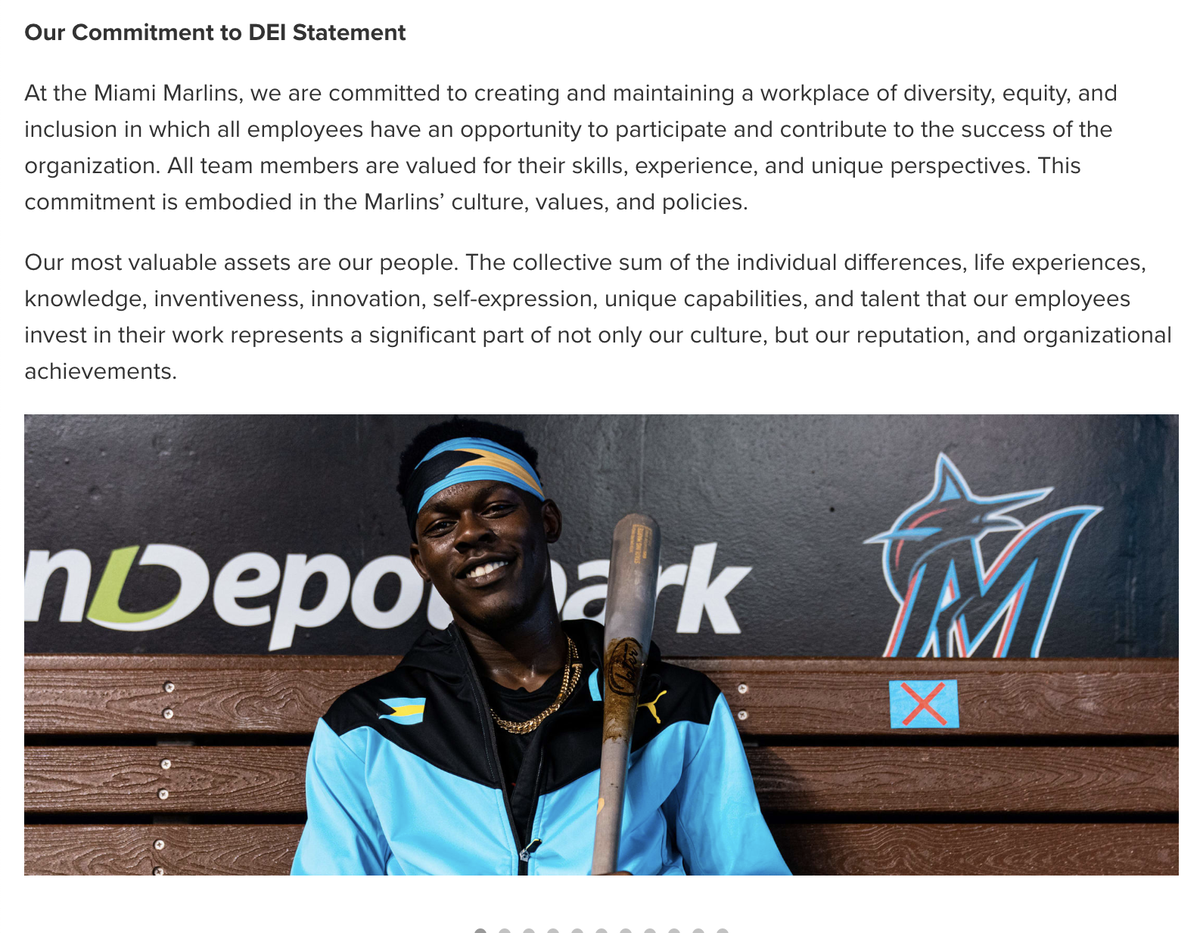
Other teams may have once had active diversity initiatives, though their digital presence suggests a need to clear the cobwebs. The Miami Marlins’ DEI page, for example, boasts several photos of Jazz Chisholm Jr., even though the team traded its Bahamian All-Star last year.
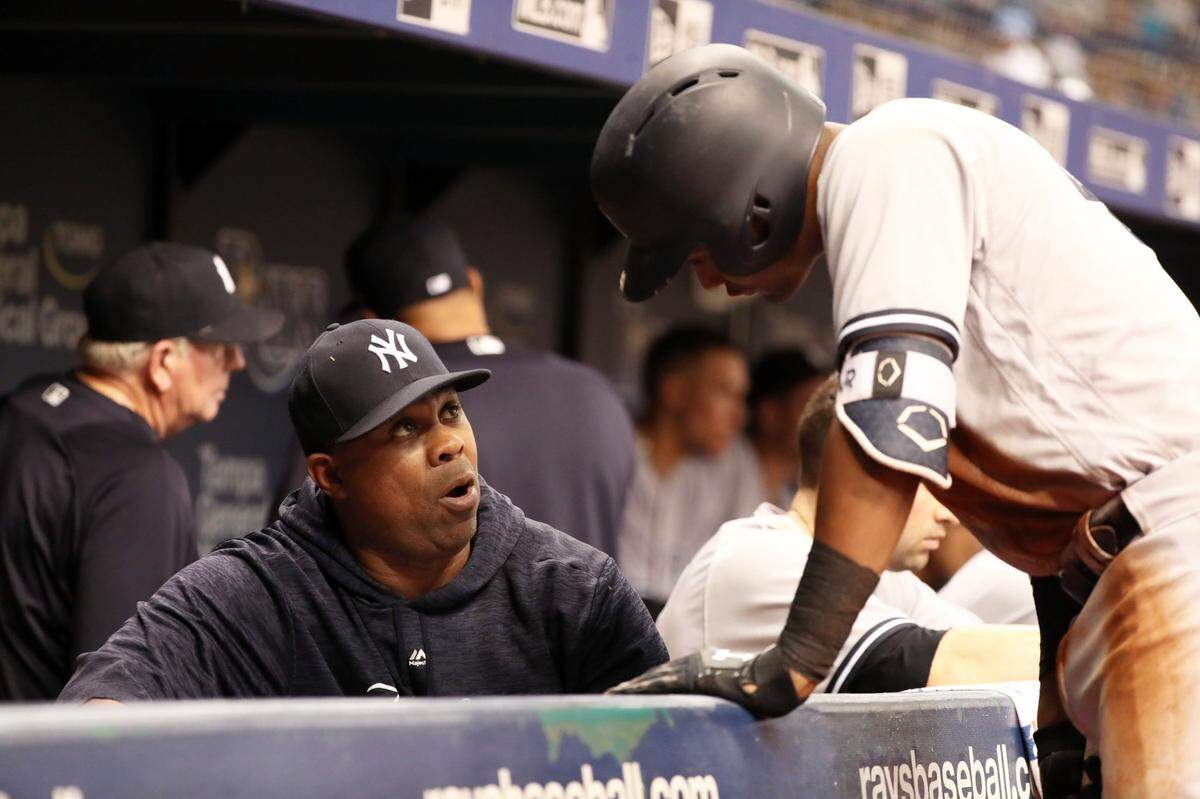
Chisholm may soon find the Marlins aren’t alone in coasting on the image of Black people it no longer employs; his new team, the New York Yankees, touts former player and hitting coach Marcus Thames as part of its “Diversity Council.” Chisholm will have to reach Thames for hitting tips on the side — the Yankees fired Thames nearly four years ago.
Thames has already coached for three different teams, and he is currently the Chicago White Sox hitting coach. I’d love to talk to his current team about the importance of diverse on-field leadership in a game with international ambitions — but, they also didn’t respond! Neither did the New York Mets — billionaire financier Steve Cohen’s wife, Alex, who is Puerto Rican, is heavily involved in the team’s community relations — or the Los Angeles Angels, two teams with non-white Latino majority-owners.
Even the Los Angeles Dodgers, the team that signed Jackie and DEI-hired American baseball, didn’t respond to our request for comment about efforts one might imagine were inspired by the courage and common sense from its past.
I find no salvation in corporate diversity programs, but believe DEI is, at best, what Georgetown professor Olúfẹ́mi O. Táíwò described as “the work of patient incrementalists who simply sought to standardize education opportunities and hiring practices,” At worst, they are inherently insufficient efforts between the lines and beyond them, too, serving primarily as performative public relations ploys that preserve a fundamentally unequal status quo.
League-wide silence doesn’t confirm they’re all going away. But are teams that once used these programs to seek the public’s attention hiding the good work they do?
Even the most cynical view assumes diversity initiatives were built for public consideration over anyone’s benefit. Which makes the radio silence even louder. If addressing inequality was a performance, is the show over?
Unlikely. Some of these diversity efforts will probably continue, though you may have to work a little harder to find them.
On April 15, every player will line up in ceremonies said to honor Jackie Robinson, trading on nearly 80 years of equity earned from the first time a team decided it would attempt a meritocracy. Each team will display unity around venerating No. 42 and cowardice discussing what his life meant. When the league and its franchises cower over the good, or at least being threatened by Trump for the appearance of good, in fear of fascism, Robinson’s celebration more resembles a funeral — except this funeral also has merch.
My experience covering and following MLB has introduced me to many league and team employees, including women, racial minorities, queer people and the disabled — all inhabiting identities that the caretakers and culture of their favorite sport haven’t included. People who scout, analyze, coach, lead, and promote, and through their work and quiet advocacy, push through admittedly clumsy diversity efforts in their pursuit of a better sport.
These sources and colleagues, many of whom became friends, were typically skeptical of their employer’s motives but reasoned it was better to work their way to first base than pray for a home run. Some who may have rolled their eyes but hoped that in some small way, their sport can be a little better and fairer when their time is through. I’m angry that their worst fears were right and that their greatest hopes were wrong.
These diversity efforts were half-hearted, probably. But better half a heart than none at all.
This story was originally published April 5, 2025 at 5:28 AM with the headline "Most MLB teams have DEI programs. Why won’t any commit to them or talk about it? | Opinion."