GOP may be all about ‘America first,’ but this bill could make Texas last in sports | Opinion

For my money, the best player in the NBA is Nikola Jokic. I’ve never seen a near-seven-footer Frankensteined with Chris Paul’s passing mind and feel for the game. Or maybe it’s Giannis Antentekoumpo, aka the Greek Freak, who can clear both ends of the court with a few leaps. However, Luka Doncic has a case as a one-man offense who just led his team to the Finals.
At 25, is as untradeable a young star as we’ve ever seen. Joel Embiid is having a tough year in Philly as he and his 76ers battle injuries, but he’s only a year removed from a 70-point outing and reasonable claims that he was scoring at the most efficient rate ever. Shai Gilgeous-Alexander (known as SGA) might dethrone all of them as the league’s No. 1 scorer for a team with as good a chance as any to finish with the Association’s top record.
All of these players, despite their varied heights, weights, backgrounds, roles and skillsets, have one thing in common besides a legitimate claim to being the NBA’s best: They were born outside the United States. Some came up through international pro leagues, while others, such as Embiid and SGA, opted to play with Kansas and Kentucky, respectfully, two perennially top-ranked NCAA Division 1 teams.
But two Texas lawmakers, if they get their way, would like fewer of the next Lukas, Jokers, Embiids and Shais balling stateside before the league inevitably calls their name.
Last week, Republican Sen. Brandon Creighton and Rep. Drew Darby released companion bills requiring Texas public colleges to offer a maximum of 25% of its total “athletic scholarships, grants, or other financial assistance” to non-US citizens. Such a law would work as a hard cap on international student athletes, regardless of their obvious talent.
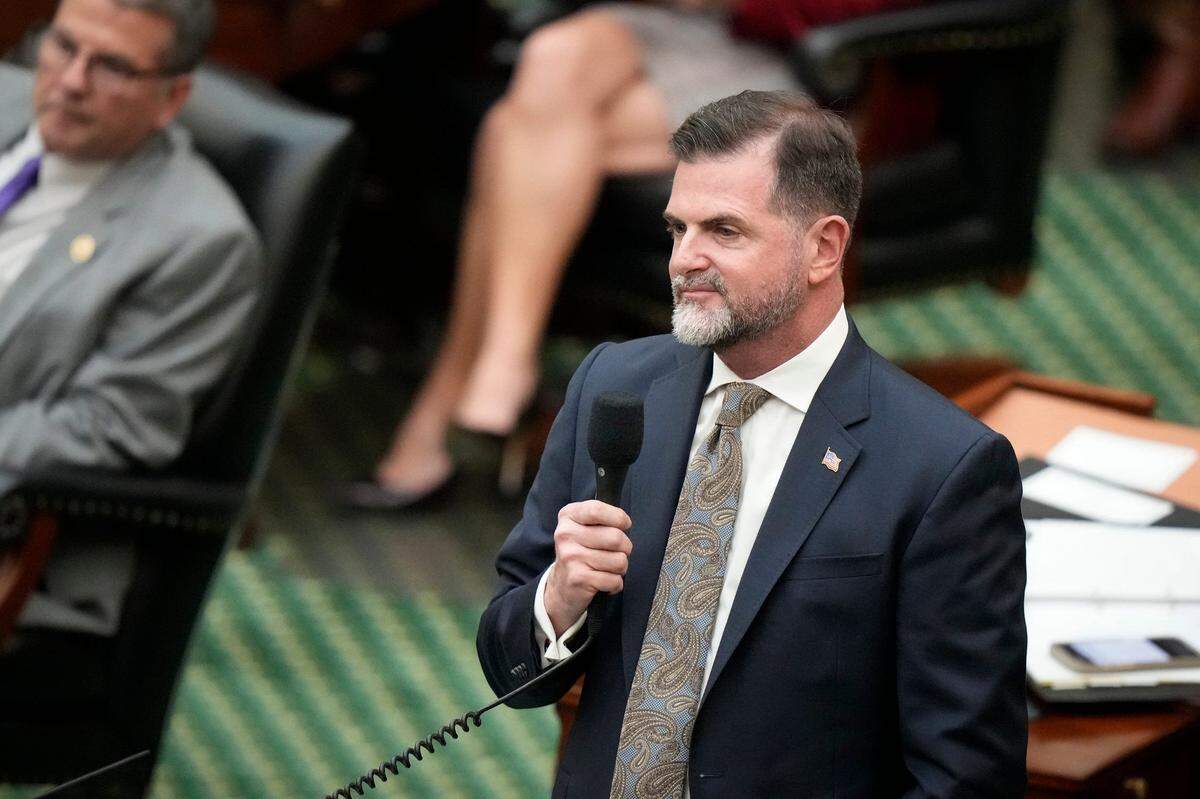
According to defenders of the bill who spoke to Front Office Sports, athletic scholarships, funded in part by American tax dollars, “provide a pathway to academic success and career advancement, particularly for students from low-income backgrounds,” and giving them to non-citizens “undermines the primary goal of non-revenue collegiate sports, which is to provide educational opportunities for U.S. citizens.”
Hold aside for a moment that Creighton’s and Darby’s bills codify the inherently bigoted argument that where you’re from matters more than whether you can play. Or that this law would strip authority from coaches, shifting talent evaluation from trained scouts to the statehouse. Or that, ultimately, this will make our teams worse than they otherwise would be. Or that the bill won’t just restrict “non-revenue” college sports, but all of them. Or that, according to one immigration attorney, the law could also apply to athletes with dual citizenship, which would turn some Americans into literal second-class citizens.
What I want you to understand is that these bills, unserious as it is, reveals what fairness means to members of Austin’s ruling party.
There’s a terminal flaw to the debate because so much of it revolves around the idea of meritocracy, a completely unfalsifiable concept vague enough to be wielded as a rhetorical weapon by whoever uses it. Is it “fair” for colleges to only admit people with the highest mark on a transcript or SAT, ignoring the schools, neighborhoods, families, and histories that created them? Were we more meritocratic in 1965 than we are in 2025?
Republicans argued that the form of meritocracy that sought to Include people in an Equitable process by expanding a school’s gender and ethnic Diversity, was actually discriminatory. It’s why Texas has a law barring DEI efforts in public colleges and why Tarrant County College lost a Hispanic Heritage Month event.
I am a direct descendant of Black parents who attended public universities, one of them a beneficiary of one of our nation’s first affirmative action programs. I make no apologies for rejecting meritocratic presumptions of “fairness.” But now, at least within the confines of athletics, lawmakers are actively campaigning for a worse product on the field, court, or arena because they’d prefer something analogous to a racial quota that reduces the ability of talented people to compete because they were born on the wrong soil.
Pointing out hypocrisy, as I do every so often in our column, hardly matters when there’s no power to challenge it, which is why I recommend athletes who excel on the court and gridiron take their talents elsewhere while they can. But since some Texans clearly don’t care about winning, anyway, maybe my suggestion was a mistake.
And about those non-revenue sports in focus? So many of those D1 athletics are already dominated by wealth on the youth level. Those epeé blades and lacrosse travel squads don’t pay for themselves. Privileging Americans by law, to borrow language from commentator Michelle H. Davis, preserves “power for the same people who’ve always had it.”
Ultimately, Creighton’s and Darby’s bills lie at the intersection between affirmative action and America First. And the natural end goal of an America First doctrine, in all its forms, isn’t about securing first place, no matter how much its proponents want to soothe our guilt or hide our cowardice. It’s always about keeping them out.
This story was originally published February 26, 2025 at 1:05 PM with the headline "GOP may be all about ‘America first,’ but this bill could make Texas last in sports | Opinion."