Even as TikTok ban is mired in politics on China, app is already becoming more American | Opinion
If you’re a musician, you probably know TikTok is parasitically absorbing your songs into viral video fuel, while paying artists “almost nothing.” When I’m trying to explore good food, film, fashion, or any realm of culture, I don’t like the systemic elevation of content creators with undisclosed incentives over critics who analyze with transparency.
TikTok’s pioneering delivery of short-form video content drives what scholar Matthew Ellis describes as an “increasing loss of knowledge about how the world actually works in place of algorithms that feed us what we want to hear,” siloing our exposure from facts and ideas if our behavior indicates we won’t like them. And I’m not immune from any of this — I sometimes spend time scrolling the app when I could be doing anything else productive. TikTok is bad.
TikTok is also a platform where, like the six-second looping video app Vine before it, people master its constraints of content to create hilarious sketches that should easily be understood as micro-budget short films. Filmmaker Caroline Golum once wrote about how TikTok users, unwittingly or not, evoked the logic and language of century-old silent film.) A quick scan of the Fort Worth Love List (or its Dallas and statewide counterparts) often gives me exactly what I need for my next meal, date night or weekend excursion. TikTok is good.
But evaluating TikTok’s merits, as well as the ban, is almost besides the point if you want to understand how America works. TikTok is something more important than bad or good. TikTok is Chinese.
Partially owned by Beijing-based parent company ByteDance, America’s favorite recipe/fitness/sketch comedy/tourism app was, our electeds claimed, developed too close to comfort to the government of a chief American rival. And America’s favorite recipe/fitness plan/ sketch comedy/tour guide app, U.S. Solicitor General Elizabeth Prelogar argued, could be “a powerful tool for harassment, recruitment and espionage.”
Toward the tail end of his first term, President Donald Trump attempted to ban the platform via executive order, citing how it “reportedly censors content that the Chinese Communist Party deems politically sensitive such as content concerning protests in Hong Kong and China’s treatment of Uyghurs and other Muslim minorities.”His order argued that the “mobile application may also be used for disinformation campaigns that benefit the Chinese Communist Party.”
All this from the author of the 2017 Muslim ban. Or Monday’s assault on the fundamental logic of American citizenship, the idea that being born here makes you from here. Strident defenses of Muslims’ liberty are quite the pivot. Better to understand Trump’s concerns about the Chinese government as a useful pretext for scapegoating while waging his ever-escalating trade war.
Trump’s order was swiftly struck down, but in recent years, support for a TikTok ban reemerged with help from the other side. Democrats began parroting Trump’s concerns about Chinese ownership and blaming the platform for ongoing disgust with Israel’s siege of Gaza. Now, scholars who study mass violence for a living, human-rights organizations on the ground and Palestinian journalists watching the bombs decimate their community called it more than a war, but a genocide.
But TikTok became a platform where users who might never engage with the drier elements of a nearly century-long conflict, research on colonization or arguments for or against Palestinians’ right to return. But they could see a father pulling his dead children out of the rubble and know something was wrong. Concurrently, TikTok became a bipartisan problem.
“The way that TikTok is talking about Gaza is designed to divide Americans from each other,” said Sen. Chris Murphy a Connecticut Democrat, adding that it was “probably time to say that we shouldn’t have a Chinese-owned social media company force-feeding divisive information to our kids.”
Anti-TikTok sentiment rapidly accelerated through all branches of government. A congressional bill demanding ByteDance sell its stake in their app to an American buyer or face expulsion from the country vote received a bipartisan vote, was signed by President Joe Biden and upheld by a 7-2 Supreme Court decision.
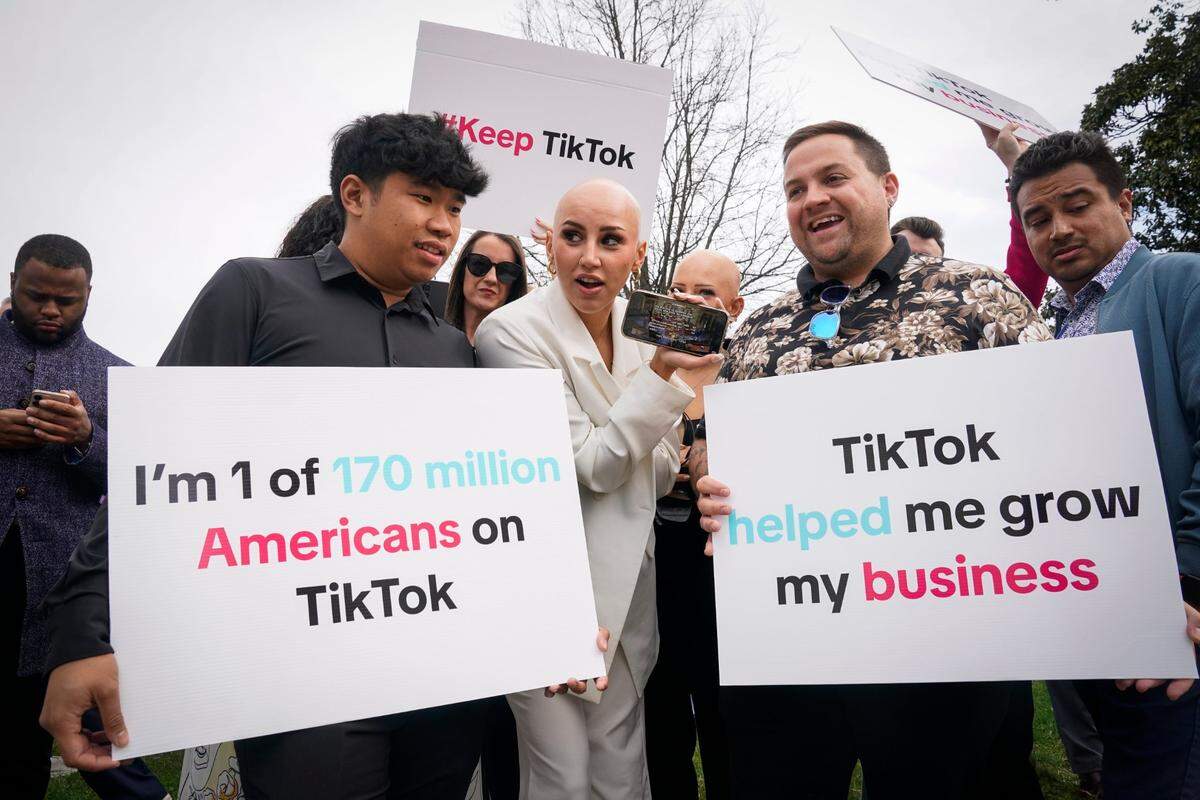
Though I am a committed newspaperman, I know some of you who read this are more likely to get your news from TikTok than the Star-Telegram. (You can follow @startelegram and do both!) TikTok users, who skew ages 18 to 34, according to the Pew Research Center, were furious with what they felt was a cynical attack on their freedom of speech. Users identified the looming ban as a suppression of pro-Palestinian speech. Some entrepreneurs pulling in meaningful revenue from their TikTok content were upset at the politicians disrupting a major source of their income. English-speaking TikTokers went in droves to another Chinese video app called RedNote, which, ironically enough, is named after Chinese Communist Party’s Mao Zedong’s Little Red Book.
Some of those young Americans angrily switching from one Chinese app to another might even find themselves in a voting booth.
And then, a funny thing happened. All those arguments about TikTok’s potential assault on our freedoms and impact on our most impressionable minds lost purchase at roughly the same time that Republicans and Democrats seemed to remember that 170 million people in the U.S. liked their meal plans, edgy “Family Guy” memes, and Things To Do In Accra lists.
Senate Democratic leader Chuck Schumer sought a pause to the law, that, if you’re keeping score, he voted for! Trump swooped in to save to app he once tried to ban. The bipartisan backpedaling could have won the Tour de France.
TikTok was more than willing to participate in a Trumpian redemption story, notifying all American users — again, some of whom might be voters — who opened the app during its ban that the incoming president would work something out. Indeed he did, signing an executive order that stalled the ban for 75 days and restored service while continuing to endorse non-Chinese buyers.
Experts are divided over whether the order can stick without the right buyer. Most of what I despise or enjoy about TikTok isn’t exclusive to it anymore; now, many social media platforms, including Instagram, YouTube, Facebook, X (formerly Twitter) and even LinkedIn have some version of the algorithmic video reels TikTok popularized. (No serious talks of banning those apps currently, no matter how much its owners allow disinformation and outright Nazism to proliferate.)
For now, the TikTok app isn’t on the Apple Store. But it’s here, and since the ban was delayed, back with at least one small user-reported tweak. The app, once credited for documenting an international atrocity, started flagging the phrase “Free Palestine” as a violation of its community guidelines.
TikTok is still here, and it’s neither uniquely and distinctly bad or good. But that’s OK, because TikTok is becoming something more important than bad or good.
TikTok is becoming American.
This story was originally published January 24, 2025 at 5:21 AM with the headline "Even as TikTok ban is mired in politics on China, app is already becoming more American | Opinion."