
My weight and exercise were always my father’s concerns. Now, it’s his own mortality
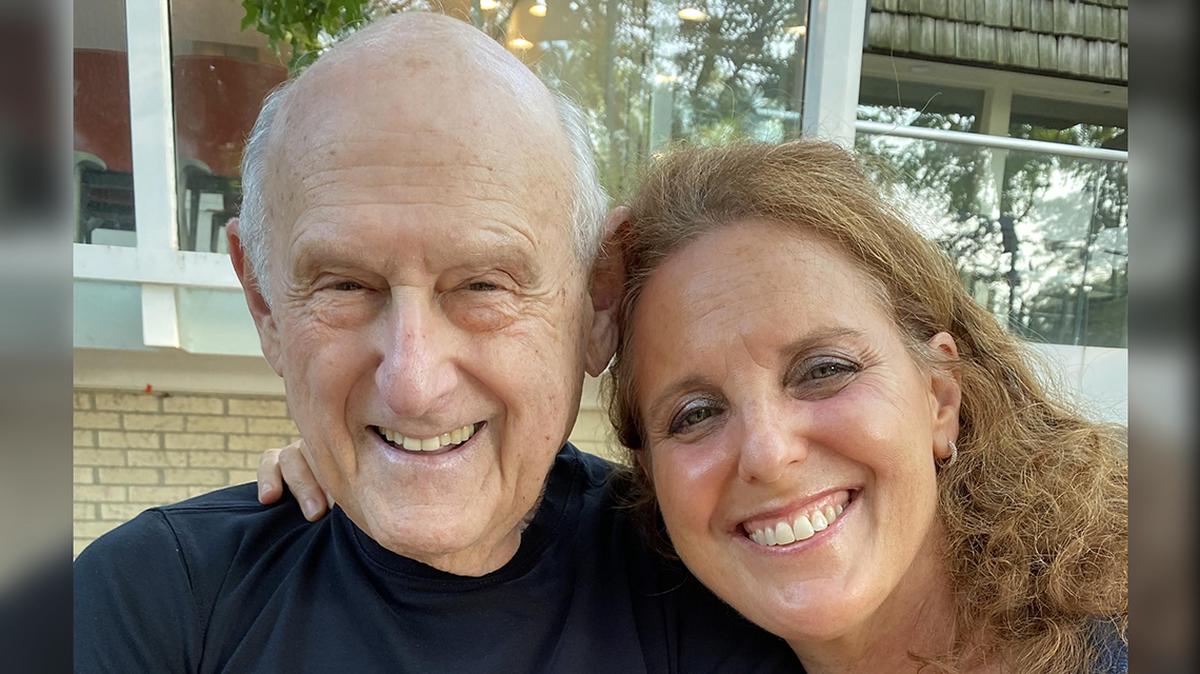
I’m on my way to the gym for the first time since the mask mandate ended, and I’m struck with the pathetic urge to call and tell my father. I’m 55 years old, and he’s 90, but still, I need for him to know.
“What’s up?” he asks.
“Going to the gym.” I say, fake-offhandedly.
“And?”
I know what he’s asking. “Forty minutes of cardio intervals, 40 minutes on weights.”
Pause. “Good, but not sufficient,” he says, kidding but not.
I’ve psychologically evolved just barely enough not to take the bait. But still, I press on with my report card: I tell him I’ve also started doing water aerobics. It’s me and the cast of the Golden Girls, watched over by three lifeguards clutching flotation devices in case someone goes into cardiac arrest, but still, I tell him, I leave the water feeling great.
“That you leave feeling good is 10%!” my father’s voice booms. “You need to do something that feels terrible to have any benefit!”
We’re in our routine now.
“What about feeling good?”
“Forget that!”
I chuckle at the sentiment, one of the underlying soundtracks of my life.
Growing up, sports and grades were the main topics of conversation between my brothers and my father. For me, it was weight and exercise.
“Exercise is like a little pill,” my father would say reverently, his bony index finger jabbing the air. “A magic little pill you take. Every. Single. Day.”
I believed him. I agreed! But no amount of self-loathing and shame — and I generated plenty of both — could force me into line.
Maybe my father’s example was too draconian. He was like a Marine in Afghanistan, except that he was a lawyer in Prairie Village, Kansas. Seven days a week, he’d pound his body into the pavement, then fall onto a bench and plunge each leg into a bucket of ice. There he’d sit, ripping through the pages of the latest New Yorker, freezing his traumatized legs for exactly 30 minutes. Who could compete?
Not me. I’d pull on my too-tight red track shorts (better to gasp for air than buy a bigger size) and huff and puff around our block, simmering with a mix of self-loathing and resentment. Then I’d give up.
So much seemed to depend on my ability to exercise — my character, my thinness, my future marriage prospects. And my failure reflected the worst sin of all: sloth, a moral failing second only to gluttony, of which I was also guilty.
Years of diets and deprivation before peace
I joined Weight Watchers at 15. In college, while my friends burrowed into exams, I’d prepare to go home for Thanksgiving with crash workouts, melba toast and cottage cheese. I hung onto the family edict like a rope, swinging between yes and no, pride and shame, all the while cursing my own diseased psyche.
Like legions of my contemporaries, I spent my 20s and 30s slogging through step classes, Nutrisystem, Jenny Craig, aerobics, the Zone Diet, hot yoga, the South Beach Diet, on and on. None of it stuck.
It took every week of every year of every decade of my life, but by my mid-40s, I finally made peace with my twin adversaries of diet and exercise. First came learning to love running in our northern Californian hills — without running myself into the ground. Then came rejoining Weight Watchers and learning to stop punishing myself with food. During the pandemic, I found Zoom yoga, a sanctuary from the anxiety and woes of our shattered world.
Not coincidentally, finding my own way slayed the beast between my father and me. Or maybe I just learned how to take that little exercise pill, but on my own terms. Whatever the case, what had once been a source of turmoil has miraculously mellowed into a warm bond.
“Hey Dad, looks like you’ve gained a few pounds,” I’ll say, patting his belly. We play, we joke, we take our roles. He scolds, I scold back.
Our routine keeps our attention off the new and painful beast between us: his failing body.
After a lifetime of beating himself into submission, he’s mostly bone on bone now, having worn away the cartilage. After eight orthopedic surgeries, his shoulders are held together by failing tendons, his hips by ceramic and metal.
Last time year at Thanksgiving, the physical therapist came for him. “You need to practice your walking, Jack!” she shouted in a too loud, too singsongy voice. I watched my father shake his head.
Humor helps. When friends greet with an innocent “How are you, Jack?” he responds variously:
“Breathing unassisted.”
“Still vertical.”
“Old age. I wouldn’t want to do it again.”
We’re all trying to prepare for when his old age is, in fact, over. And he likes to remind us with his new and upsetting practical joke: I’ll walk into the room, and he’ll snap to a position in which he’s lying stiff and staring, dead-like, at the ceiling.
“Stop pretending you’re dead!” I yell at him, absurdly. I protest and cackle, but underneath, I know what he’s doing: In his own way, he’s preparing us.
Heart scare and time reveal love for children
Last month, my cellphone buzzed. It was my mother. “Daddy is having a little heart problem,” she said, her voice thin. A leaking valve had caused the walls of his lungs to close in.
“Don’t die on the table,” I told him on his way into the hospital, my hand on my chest.
“That would be the second-worst outcome,” he said dryly, and I knew what he meant. Losing his mental faculties had always been his worst nightmare.
He woke up in the recovery room. “Someone get me a bottle of Wild Turkey,” he said. “I’m still around.”
With God’s will, my father will be around for many more Father’s Days, so he can keep giving our kids unsolicited critiques, telling them to cut their hair, stand up straighter, go here but not there for college.
As I fight my own urge to impose my will onto my own children, I see my father’s iron will differently now. Time has cleared away the brush and noise to reveal in all my father’s relationships what has always flowed beneath. His love and constancy. His devotion and deep desire for what all fathers ultimately want for their children: to be happy.
Today, I see my father whole. I relish the complex, loving person he is and the depth and richness of our relationship. I see how his expression of love was never about talking, but doing — in working hard and humbly, always finding time, taking a genuine interest, and constantly giving, without expectation of thanks.
One day soon, I’ll drive to the gym, and there will be no one who cares about my exercise regimen, no one to ask me why I need butter on my bread. And of course, I’ll miss that more than I can possibly imagine now.
Call it Stockholm syndrome, but I suspect I’m not alone. I bet millions of sons and daughters are out there with me, still pining for that gold star from their father, no matter how old they are or how crazy it is.
They say love is stronger than death. They say that love is eternal. All I can say is, it better be. Because when the day comes that my father’s no longer there to judge my workouts or to nod at my finally fit physique, I’ll be counting on his starry love to carry me through.
This story was originally published June 19, 2022 at 5:00 AM with the headline "My weight and exercise were always my father’s concerns. Now, it’s his own mortality."