
The other big story: Could this finally be an end to the Afghan war?
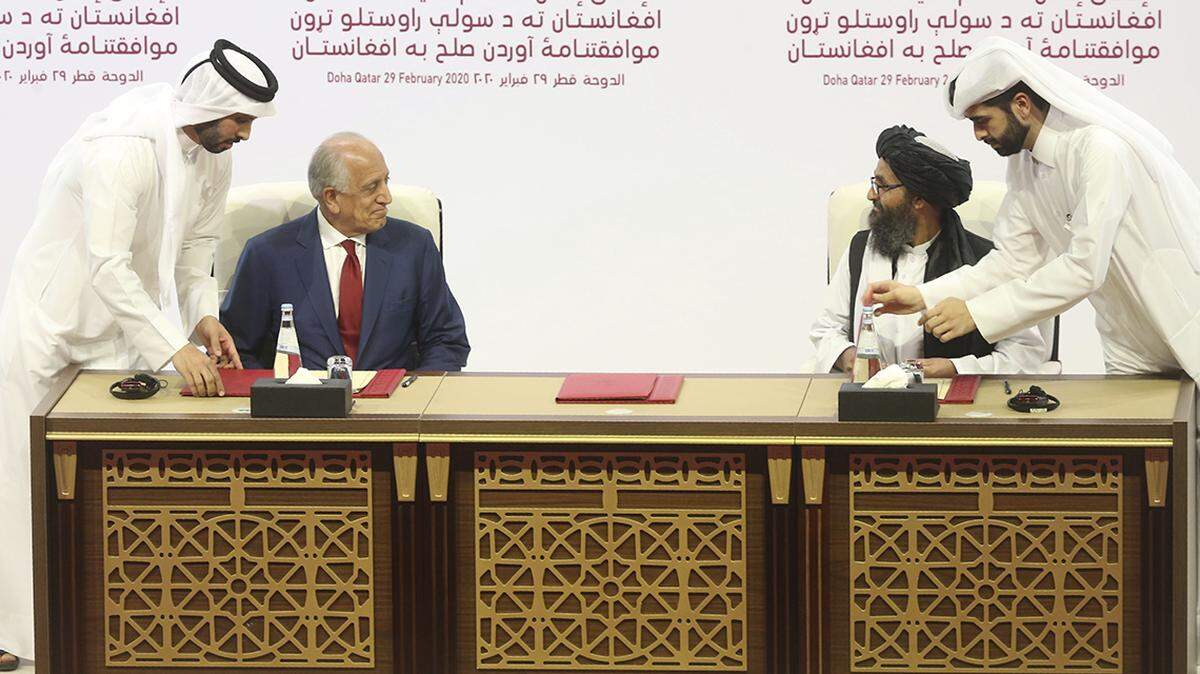
With the suffocating blanket news coverage of the Democratic primary contest and now the coronavirus, the alleged end of the longest war in America’s history has drawn surprisingly little attention.
Perhaps Americans have grown so tired and maybe cynical over the nearly 1,000 weeks of the Afghan conflict that began as a brief adventure to capture Osama bin Laden and oust the Taliban that granted al-Qaida safe turf to plot 9/11.
Obviously, it didn’t turn out to be brief. The SEALs got bin Laden elsewhere, living comfortably in a custom house inside our alleged ally Pakistan.
But now, here we are, signing documents with that same Taliban crowd promising, among other things, to draw down our troop level there to 8,600 shortly and totally in 14 months. And our allies doing the same. In return, the Taliban that once executed women for lack of head covers promises to reduce violence and deny sanctuary to other terrorists. It does not require negotiations with the elected government in Kabul, which it refuses to recognize.
I know what you’re thinking. Trust the Taliban to do anything other than return to its lethal local ways? Seriously? President Donald Trump states, “Everyone is tired of war.” Classic smoke to cover retreat.
War is an awful thing. If there’s anything worse than war, it might be war without victory.
That places in question all of the costs: the 2,448 dead American men and women, another seven so far this year. The 1,144 lost troops from allies responding under their NATO obligations to assist another attacked member after 9/11. The 20,662 Americans wounded there, some crippled in one form or another for life. And every member of all their affected families.
Plus an unknown number in the many thousands of dead Afghans, many of them combatants, many more of them innocents. And then there is Shakil Afridi, a Pakistani doctor who at our request under the guise of a fake hepatitis vaccine program obtained bin Laden’s DNA before the 2011 raid. In appreciation, we’re letting the doctor rot in a Pakistani prison cell.
The U.S. alone has spent $2.4 trillion on Afghanistan. As a reminder, one trillion is a million millions. Twelve zeroes. And we spent 2.4 of them. As with any such immense spending, there was vast graft and theft and waste. But U.S. taxpayers also financed many good things — relatively free elections, improved health care and infrastructure, schools for girls and more safety, a little hope and less fear than many had known for years.
Afghanistan is America’s second straight major victory-less war. Vietnam began under President John F. Kennedy also as a well-intentioned effort to help a government resist a takeover by communists. That was a clear-cut defeat. During the 1960s at the height of that painfully divisive conflict both there and at home, Sen. George Aiken, a Vermont Republican, suggested to derisive laughter that the U.S. simply declare victory in Vietnam and come home.
In a way, Trump is doing just that in Afghanistan. During his first campaign, he vowed to defeat ISIS and end America’s endless wars to bring the troops home. He gave the Pentagon free rein to erase the caliphate, which it did in one year.
Trump withdrew U.S. troops from Syria last fall to let Turkey and Syrian Democratic Forces fight it out with Russia and Bashar al-Assad. Now, Trump clearly wants to end U.S. military involvement in Afghanistan, even if the Taliban agreement is less than an artful deal.
Years ago, polls revealed Americans stopped believing Afghan fighting was worth the cost. Perusing history books might have taught that lesson early on.
Afghanistan has never been a nation. It’s always been and still remains a collection of fierce, warring tribes that gave would-be conqueror Alexander the Great trouble in 330 B.C. and on through invading Sikhs in the 1830s. Then came the British who fought three wars there between 1839 and 1919. Forces of the mighty Soviet Union arrived in 1979 and left in defeat in 1989.
Then the U.S. and allies landed exactly one month after 9/11.
Warnings by regional experts do not get much media attention in the U.S. these days, as there are far sexier and more clickable stories to present on the domestic front. But they report that Afghanistan’s warlords are already rapidly arming for the inevitable civil war they see coming as soon as the most recent foreigners depart.
Naturally, Americans are sick of Afghanistan, like all invaders before. No one could justifiably accuse their military, diplomats, social workers, teachers, contractors and taxpayers of not having tried and sacrificed there. Now, understandably, after 6,732 days of earnest and often bloody effort, they just want to be done with it.
As it was in Vietnam, the lesson for terrorists, communists and other troublemakers not subject to internal dissent or bothersome binding elections is that their patience and willingness to sacrifice the lives of others in a prolonged conflict eventually outlasts the generosity, determination and will of democracies with leaders subject to the collective wishes of not-always attentive voters.
Now, let’s wash our hands.
This story was originally published March 17, 2020 at 12:00 AM with the headline "The other big story: Could this finally be an end to the Afghan war?."