How to keep your dog safe and happy during this Texas winter storm
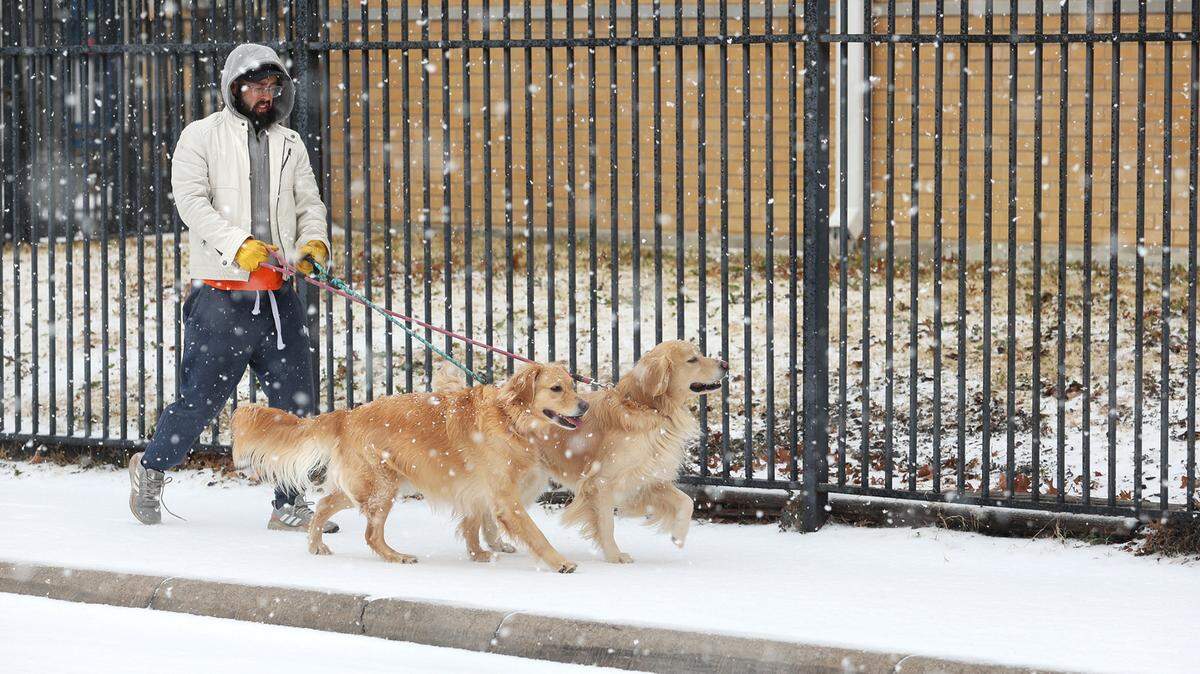
Caring for a pet can be a little tricky when it gets cold.
You may need to find ways to keep your dog busy indoors and modify the amount of time it spends outside.
Significant snowfall is expected across North and Central Texas late Wednesday, Jan. 8, through early Friday, Jan. 10, according to the National Weather Service.
Here’s how to protect your pet in these freezing temperatures.
How long should I walk my dog when it’s cold?
Experts at pet supply company Chewy suggest that pet parents should limit cold-weather walks to 30 minutes or less when it’s cold — and when it’s below freezing, pets would be better off indoors. Once it gets that cold, you should keep walks very brief.
Experts also recommend dressing pets in water-resistant booties or shoes and insulated winter coats.
How do I know if my pet is cold?
A dog can experience hypothermia if its body temperature falls below 98 or 99 degrees Fahrenheit.
Watch out for the following symptoms of mild to moderate hypothermia in your dog, according to PetMd:
Shivering
Muscle stiffness
Lethargy
Difficulty walking
Pale gums
Cool body surfaces
Confusion
Moderate hypothermia symptoms to watch out for in your dog:
Shivering
Stiff or clumsy movements; difficulty walking
Sluggishness
Seeming confused
Pale gums
The risk of frostbite also increases if your dog’s body temperature lowers or if its extremities become cold due to wind or moisture. Blood flow to the the nose, paws, ears and tip of the tail decreases as a result. Tissue damaged by frostbite can become infected.
Signs of frostbite in dogs include redness, swelling, blistering, and discoloration of the skin, with a darker or blacker skin tone.
Pets that are in pain may also lick, chew, or scratch excessively. Owners should visit a veterinarian at the first sign of hypothermia or frostbite.
How can I keep my pet active indoors when it’s cold outside?
Experts at Rover.com encourage pet owners to explore a variety of activities that can help tire out your pets without leaving the house.
Activities can range from teaching new tricks, playing training games or doing exercises with an obstacle course.
The experts advise owners maintain gentle movements and soft interactions when engaging in indoor play.
Dogs can still thrive with engaging indoor activities, Rover experts said. It comes down to creating a routine.
This story was originally published January 7, 2025 at 5:45 AM.